
The Cruz V3 is UPPAbaby’s smaller full-size pram, and at $999 it is the cheapest way into the brand in Australia. It is a single pram, from birth, with a reversible seat and an infant insert in the box. Buy it if you want UPPAbaby running gear and fabrics without the Vista’s $500 premium, and if you can live with a bassinet that is not included. Prices here are as at 30 July 2026, lowest listed Australian retail, and this assessment is on the manufacturer’s published specification only.
The case for it
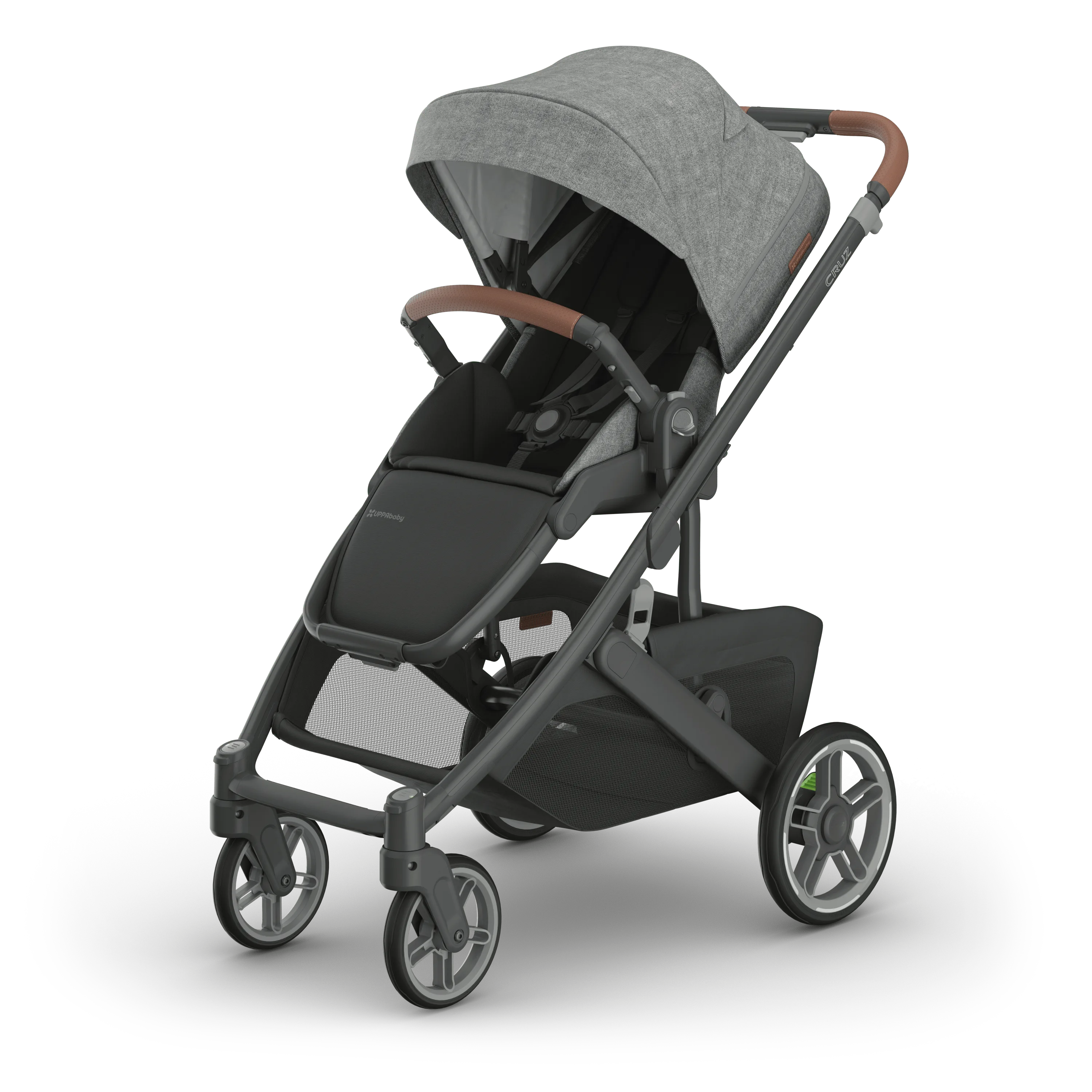
The number that matters is the seat. UPPAbaby lists the Cruz V3 as suitable from birth to 22.7 kg, with a from-birth recline and a cosy infant insert supplied. That is unusual under four figures. The Bugaboo Dragonfly Plus and both Thule Urban Glide 3 models put their seats at six months and up, which means a capsule or a bassinet purchase before you can use them at all. On the Cruz you can walk out of the shop at $999 and use the pram on the way home from hospital.
The seat also runs to 22.7 kg, which is the highest single-seat figure published anywhere in this field. Most rivals stop at 22 kg. It is a small margin, but it is the top end of the range that decides whether you get four years out of a pram or three and a half.
Underneath, the spec sheet lists Enhanced FlexRide Suspension and never-flat tyres with a front wheel lock. Never-flat matters more in Australia than the marketing suggests. Air-filled tyres, of the sort Thule fits to the Urban Glide 3, ride better on gravel and grass, and they are also the thing you will be pumping up in a carpark in three years. The Cruz gives up some ride quality for never having to think about it.
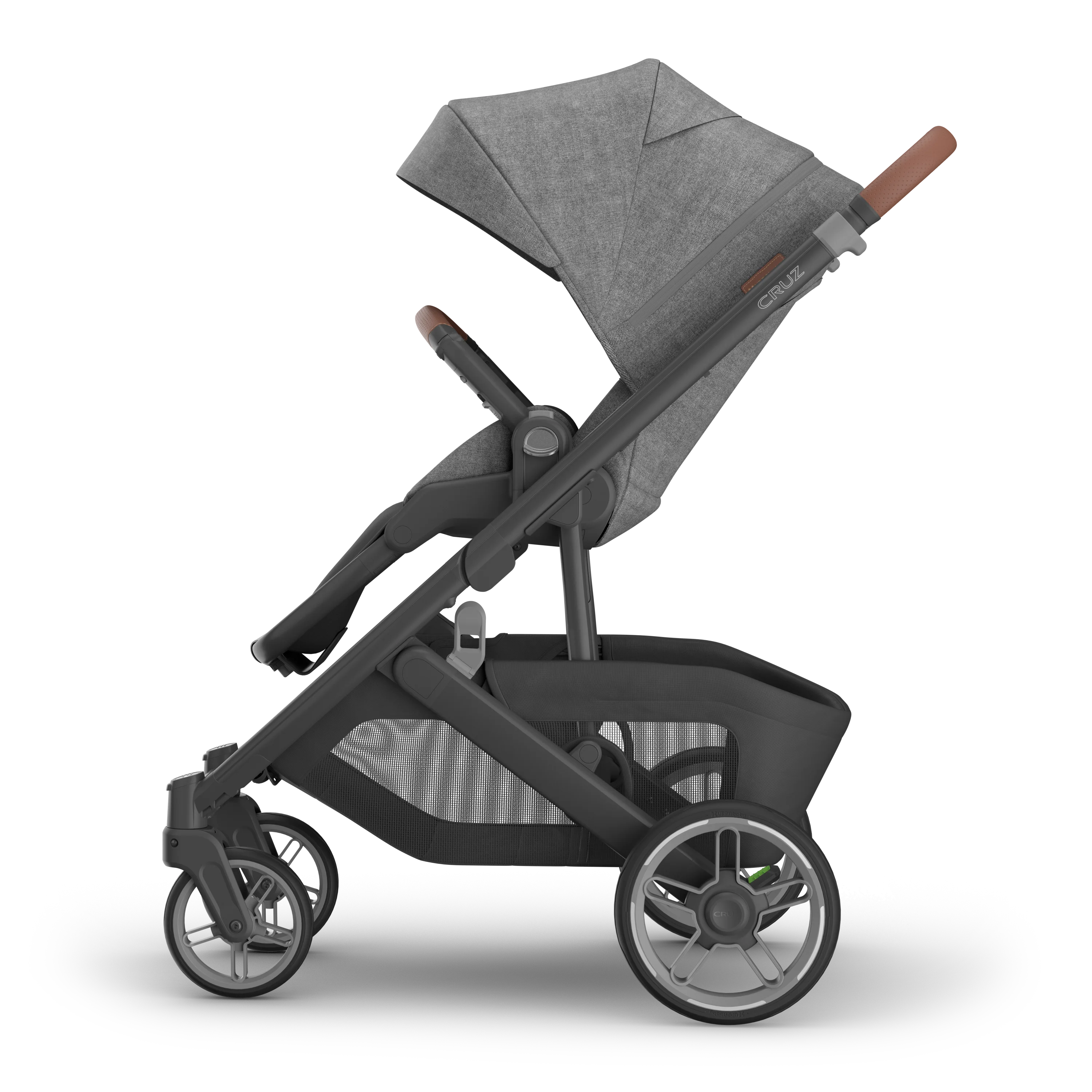
Storage is genuinely large. The basket is rated to 13.6 kg, the same figure UPPAbaby publishes for the Vista V3, and it is 3.6 kg clear of the 10 kg baskets on the Bugaboo Dragonfly and the Donkey 5. On a supermarket run that is the difference between hanging bags off the handlebar and not.
The small items are where the price starts to look sensible. A rain shield and a bug shield are in the box. The canopy is UPF 50+, water-repellent, with an integrated sun visor and a zip-out extension. The harness is a five-point no-rethread design, so you are not unpicking straps every few months to move the shoulder height. The recline and the handlebar adjust one-handed, and the leg rest adjusts as well. Fabrics are listed as premium with full-grain leather accents, which is the same finishing language UPPAbaby uses on the Vista V3 at $1,499. On paper you are not being sold a cheapened cabin.
The case against it
The bassinet is not included, and that is the whole argument. The Cruz V3 Bassinet and Seat package lists at $1,649. Buy the pram at $999 and add the bassinet later and you have spent $650 more than the sticker that got you interested. The Cruz V3 with the UPPAbaby Mesa capsule sits at $1,449, so the capsule route costs $450 on top.
Put that against the field and the $999 looks less special. The UPPAbaby Vista V3 with the bassinet in the box is $1,499. That is $500 more than a bare Cruz but $150 less than a Cruz set up the same way, and the Vista carries a bigger, more capable frame with all-wheel suspension and the option of a second and third child. If you know you want a bassinet, the $999 entry price is not the price you will pay, and the Cruz stops being the value play.
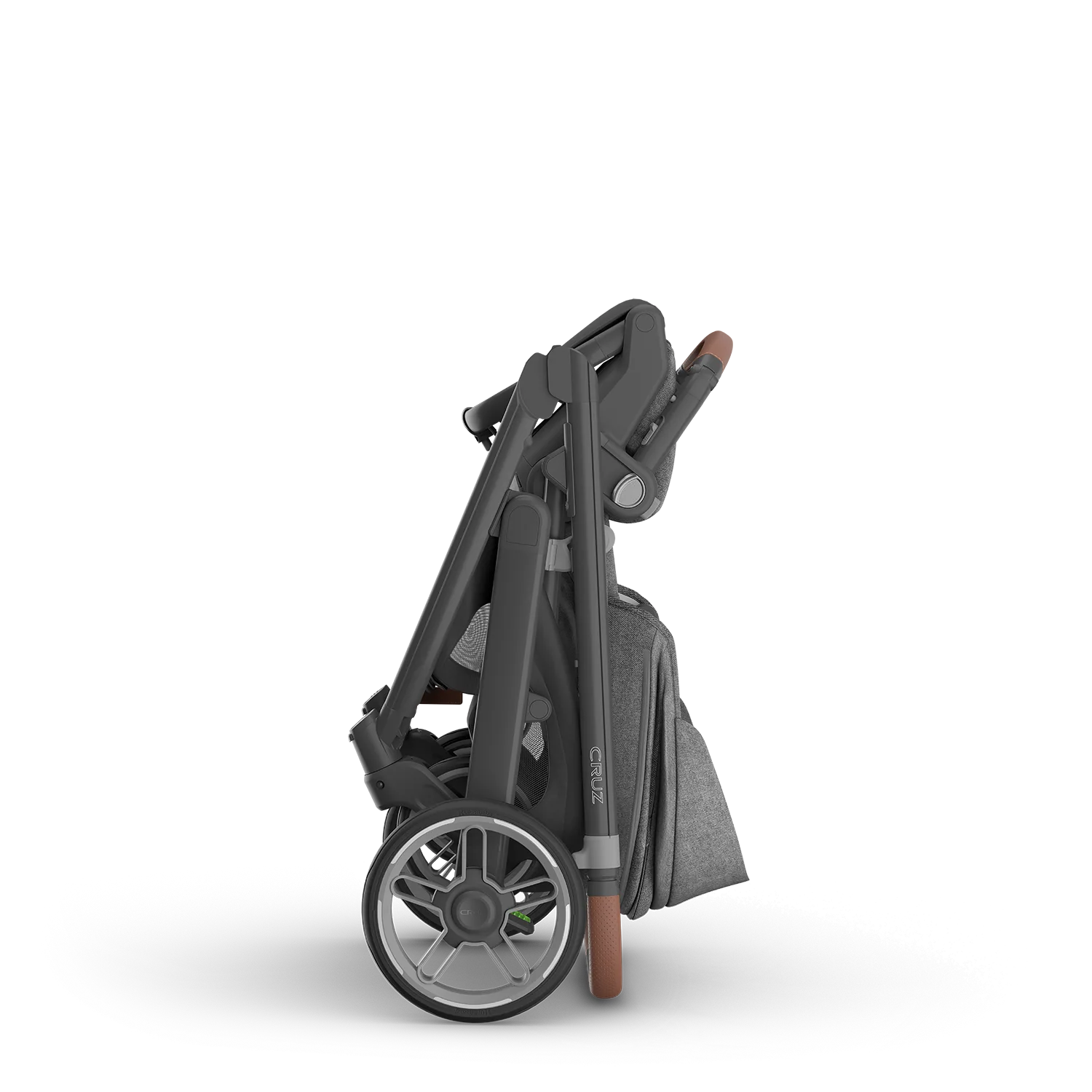
The second problem is what UPPAbaby does not publish. There is no folded dimension and no pram weight in the Cruz V3 spec sheet. “Ultra-compact one-piece fold” is a claim, not a measurement. Bugaboo publishes 9.9 kg and a folded 36 x 52 x 90 cm for the Dragonfly, and Joolz publishes 6.5 kg and an IATA-compliant 44 x 53 x 23.5 cm for the Aer2. If you are buying around a small boot or a walk-up flat, the Cruz asks you to take it on faith. We score fold and footprint at 8.0 for it, and the missing figures are why it is not higher.
Third, this is a single pram that stays a single pram. There is no published second-seat or twin conversion. The Vista V3 takes a RumbleSeat and a PiggyBack for up to three children, and the Bugaboo Donkey 5 converts from mono to duo. If a second child is likely inside four years, the Cruz is a pram you will replace rather than extend, and that is the more expensive path.
Fourth, parts and service. UPPAbaby is an imported brand supported through distribution rather than a local factory, and we score it 7.5 for Australian parts and service, behind Babybee and Mountain Buggy at 8.5 and 8.0, and behind Babyhood at 9.0. It is not a fault. It is a difference you notice on the day a wheel or a canopy needs replacing rather than the day you buy.
How it compares
Bugaboo Dragonfly Pram, $979. Twenty dollars cheaper and the closest direct rival. The Dragonfly is also from birth, also 22 kg, and it publishes what the Cruz will not: 9.9 kg assembled, folded to 36 x 52 x 90 cm, self-standing, one-hand fold with the seat still attached. It takes our Best city fold award and scores 9.0 for fold and footprint against the Cruz V3’s 8.0. The Cruz answers with a bigger basket, 13.6 kg against the Dragonfly’s 10 kg, and never-flat tyres against urban wheels. Add a bassinet and the Dragonfly package is $1,247, which is $402 under the equivalent Cruz. Overall the Dragonfly scores 7.9 to the Cruz V3’s 8.0. Take the Cruz for the seat and the storage. Take the Dragonfly if the pram has to live in a hallway or a small boot.
Babybee Rover3, $799.99. Two hundred dollars less and the only sub-$1,000 pram in this field with a bassinet included, along with capsule compatibility to approximately five years. It is an Australian company with a stronger service position, scoring 8.5 for Australian parts and service against the Cruz V3’s 7.5. Where it loses is detail. Babybee publishes almost nothing on wheels or suspension, so we score it 7.0 for push and wheels against 8.0 for the Cruz, and 7.7 overall. If your budget stops near $800 and you need a bassinet, the Rover3 is the more complete purchase. If you want to know what the pram is actually riding on, the Cruz tells you.
UPPAbaby Vista V3 Pram + Bassinet, $1,499. The pram the Cruz is priced under, and our Best overall at 9.0. It brings the bassinet, all-wheel suspension, a one-step self-standing fold and room for up to three children with accessories. It scores 9.5 for conversion and versatility against the Cruz V3’s 8.0. Five hundred dollars is a real gap on a bare comparison, but $150 in the Vista’s favour once you have added a Cruz bassinet. The Cruz makes sense for one child and a fixed budget. Beyond that the Vista is the better buy, and it is not a Babyhood product, so we will say it plainly.
If $999 is more than you want to spend
Mountain Buggy’s Swift V4 at $729 is the strongest pram under the Cruz’s price. It takes our Best value award and scores 7.8, with an aircraft-grade aluminium frame and puncture-proof tyres closer to the Cruz’s league. Below that, Babyhood’s Air Compact Stroller at $499 takes our Best under $500 award and scores 7.2 overall. It is not the Cruz. It runs high-density EVA wheels, which is why it scores 6.0 for push and wheels against the Cruz V3’s 8.0, and the build sits below the UPPAbaby benchmark at 6.5 against 8.5. What it does have is a newborn-ready recline, capsule compatibility, an assisted auto fold and the best Australian parts and service position in this field at 9.0. As a second pram for the boot, or a first pram when $999 is not available, it is the honest answer at half the money. The rest of the budget field is ranked in our best prams under $800.
Verdict
The Cruz V3 is a well-specified single pram sold at a price that only tells half the story. As a bare $999 purchase for one child, with the infant insert doing newborn duty and no bassinet in the plan, it is the strongest thing on the market under four figures and it takes our Best under $1,000 award. Add the bassinet and the maths inverts, and the Vista V3 at $1,499 becomes the pram to buy. We run that decision in full in Vista vs Cruz. Decide which of those two buyers you are before you look at colours, and see where the Cruz lands against the whole field in our best prams in Australia.
| Conversion and versatility | 8.0 |
| Fold and footprint | 8.0 |
| Push and wheels | 8.0 |
| Build and materials | 8.5 |
| Australian parts and service | 7.5 |
| Bench Score | 8.0 |
Award: Best under $1,000. Price $999, as at 30 July 2026, lowest listed Australian retail.
Assessed on specification, 30 July 2026.
Disclosure: Babyhood, and its distributed brand Kaylula, is an agency client of this publication’s owner, Xpand Digital. Scores are set from published specification and are not influenced by that relationship. The category leader here is not a Babyhood product.
Evidence record
Sources checked
Product specifications, claims and Australian pricing were checked against the following sources for this assessment. Prices and availability can change after publication.