
The short answer
The Vista V3 wins, and by a full point. It scores 9.0 and takes Best overall in this field. The Cruz V3 scores 8.0 and takes Best under $1,000. That gap is real, but it is not worth $500 to every buyer, and the pricing does something you would not expect.
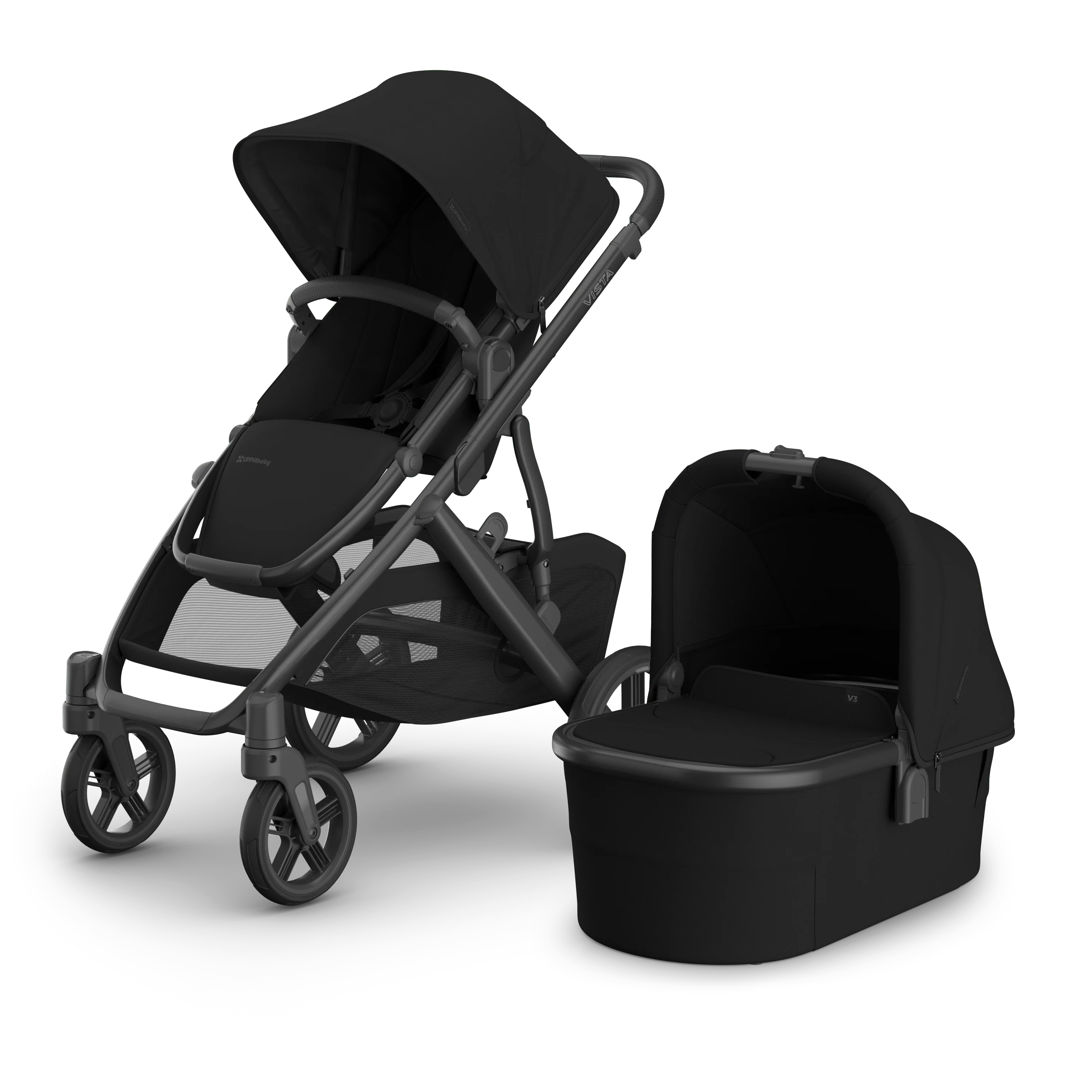
The Cruz V3 Pram is $999. The Vista V3 with the bassinet already in the box is $1,499. If you are confident you will only ever push one child, and you are content to start that child in the seat rather than a bassinet, the Cruz gives you the same 13.6 kg basket and the same no-rethread harness, with the full-grain leather accents carried over, and leaves $500 in your account. But the moment a bassinet enters the conversation, the maths inverts. The Cruz V3 bassinet-and-seat package lists at $1,649. That is $150 more than the Vista package that includes a bassinet as standard, for a pram that scores a point lower. If you want a bassinet, buy the Vista.
Price
All prices are the lowest listed Australian retail as at 30 July 2026.
| Configuration | Price |
|---|---|
| Cruz V3 Pram (seat only, infant insert included) | $999 |
| Vista V3 Pram Nori (no bassinet) | $1,349 |
| Cruz V3 Pram + Mesa capsule bundle | $1,449 |
| Vista V3 Pram + bassinet | $1,499 |
| Cruz V3 bassinet and seat pram | $1,649 |
| Vista V3 Nori Pram + Nori bassinet | $1,759 |
| Vista V3 Double Pram | $1,899 |
| Vista V3 Pram + Mesa capsule bundle | $1,998 |
Read that table twice before you commit. The Vista V3 with bassinet was also listed as high as $1,529 at the time of assessment, so shop the colourway. The bassinet-free Vista V3 Nori at $1,349 is the configuration most people overlook: it puts you on the better chassis for $350 over the Cruz, and lets you add a bassinet later or skip it entirely for a capsule.
Weight
Neither listing publishes a frame weight, so we are not going to invent one. For scale inside the same field, Bugaboo publishes 9.9 kg for the Dragonfly and Joolz publishes 6.5 kg for the Aer2. Both UPPAbabys are full-size four-wheel prams and neither is sold as a travel stroller, so neither is going near those numbers.
If a boot lift is the thing that will decide this for you, lift both in a shop. The published spec sheets will not answer it, and a reviewer who tells you the difference in kilograms without a manufacturer figure to cite is guessing.
Fold and footprint
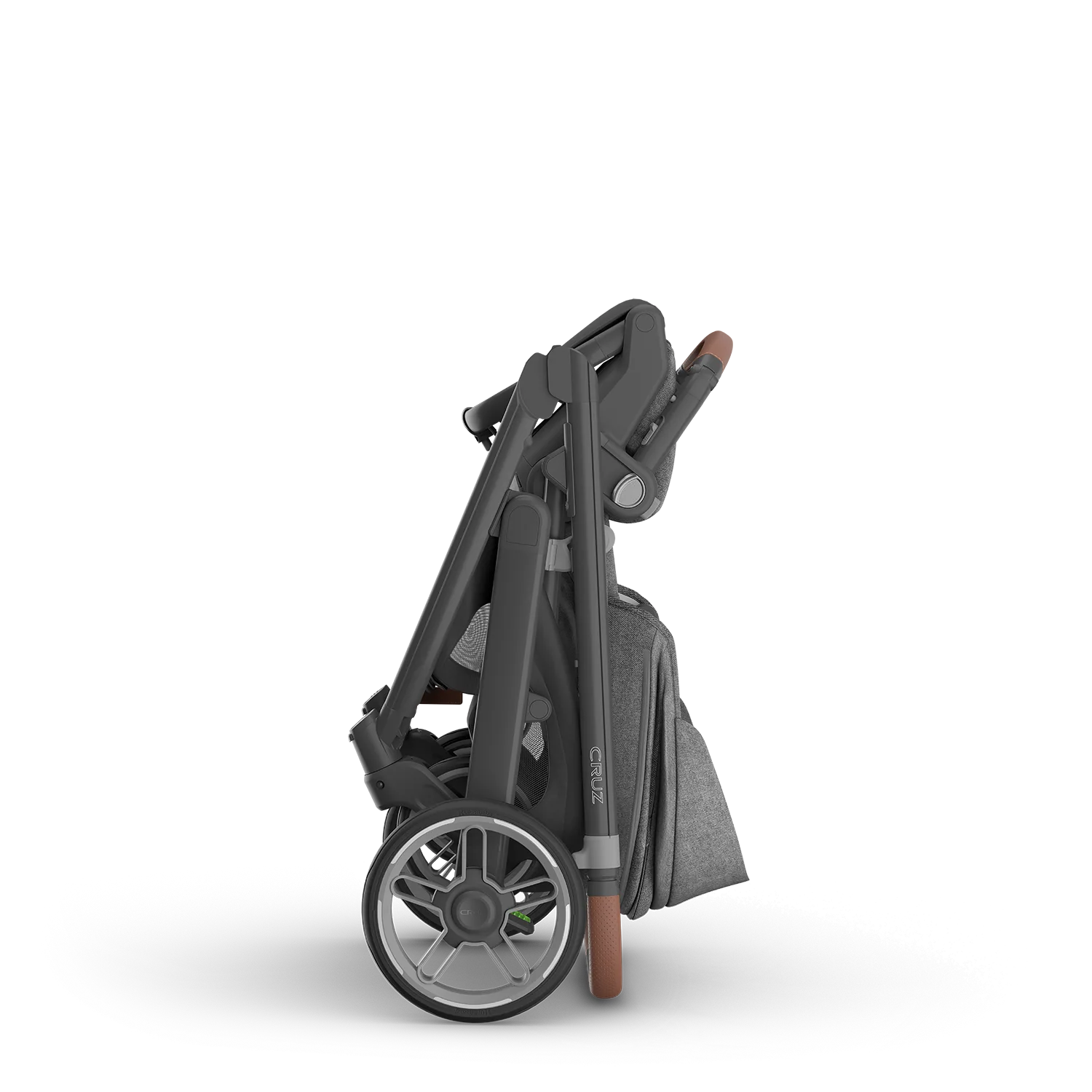
The Vista V3 has a one-step fold and stands when folded. The Cruz V3 has what UPPAbaby calls an ultra-compact one-piece fold. Neither listing publishes folded dimensions, which is a gap in both spec sheets rather than a point of difference.
The Vista takes 9.0 for fold and footprint, the Cruz 8.0. The Vista’s advantage on paper is that the fold is one step on a chassis that also carries a bassinet and a second seat. The Cruz is the physically smaller pram, but “ultra-compact” is a marketing term with no centimetres attached to it, so treat it as a claim rather than a measurement.
The seat and from-birth use
This is the real fork in the road.
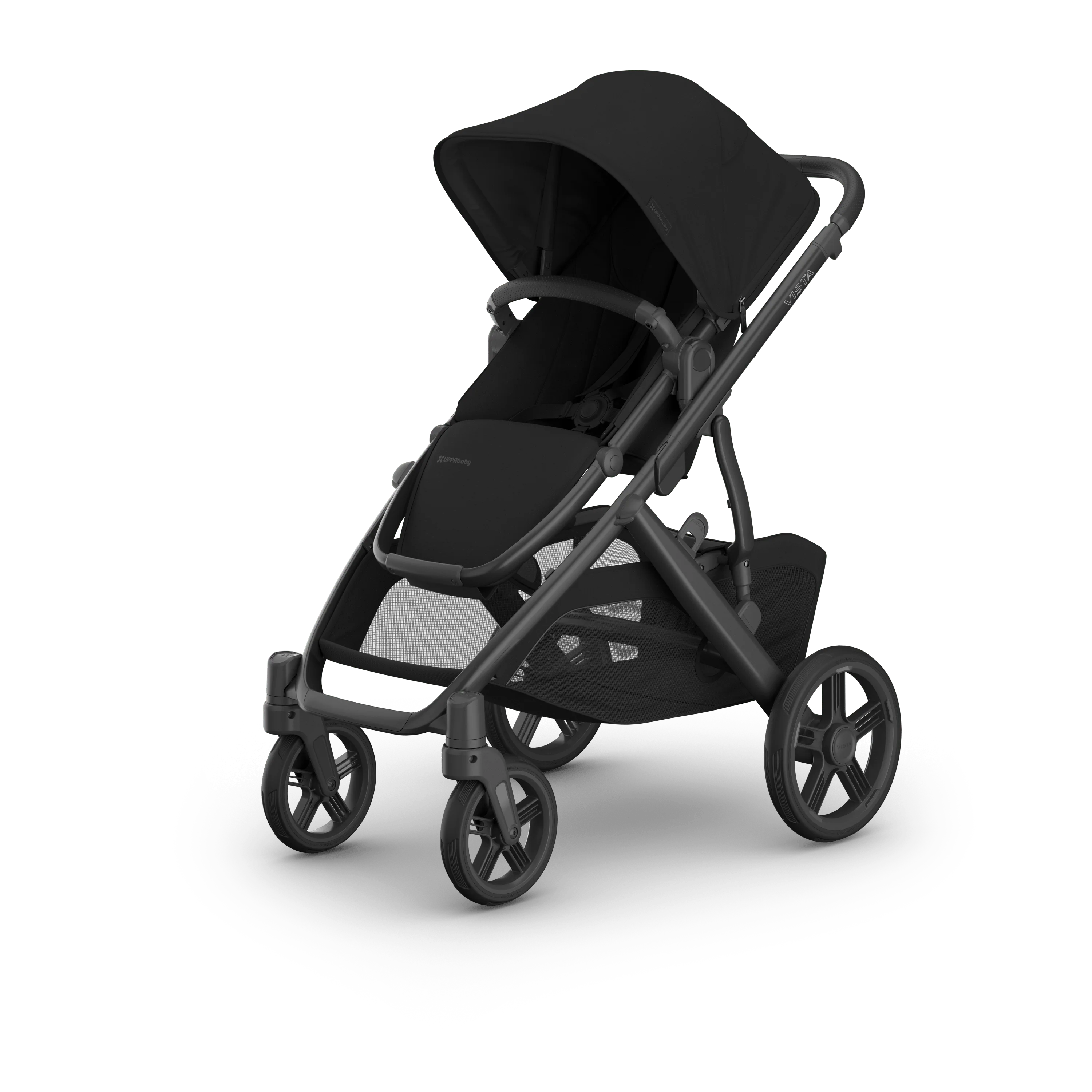
The Vista V3 arrives newborn-ready at $1,499 because the bassinet is in the box. That bassinet has zip cross-ventilation panels at both ends, a vented base and a foam-free air mesh mattress, which matters more in an Australian February than it does in the marketing copy. The toddler seat is full-size and reversible, with a seasonal liner that converts to a mesh ventilation backing and a one-handed multi-position recline. The extendable canopy is UPF 50+ with zip-out fabric and mesh panels.
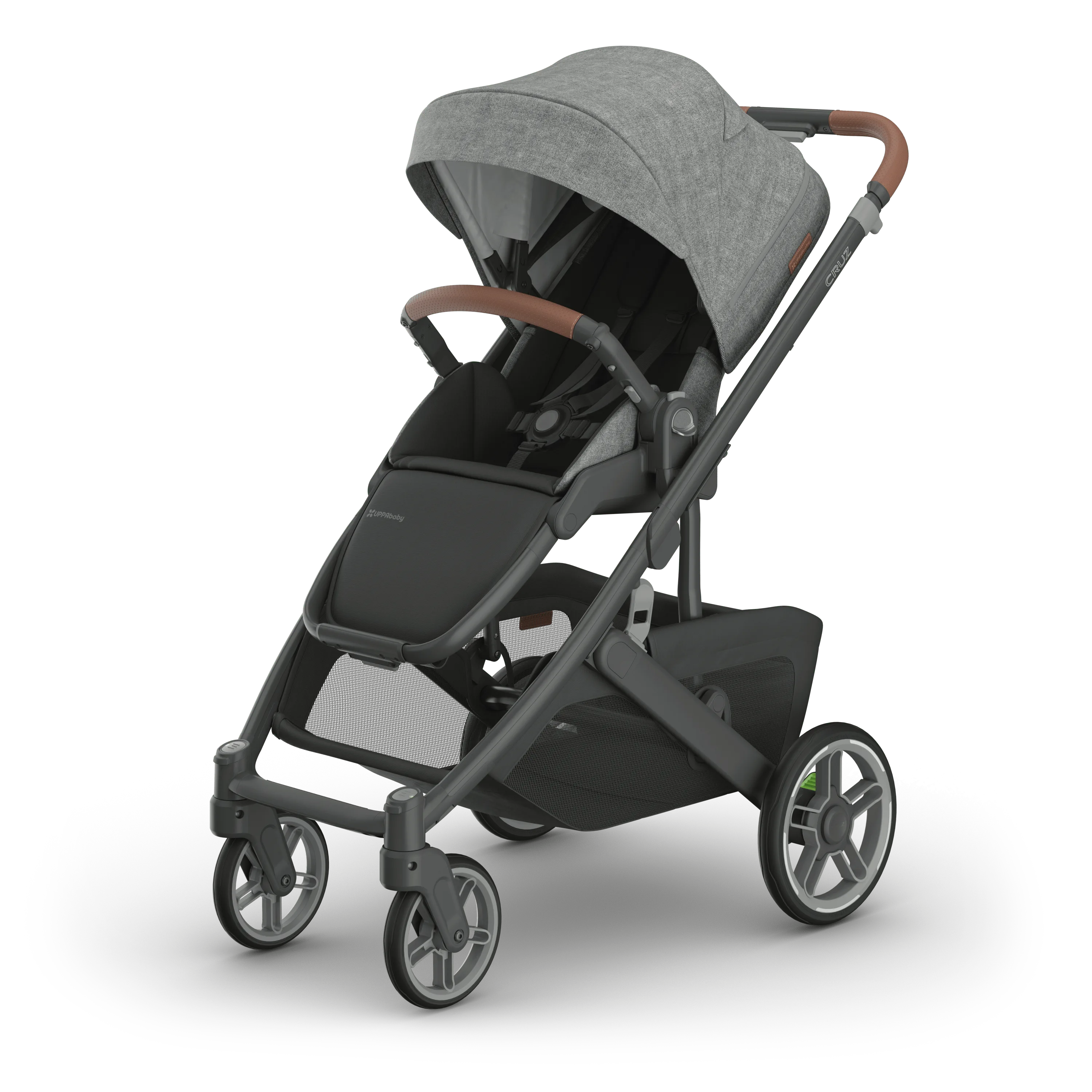
The Cruz V3 gets to the same place by a different route. It is rated from birth to 22.7 kg, using a from-birth seat recline and a cosy infant insert that comes with the pram. There is no bassinet at $999. The seat is also full-size and reversible, with a one-hand recline and an adjustable leg rest that the Vista listing does not mention. The UPF 50+ water-repellent canopy has an integrated sun visor and zip-out extension. A Cruz bassinet is available separately and attaches directly to the pram with no adapters.
Note that UPPAbaby publishes a 22.7 kg limit for the Cruz seat but no equivalent figure appears on the Vista listings assessed here. If you are buying for a heavy four-year-old, ask the retailer for the Vista’s published limit in writing rather than assuming it matches.
Wheels and ride
The Vista V3 runs all-wheel suspension with front wheel locks that have visual indicators. The Cruz V3 runs Enhanced FlexRide Suspension on never-flat tyres with a front wheel lock. Neither brand publishes a tyre size for either pram, which is worth knowing when Thule publishes 16 inch air-filled tyres for the Urban Glide 3 at $1,379 and scores 9.5 for push and wheels as a result.
The Vista takes 9.0 here to the Cruz’s 8.0, on the strength of suspension at all four corners against the Cruz’s single system. If gravel tracks and beach car parks are your daily reality rather than footpaths, neither of these is the sharpest tool in this field.
Storage and what is in the box
Both prams carry the same 13.6 kg underseat basket, a figure only the 15 kg baskets of the Bugaboo Donkey 6 and the Babybee Juno beat in this field. The Cruz includes a rain shield and a bug shield with the pram. The Vista’s box gives you the bassinet instead, plus a boot cover for it. One retailer was also listing free upper adaptors with every Vista V3 at the time of assessment, which is a promotion and may not be there when you read this.
Both prams connect directly to the UPPAbaby Mesa capsule with no adapters required, so the travel-system path is identical.
How far each one grows
The Vista V3 carries up to three children with the RumbleSeat and PiggyBack accessories, and there is a factory Vista V3 Double at $1,899 if you would rather buy the double outright. That is what earns it 9.5 for conversion and versatility, the equal-highest score in the field alongside the Bugaboo Donkey 6.
The Cruz V3 is a single pram and stays one. It takes 8.0 for versatility, which reflects capsule compatibility and the add-on bassinet rather than any ability to carry a second child. If your family plan has a second baby in it, the Cruz is a pram you will sell.
The scores
| Sub-score | Vista V3 Pram + Bassinet | Cruz V3 Pram |
|---|---|---|
| Conversion and versatility | 9.5 | 8.0 |
| Fold and footprint | 9.0 | 8.0 |
| Push and wheels | 9.0 | 8.0 |
| Build and materials | 9.5 | 8.5 |
| Australian parts and service | 7.5 | 7.5 |
| Bench Score | 9.0 | 8.0 |
The Vista V3 Pram + Bassinet holds our Best overall award in the full prams field. The Cruz V3 Pram holds Best under $1,000. Each pram also gets its own longer treatment in the Vista V3 review and the Cruz V3 review.
Where Babyhood fits
Neither of these is beaten by the publisher’s agency client, and we will not pretend otherwise. Babyhood’s Doppio Plus single-seat package is $1,499 and now scores 8.1 against the Vista’s 9.0 after Babyhood published its weight, fold, wheel construction and suspension. Its inline-double flexibility and local support are genuine strengths; its build disclosure, basket specification and fold action still sit below the UPPAbaby benchmark.
The one column it wins is Australian parts and service, at 9.0 against 7.5 for both UPPAbabys. If a replacement wheel or a warranty claim handled locally matters more to you than ride refinement, that is a genuine reason to look at it. On the rest of the criteria the Vista is the better pram, and the score says so.
Buy the Vista V3 if
- You want a bassinet, in which case it is also the cheaper pram of the two at $1,499 against the Cruz’s $1,649 bassinet package.
- A second child is possible, and you would rather add a RumbleSeat than sell a pram.
- You push on mixed surfaces often enough that all-wheel suspension is worth $500 to you.
- You want the highest-scoring pram in this field regardless of what it costs, at 9.0.
Buy the Cruz V3 if
- One child is the plan and you are settled on it.
- You are happy starting your newborn in the seat with the included infant insert instead of a bassinet.
- The $999 price is the point, and you would rather put the $500 into a capsule or a car seat.
- You want the rain shield and bug shield included rather than bought later.
Assessed on specification, 30 July 2026. No pram in this comparison has been physically tested. Every figure above comes from the manufacturer’s or retailer’s published specification at that date, and prices are the lowest listed Australian retail on the same date.
Disclosure: Babyhood is an agency client of The Baby Bench’s owner, Xpand Digital. Babyhood products are scored on the same published criteria as every other pram in this field, and are named here only where the scores support it.
Evidence record
Sources checked
Product specifications, claims and Australian pricing were checked against the following sources for this assessment. Prices and availability can change after publication.