
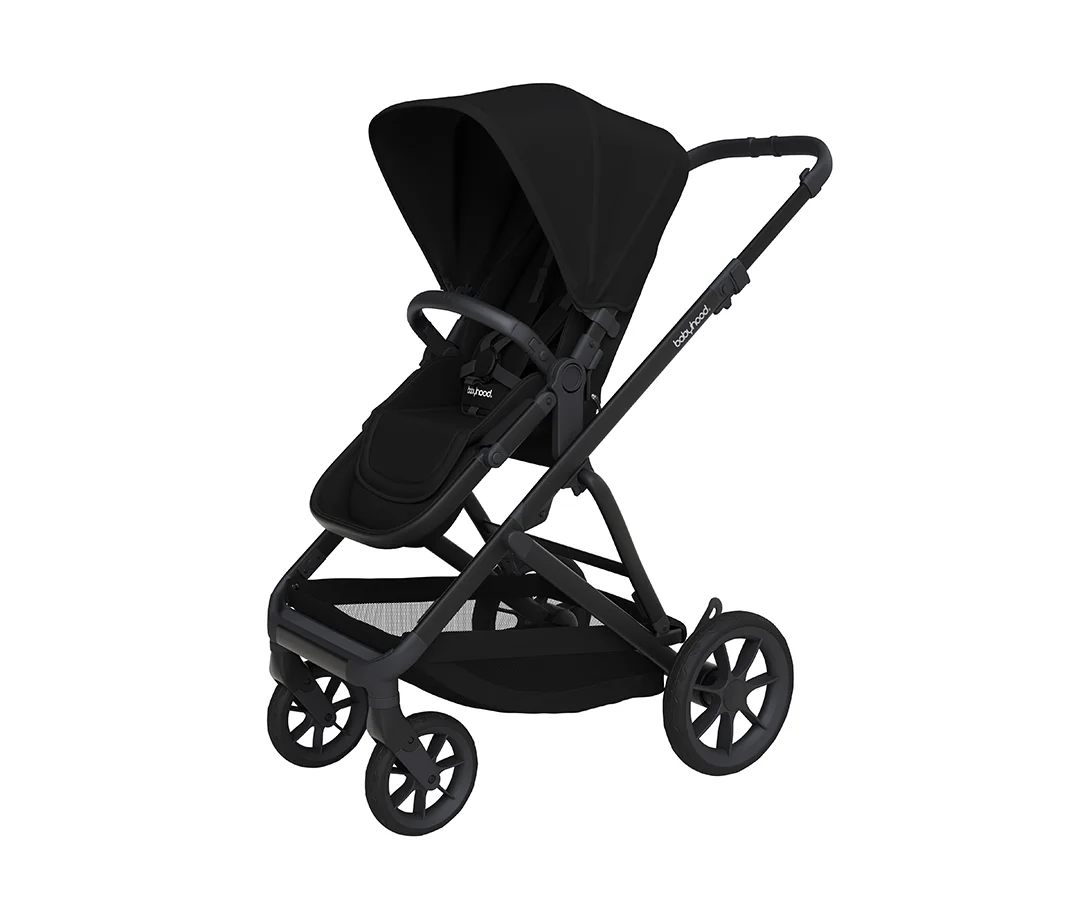
The Babyhood Doppio Plus is an Australian-designed convertible pram that starts with one from-birth seat and can be rebuilt as an inline double or twin. Babyhood publishes 18 configurations across seat, bassinet and capsule use. The frame is 62 cm wide, weighs 8.7 kg before the 3.5 kg seat is added, and carries each child to 22 kg.
That combination makes the Doppio Plus unusually relevant to parents who are buying for one baby but expect a second child within the life of the pram. It is not the lightest single, the smallest fold or the strongest all-terrain chassis in our field. Its argument is that you can buy one locally supported platform and change what sits on it as your family changes.
Bench Score: 8.1 out of 10. This is an assessment of the published specification, not a hands-on test. No unit has been pushed, folded, loaded or weighed by The Baby Bench.
Babyhood is an agency client of this publication’s owner, Xpand Digital. That relationship is disclosed here and at the end of the review. It does not buy a score, an award or this monthly feature.
The short answer
Buy the Doppio Plus if you want a from-birth single today, a narrow inline double later, and Australian parts support matters more to you than having the most refined fold or the largest published wheels.
Skip it if you want a bassinet included at the single-pram price, need a one-hand free-standing fold, or expect to push regularly on rough tracks. The foam-core wheels and independent suspension are credible urban and park specifications, but Babyhood does not publish the wheel diameters and we would not call it a true all-terrain pram from the information available.
The most important buying detail is not on the headline card. Babyhood’s current Doppio Plus range page lists the single-seat package at $1,499, and both double packages at $1,999. The $1,999 two-seat and seat-plus-bassinet bundles state that the single-to-double adaptor is not included. That adaptor is another $129.95, making the usable double configuration $2,128.95 before capsule adaptors or smaller accessories.
Bench Score
| Criterion | Score |
|---|---|
| Conversion and versatility | 8.5 |
| Fold and footprint | 8.0 |
| Push and wheels | 7.5 |
| Build and materials | 7.5 |
| Australian parts and service | 9.0 |
| Overall Bench Score | 8.1 |
The score has been updated from our July assessment because Babyhood now publishes material specifications that were previously absent: frame and seat weights, folded dimensions, wheel construction and independent suspension. Published evidence earns points; marketing adjectives do not.
Key specifications
| Specification | Babyhood Doppio Plus |
|---|---|
| Single-seat price | $1,499 sale price; $1,999 listed RRP |
| Double package price | $1,999 plus $129.95 adaptor set |
| Frame weight | 8.7 kg including wheels |
| Seat weight | 3.5 kg |
| Calculated single weight | 12.2 kg before accessories |
| Folded frame | 62 × 75 × 28 cm |
| Folded with single seat | 62 × 80 × 51 cm |
| Open as a single | 62 × 80 × 97–112 cm |
| Open as a double or twin | 62 × 120 × 97–112 cm |
| Handlebar range | 97–112 cm |
| Seat suitability | From birth to 22 kg per seat |
| Bassinet suitability | From birth to 9 kg |
| Wheels | Foam-core rubber, metal-encased bearings, lockable swivel fronts |
| Suspension | Independent suspension |
| Harness | Adjustable magnetic five-point harness |
| Standard | Tested to AS/NZS 2088:2022 |
| Warranty | Three years against manufacturing faults, excluding wear and tear |
Prices and specifications were checked against Babyhood’s Australian listings on 11 August 2026 and will move.
The case for it
One seat genuinely covers the newborn stage
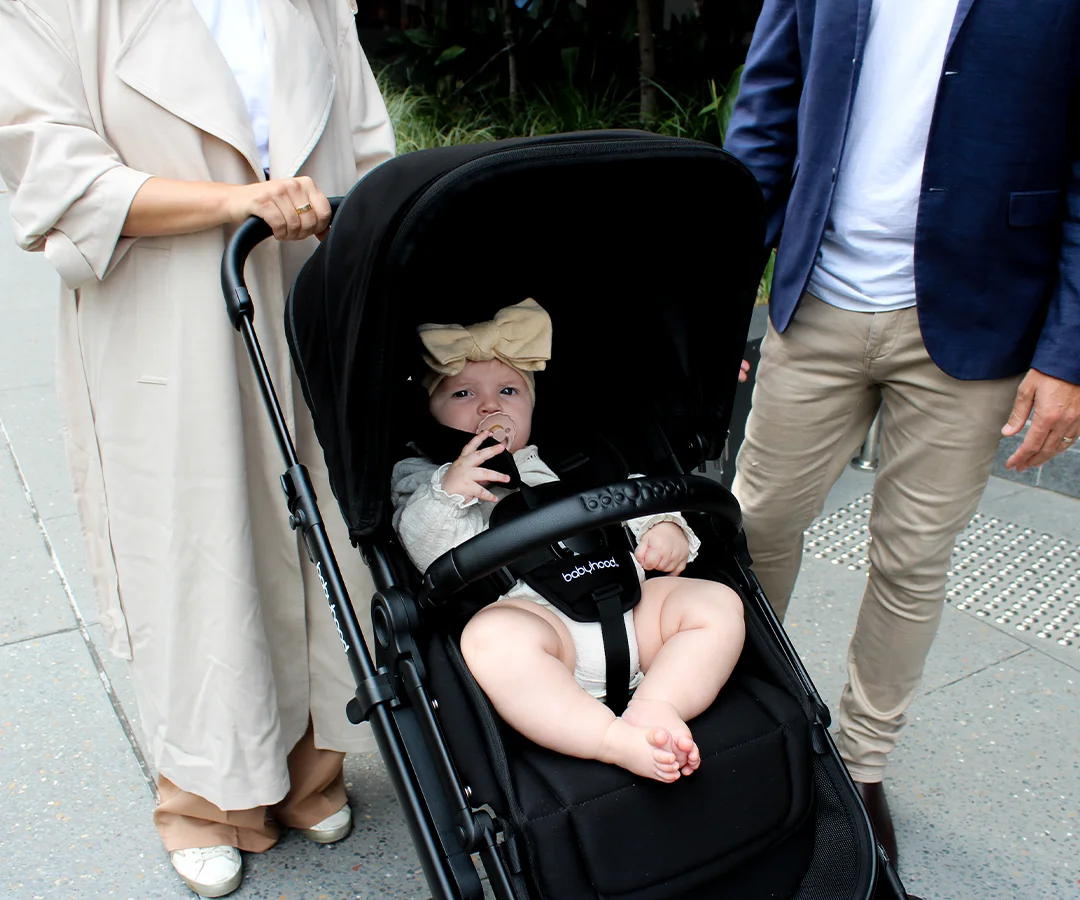
The Doppio Plus does not force you into a bassinet on day one. Babyhood rates the lay-flat seat from birth through to 22 kg, and supplies it with a three-position recline, reversible orientation, an adjustable magnetic five-point harness and a pivoting bumper bar. That is a meaningful point of difference from prams whose toddler seat begins at six months.
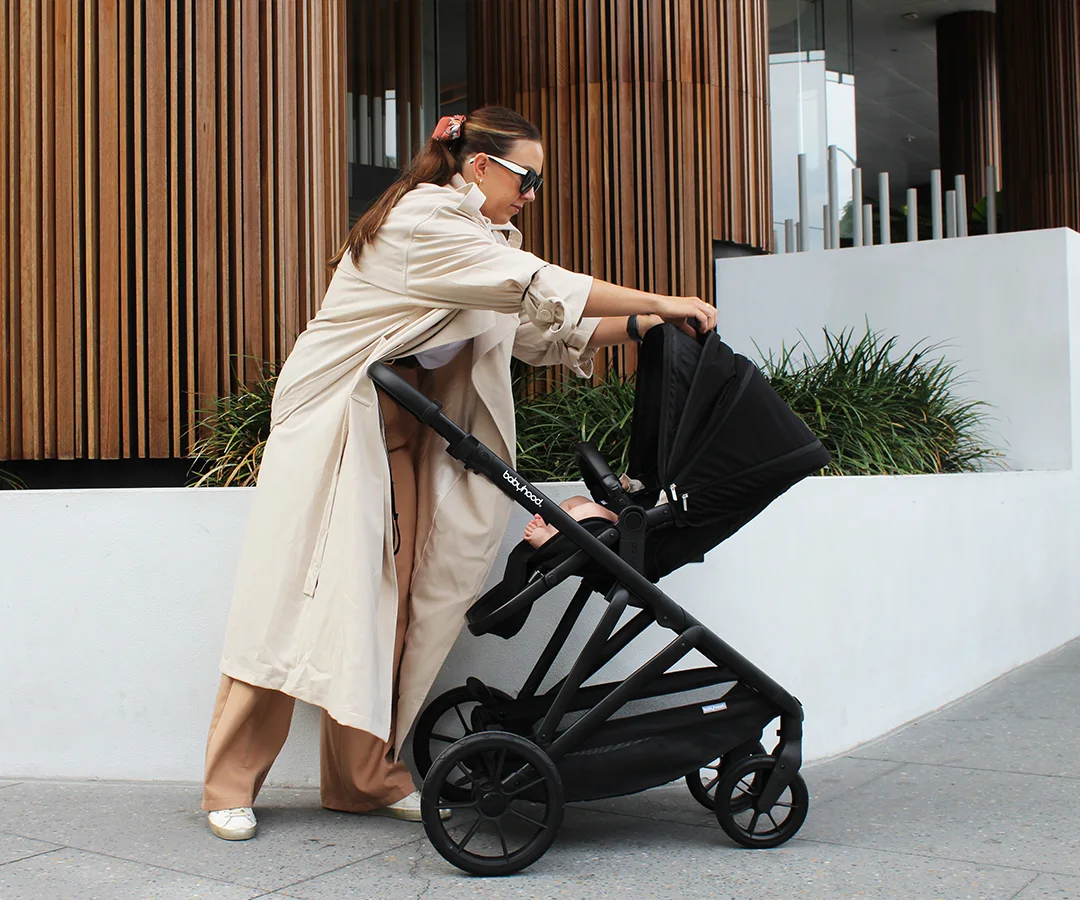
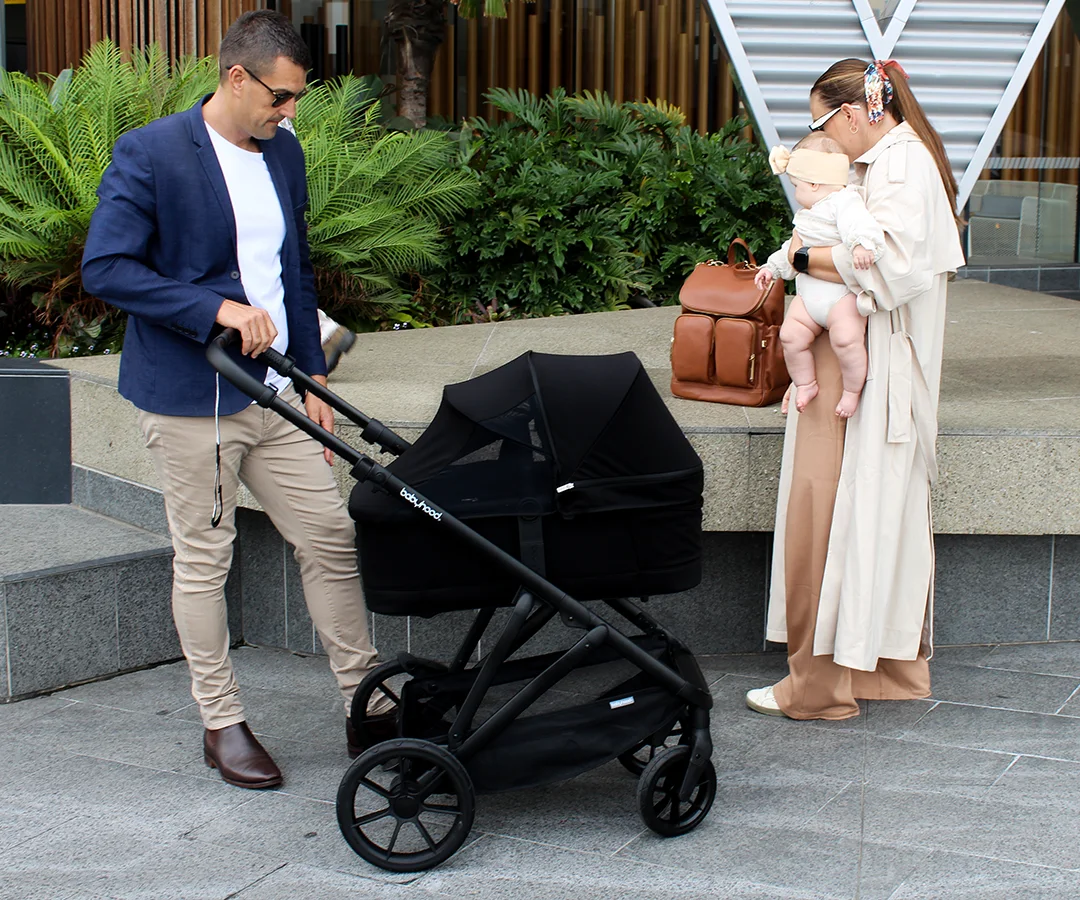
The optional bassinet still has a purpose. It carries a newborn to 9 kg, includes a 34 × 71 × 4 cm breathable mattress, a large hood with a built-in sun drape, a boot cover and its own free-standing feet. Choose it for a more enclosed newborn space, not because the base seat is unusable from birth.
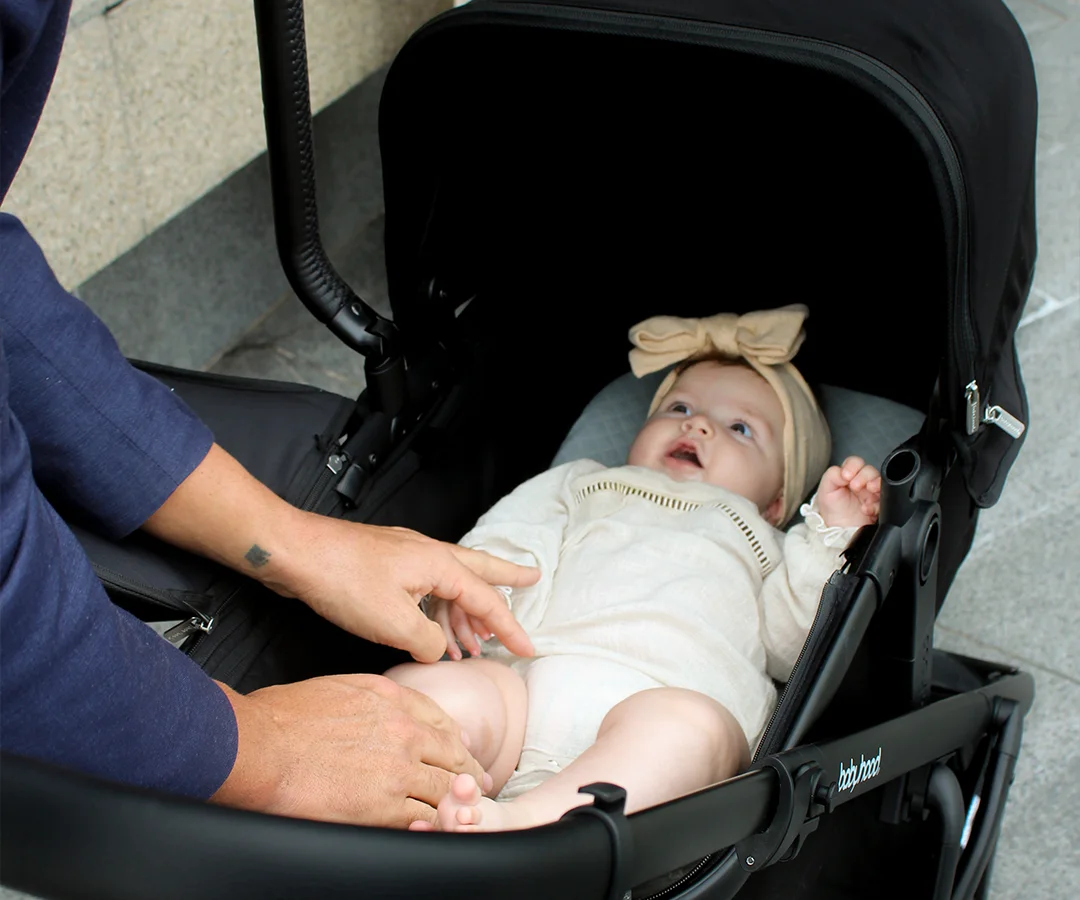
The 18-mode claim is more than brochure theatre
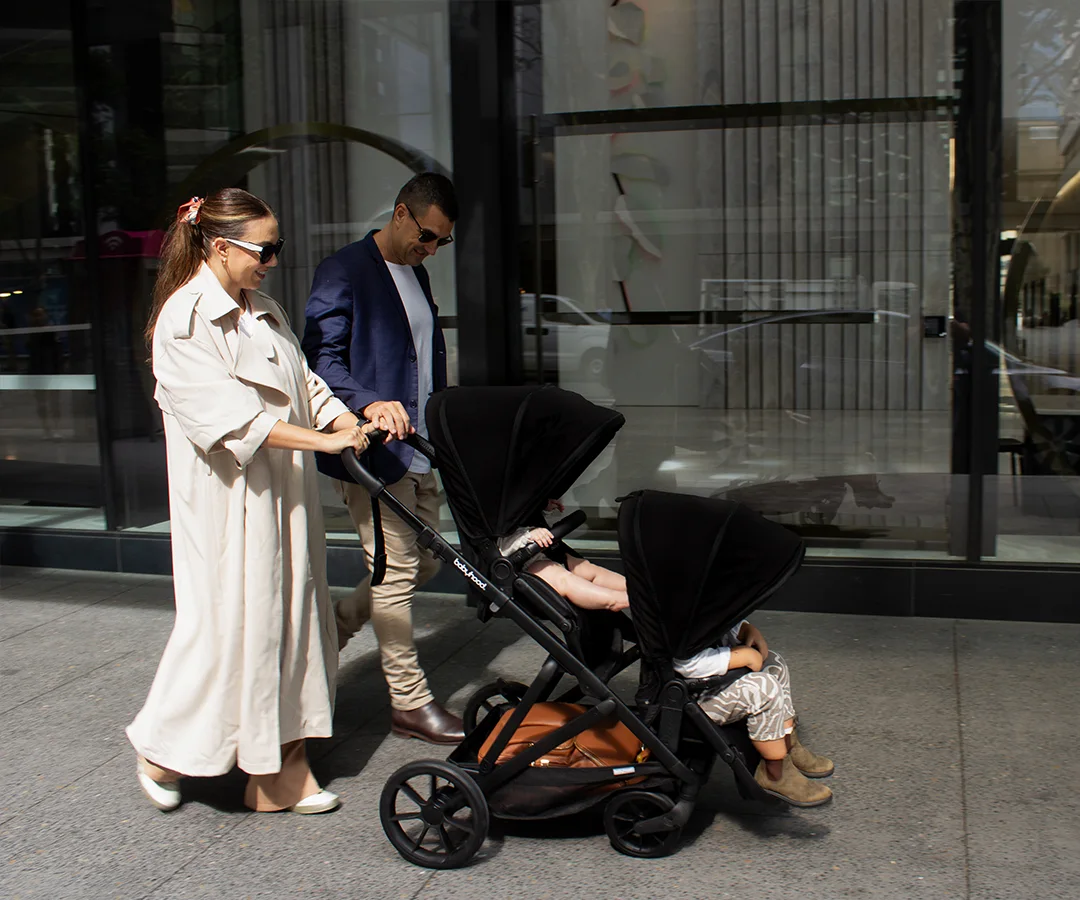
The same chassis can run one seat, a seat and bassinet, two seats, two newborn solutions or a capsule-based travel system. The seats can face the parent or the world, and the frame stays 62 cm wide when converted because the second child sits inline rather than beside the first.
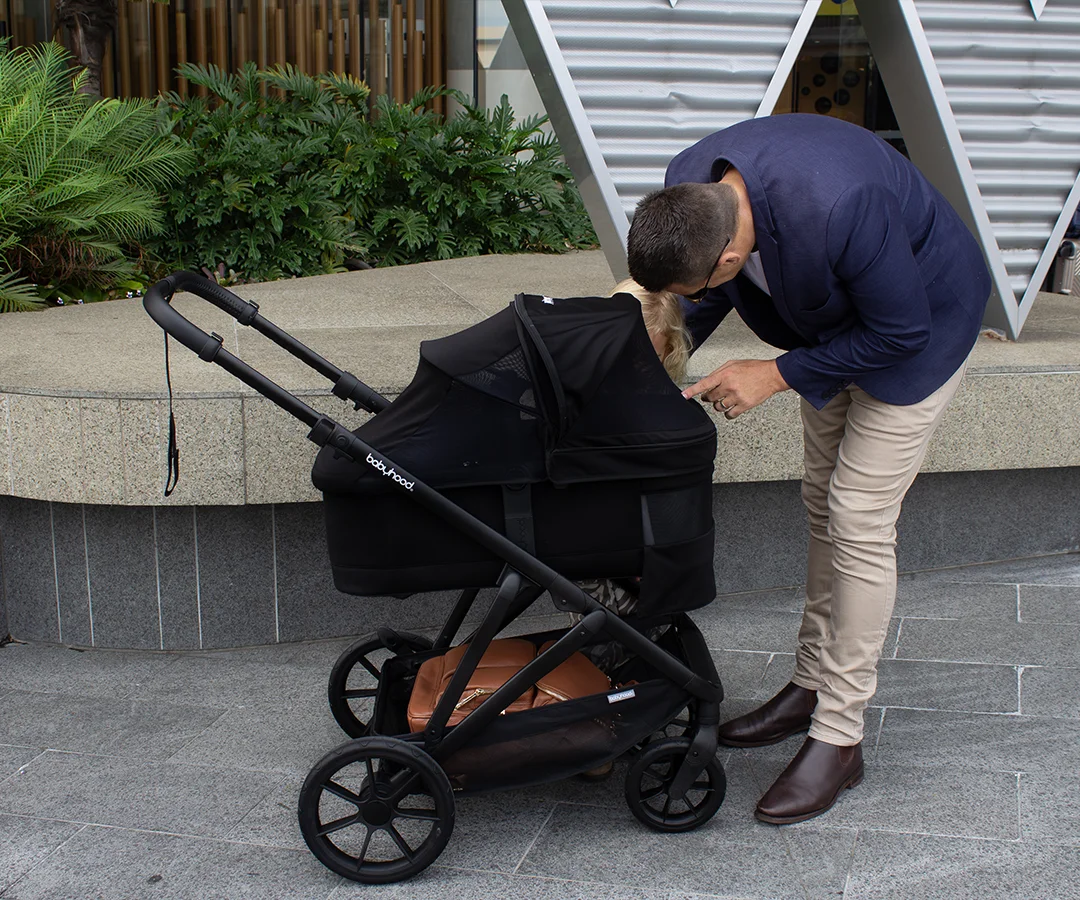
That width matters. The Bugaboo Donkey 6 expands to 74 cm as a double and the UPPAbaby Minu Duo is sold on fitting a 73 cm doorway. The Doppio Plus avoids the width problem, although it replaces it with length: Babyhood publishes 120 cm when the frame is set up for two. In a narrow shop aisle the inline geometry is an advantage. In a small lift, the extra length may simply move the problem.
Travel-system compatibility is broad on paper. Babyhood lists capsule adaptors for Cybex Cloud Q, Bugaboo Turtle, Nuna, Joie, Infasecure and Maxi-Cosi capsules. Compatibility changes across model years, so confirm the exact capsule and adaptor combination before ordering rather than assuming the brand name is enough.
The fold and weight are finally measurable
Babyhood now publishes an 8.7 kg frame including wheels and a 3.5 kg seat. Together that is 12.2 kg in the single-seat configuration before a liner, bag or cup holder. It is not travel-pram light, but it is reasonable for a chassis designed to carry two children later.
The folded frame measures 62 × 75 × 28 cm. Babyhood also publishes 62 × 80 × 51 cm with a single seat attached. Those are useful numbers: the bare frame is quite shallow, while the seat-on fold takes almost twice the height. Measure the boot around the configuration you will actually load, not the smallest number on the page.
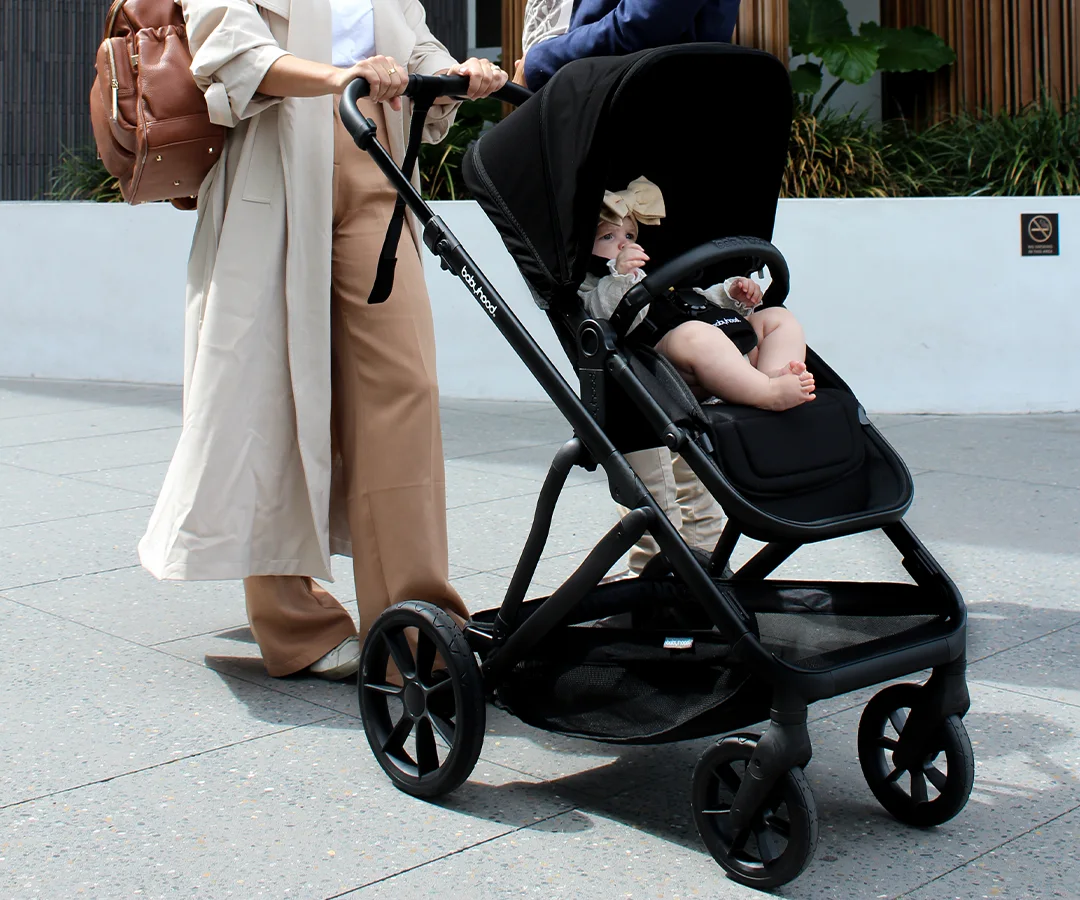
The mechanism uses two triggers rather than a one-hand action, and Babyhood does not describe the fold as free-standing. That is why the Doppio Plus scores 8.0 rather than joining the best folders at 9.0. The measurements are now good enough to plan around; the action is not class-leading.
The running gear is properly described, with one gap
The updated listing specifies four high-density foam-core rubber wheels, metal-encased bearings, independent suspension and front wheels that swivel through 360 degrees or lock straight. The wheels release with one button for cleaning, and braking is handled by a single linked foot brake. A tether strap is attached to the frame.
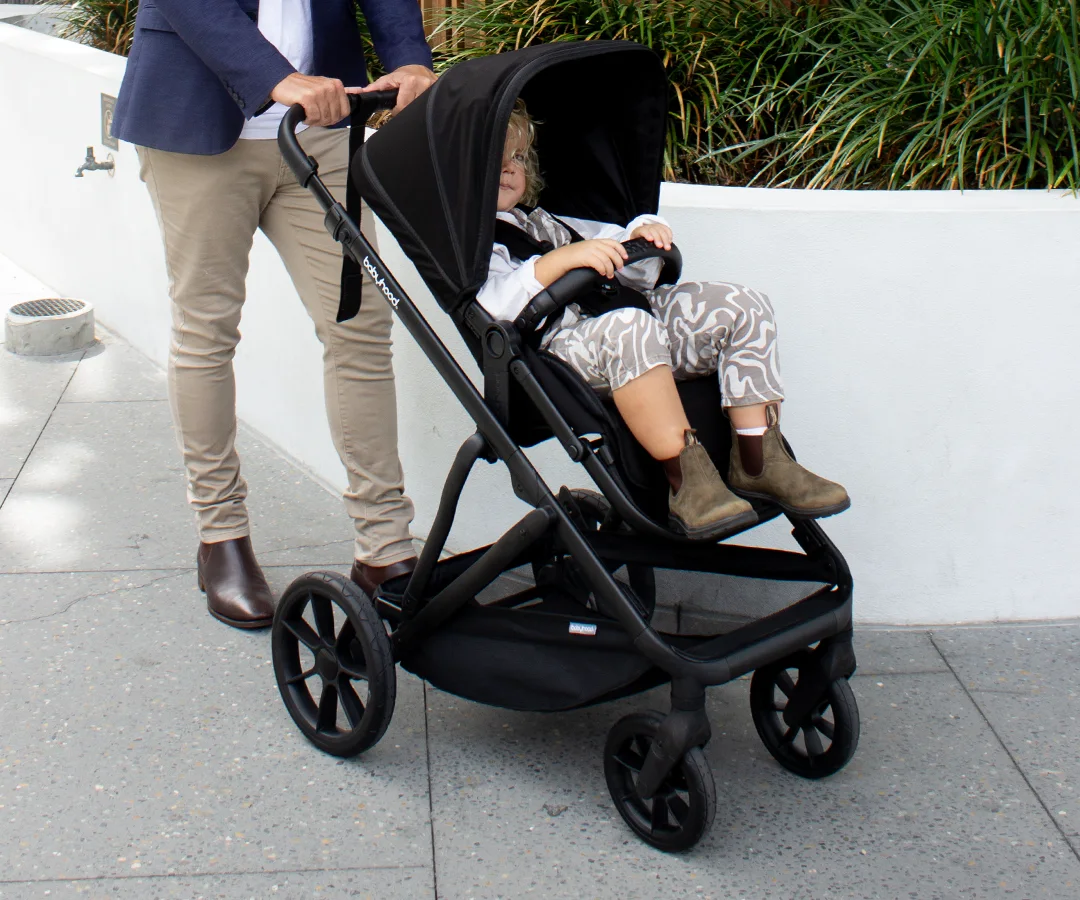
That is a much stronger specification than the previous page gave us. Foam-core tyres cannot puncture and need less maintenance than the air-filled tyres on the Mountain Buggy Duet. Independent suspension is exactly what an inline chassis needs once two children are loading it.
The missing figure is wheel diameter. Large wheels are claimed, but not measured. Without that number—and without hands-on steering under a double load—we score push and wheels at 7.5. This should be a capable urban and park pram. The specification does not justify putting it beside 16-inch running tyres on gravel or broken tracks.
It is designed around Australian weather
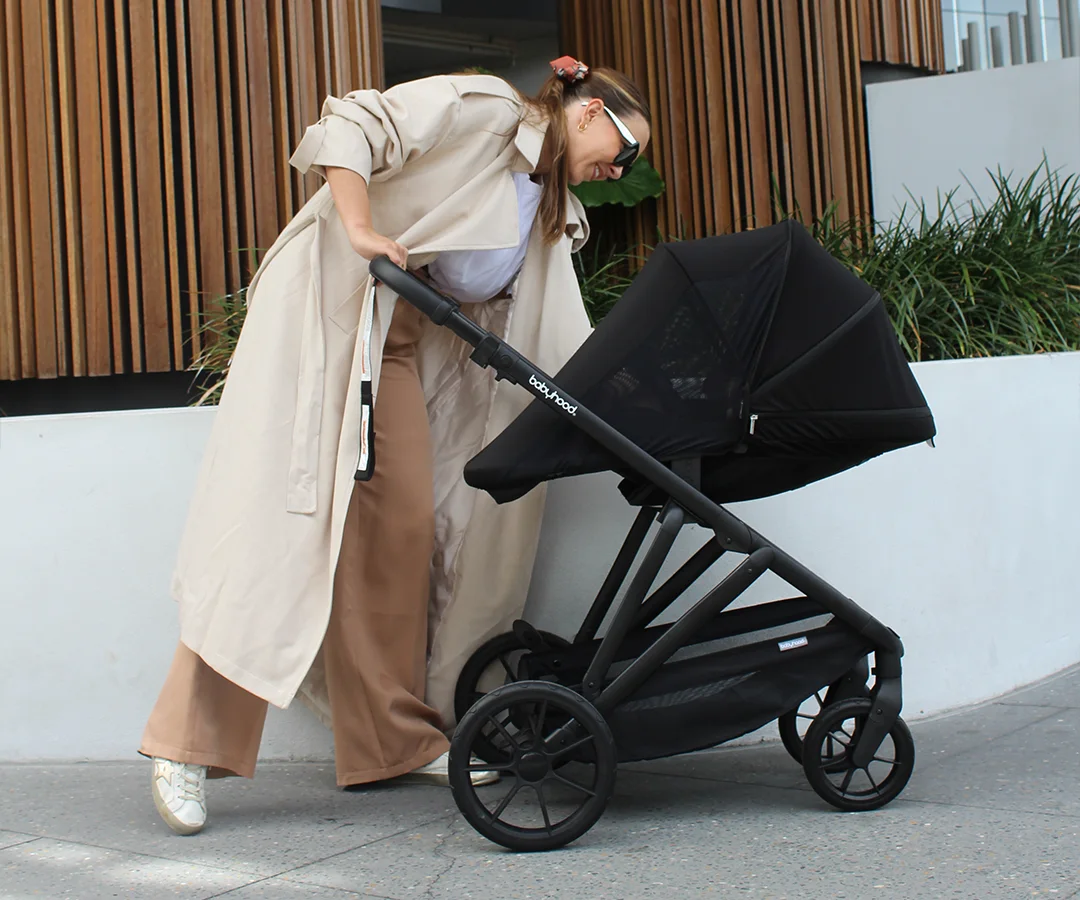
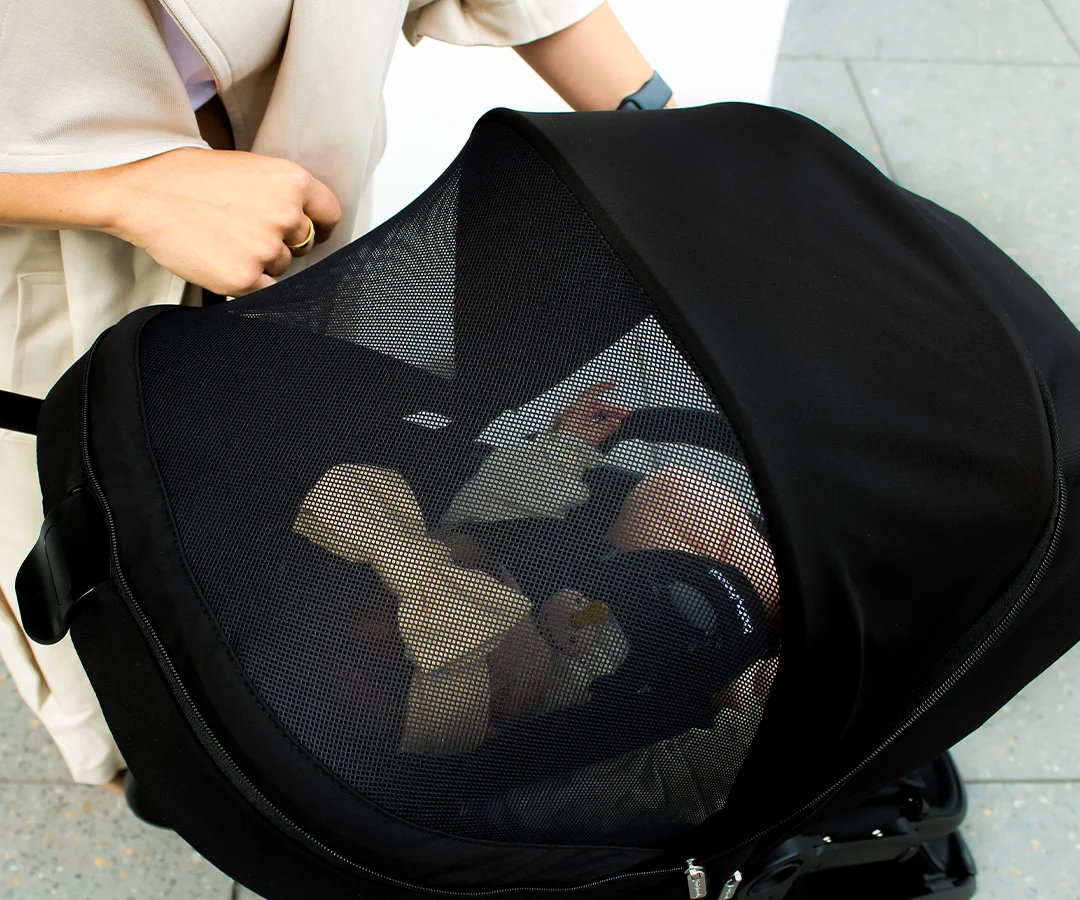
The canopy package is unusually complete. The seat includes an extendable UPF 50+ sun drape, a three-section hood, a peekaboo ventilation panel and a summer/winter seat configuration. Babyhood describes side and rear vents for summer and a padded liner for winter.
These are not glamorous specifications, but they solve Australian problems. Full shade and airflow matter on a February walk in Brisbane, while a removable cold-weather liner is more useful than a permanently heavy seat in a humid climate. The seat covers can be machine washed on a cold gentle cycle and line dried in shade.
Australian support is the strongest part of the ownership case
Babyhood is based in Queensland and publishes a three-year warranty covering manufacturing faults, with Australian contact and parts channels. In our scoring, Australian parts and service is 9.0—the highest mark in the pram field.
That does not mean a claim will automatically be accepted or that wear parts are covered for three years. The listing explicitly excludes normal wear and tear. It does mean the first conversation about a replacement wheel, seat fabric or fold component is local rather than routed through an overseas distributor. On a pram intended to serve two children, that is worth real money.
The case against it
The double price needs a calculator
The single at $1,499 is straightforward: frame and one lay-flat seat. The double packages are not. Babyhood lists the two-seat package and the seat-plus-bassinet package at $1,999, but both product pages state that the single-to-double adaptor is sold separately. The adaptor set costs $129.95.
That makes the working double price $2,128.95. The gap between the single and the actual double is $629.95, not $500. Capsule adaptors are another $99.95, while a cup holder, caddie, parent bag or bassinet stand adds more again.
This is the sharpest criticism in the review because it is avoidable. A product sold as a double should either include the part required to attach the second child or place that omission beside the price in type nobody can miss.
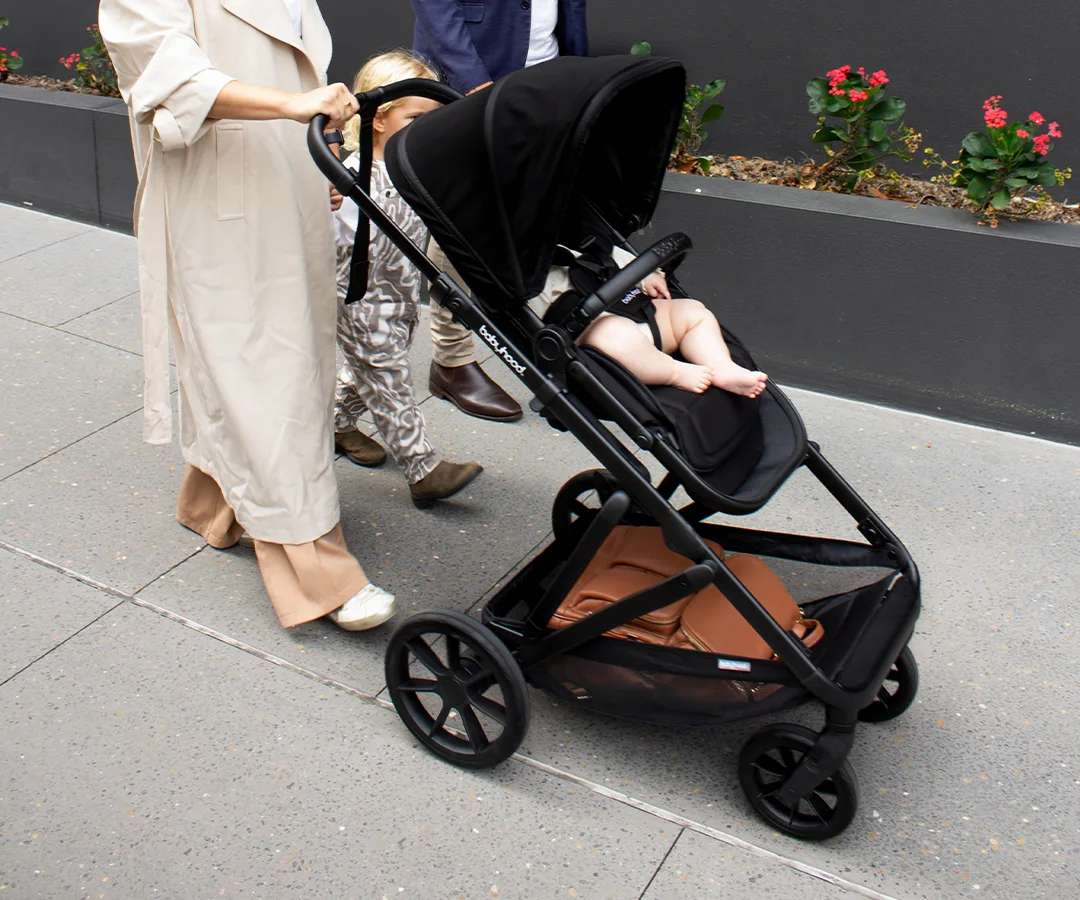
The basket has no published capacity
Babyhood calls the basket large and easy to access, but does not publish a kilogram or litre limit. A convertible pram loses basket access quickly when the lower seat or bassinet is fitted, and a numerical capacity is the only useful way to compare what remains.
Babybee publishes 15 kg for the Juno. UPPAbaby publishes 13.6 kg for the Vista V3. Bugaboo publishes 15 kg for the Donkey 6. The Doppio Plus gives you an adjective. If grocery carrying is central to the purchase, load a floor model in the exact double configuration before committing.
The inline double will be long
At 62 cm wide, the Doppio Plus should be easy through a standard doorway. At 120 cm long in double mode, it asks more space to turn, fit in a lift and clear a café table. The lower child may also have a different view and different access to the basket depending on configuration.
None of those points makes an inline double inherently worse than a side-by-side. They are the trade that buys the narrow width. Configure both seats in a shop, put a realistic load in them and turn through a tight aisle before choosing the geometry.
Build disclosure still trails the premium field
The frame is described as aluminium, but Babyhood does not publish the alloy grade or recycled content. The textiles are described by function—summer mesh, winter liner, washable covers—rather than fibre composition and abrasion testing. Build and materials scores 7.5: respectable, but below the UPPAbaby Vista V3 and Bugaboo Donkey families.
The magnetic harness, leatherette contact points and 22 kg seat rating are useful specifications. They do not turn a generic material description into a premium one.
It still needs a shop-floor test
Specification can tell you the size, claimed function and parts pathway. It cannot tell you how heavy the steering feels with 35 kg of children aboard, whether the two-trigger fold suits your reach, how easily the basket loads behind the lower seat or whether the handlebar flexes on a kerb.
The Doppio Plus has enough published evidence to make a shortlist. It does not have enough hands-on evidence from us to justify buying unseen.
How it compares
Babybee Juno
The Juno is the closest Australian rival. Its one-seat package is currently listed at $1,499.99 and the bassinet-and-seat set at $1,699.99. Babybee publishes more than 48 configurations, a 15 kg basket, four-wheel suspension, a one-hand free-standing fold, aeronautical-grade aluminium and a lifetime warranty. It scores 8.2 against the Doppio Plus at 8.1.
The Babyhood counters with a fully published 12.2 kg single weight, folded dimensions and the higher local service score. The Juno counters with the better fold, a published basket capacity and the longer warranty. If the two sit beside each other at the same one-seat price, the Juno is the slightly stronger specification. The Doppio Plus is the more clearly measured object.
Mountain Buggy Duet V4
The Duet is the better answer when you already know you need two seats. Mountain Buggy lists it at $1,399.99, with a 63 cm side-by-side width, a 14.5 kg complete weight, a 31 × 63 × 89 cm fold, air-filled tyres and 18 kg capacity in each newborn-ready sling seat. Its running gear scores 9.0 and it holds our Best double award.
The Doppio Plus carries 22 kg per seat, starts as a true single, avoids air-tyre maintenance and has stronger Australian parts support. It is also $728.96 dearer once configured as the $1,999 double with the required adaptor. Buy the Duet for two children and rougher ground. Buy the Doppio Plus when you need one child now and do not want a permanent side-by-side.
UPPAbaby Vista V3
The Vista V3 remains our category leader at 9.0. It combines an included bassinet, a one-step self-standing fold, all-wheel suspension, a 13.6 kg basket and a path to three children with accessories. The Doppio Plus beats it on Australian parts and service and publishes a more compact bare-frame fold.
The Vista is the more complete premium single and the higher-scoring pram. The Doppio Plus makes its case if the inline double configuration and local ownership pathway are the two priorities that outrank everything else.
Bugaboo Donkey 6
The Donkey 6 is the premium convertible benchmark: 60 cm wide as a single, 74 cm as a side-by-side double, large measured wheels, a 15 kg basket and a frame using 60% recycled aluminium. It scores 8.7 and converts from one to two children in three clicks.
The Doppio Plus is narrower as a double and cheaper at the single-seat entry point. The Donkey publishes more material and capacity detail, folds free-standing and keeps both children side by side. This is an inline-versus-side-by-side decision first and a badge decision second.
Which Doppio Plus package should you buy?
| Package | Listed price | What still needs checking |
|---|---|---|
| Single seat, Black or Latte | $1,499 | No bassinet included; seat is rated from birth |
| Double with two seats | $1,999 | Required $129.95 adaptor is listed separately |
| Double with seat and bassinet | $1,999 | Required $129.95 adaptor and bassinet stand are separate |
| Single-to-double adaptor set | $129.95 | Includes upper and lower adaptors |
| Capsule adaptor | $99.95 | Confirm exact capsule model compatibility |
For most buyers, the honest starting point is the single seat. It is usable from birth without another purchase and leaves the decision about a bassinet or second child until there is a reason to spend. If you already need two seats on day one, compare the $2,128.95 finished price with a dedicated double rather than comparing the $1,999 card price.
Who should buy it?
- Parents expecting a second child within the useful life of the pram.
- Families who need a 62 cm inline double rather than a wider side-by-side.
- Buyers who value Australian parts access and a local warranty pathway.
- Parents who want a from-birth seat without being forced to buy a bassinet.
- Households that mostly walk footpaths, shopping centres and maintained park paths.
Who should skip it?
- Buyers who want a complete bassinet package at the entry price.
- Anyone who needs a one-hand, self-standing fold for frequent solo car loading.
- Trail walkers who should prioritise measured wheel size and air-filled running gear.
- Parents who already know they need a permanent double and can buy a purpose-built one for less.
- Small-lift households that have measured width but not the 120 cm double length.
Verdict
The updated specification changes the Doppio Plus from an interesting configuration list into a credible shortlist pram. The 8.7 kg frame, 3.5 kg seat, measured fold, foam-core wheels and independent suspension answer the questions that previously held its score down. Add a from-birth 22 kg seat, 18 modes, Australian climate features and the strongest local service score in our field, and 8.1 is justified.
It is not an uncomplicated recommendation. The $1,999 double package still needs a $129.95 adaptor, the basket has no published load, the wheel diameters remain absent and the two-trigger fold is behind the best one-hand systems. The Doppio Plus is our Hot Product of the Month because it is a distinctive Australian convertible with newly publishable evidence—not because it is the highest-scoring pram on the site.
Buy the single if one baby is the reality and a second is a reasonable plan. Buy the double only after adding the adaptor to the price and pushing the exact configuration under load. That is the difference between buying the promise of 18 modes and buying the mode you will actually use.
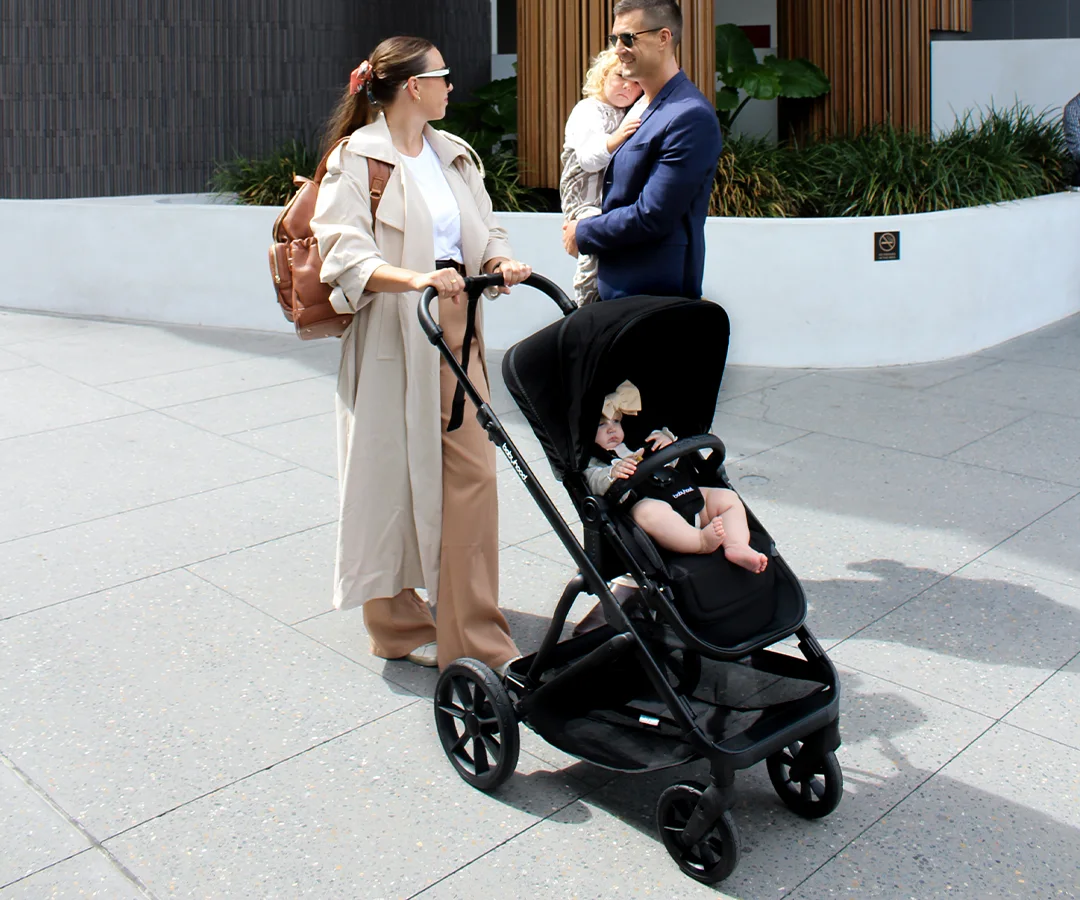
Bench Score: 8.1. Conversion and versatility 8.5, fold and footprint 8.0, push and wheels 7.5, build and materials 7.5, Australian parts and service 9.0.
Assessed on published specification, updated 11 August 2026. Product information and current package pricing: Babyhood Doppio Plus range, single-seat product page and single-to-double adaptor.
Disclosure: Babyhood is an agency client of The Baby Bench’s publisher, Xpand Digital. Scores are calculated from the same published criteria used for every pram. No commercial relationship buys placement, an award or a higher score.
Evidence record
Sources checked
Product specifications, claims and Australian pricing were checked against the following sources for this assessment. Prices and availability can change after publication.