
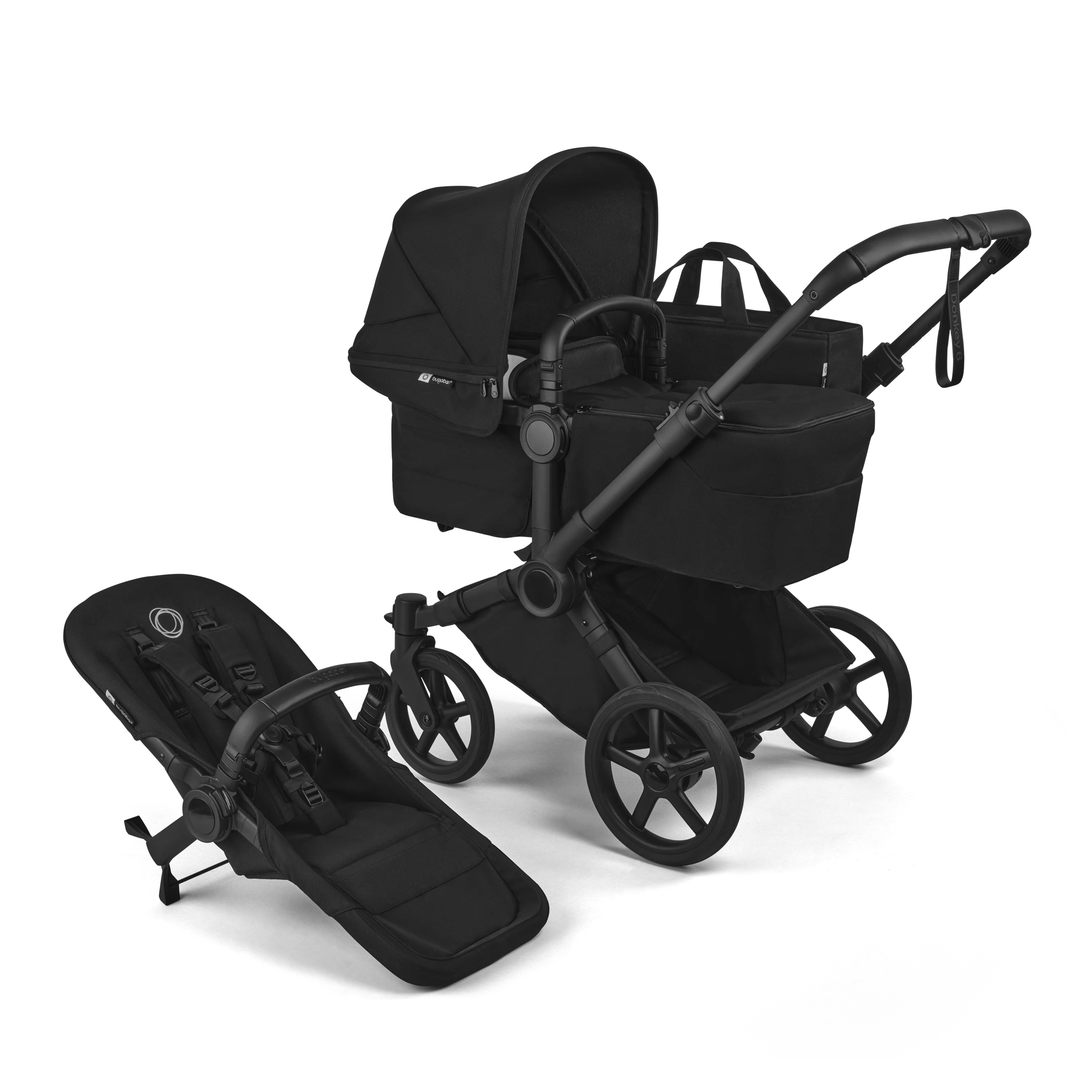
The Donkey is Bugaboo’s answer to the family that does not yet know how many children it will be pushing. It starts as a single and widens into a side-by-side, a change the manufacturer’s figures put at three clicks. Three versions of it are scored in our pram field, and they do not all deserve your money equally. Prices below are as at 30 July 2026, lowest listed Australian retail. Nothing here has been hand-tested. This is an assessment of published specification.
What you are actually buying
The Donkey name covers two generations and several configurations, which is the first thing to get straight before you spend anything.
| Version | Price | Bench Score |
|---|---|---|
| Bugaboo Donkey 6 Single Bassinet and Seat Pram | $1,999 | 8.7 |
| Bugaboo Donkey 5 Pram Complete | $1,399 | 8.3 |
| Bugaboo Donkey 5 Twin Pram | $1,889 | 8.2 |
Beyond those three, the pricing ladder climbs quickly. The Donkey 6 Double sits at $2,499 and the Donkey 6 Twin at $2,749. Bundle a Bugaboo Turtle capsule with a Donkey 5 Mono and you are at $1,979; do the same on the Donkey 5 Twin and the bill reaches $3,119. The gap between the cheapest scored Donkey and the dearest twin travel system is $1,720, which is more than most prams in this field cost outright.
The case for it
Conversion is where the Donkey earns its keep, and the sub-scores say so plainly. The Donkey 6 Single takes 9.5 for conversion and versatility, the joint highest mark in the field alongside the UPPAbaby Vista V3. Bugaboo’s spec sheet lists a Mono-to-Duo change in three clicks, more than 20 configurations once you add a capsule and a wheeled board, and capacity for up to three children. If you are buying at 30 weeks pregnant with a two year old already at home, that flexibility is the whole argument.
The Donkey 6 also fixes the practical complaint you would have with the older car. Its underseat basket carries up to 15 kg against 10 kg on the Donkey 5, and it adds a side bag that doubles as a changing bag and holds another 10 kg. Bugaboo quotes a 60 cm width in single mode, narrow enough for the doorways and supermarket aisles that defeat wider side-by-sides. The frame is 60% recycled aluminium with 100% recycled outer fabrics, organic cotton lining and vegan leather trim, which is why it takes 9.5 for build and materials. Only the Vista V3 matches that mark.
Running gear is strong on paper. Large puncture-proof all-terrain wheels and one-hand steering put the Donkey 6 on 9.0 for push and wheels, and the one-piece fold stands on its own once closed. Every scored Donkey is rated from birth to 22 kg per seat with a bassinet included in the box, so you are not buying a newborn kit separately the way you are with the Thule Urban Glide 3.
Then there is the Donkey 5 Pram Complete at $1,399, which is the quietly sensible buy in the range. It brings bassinet and toddler seat fabrics, the same three-click conversion, all-terrain puncture-proof wheels, a side luggage basket and an XL canopy, and it scores 8.3. You give up 0.4 of a point and $600 against the Donkey 6 Single. Very few upgrades in this category are that easy to decline.
For twins, the Donkey 5 Twin at $1,889 takes the Best for twins award on 8.2. Two bassinets and two reversible seats come in the box, both seats carry 22 kg, and Bugaboo states the side-by-side fits through most standard doorways. No other twin package in this field arrives that complete at that price.
The case against it
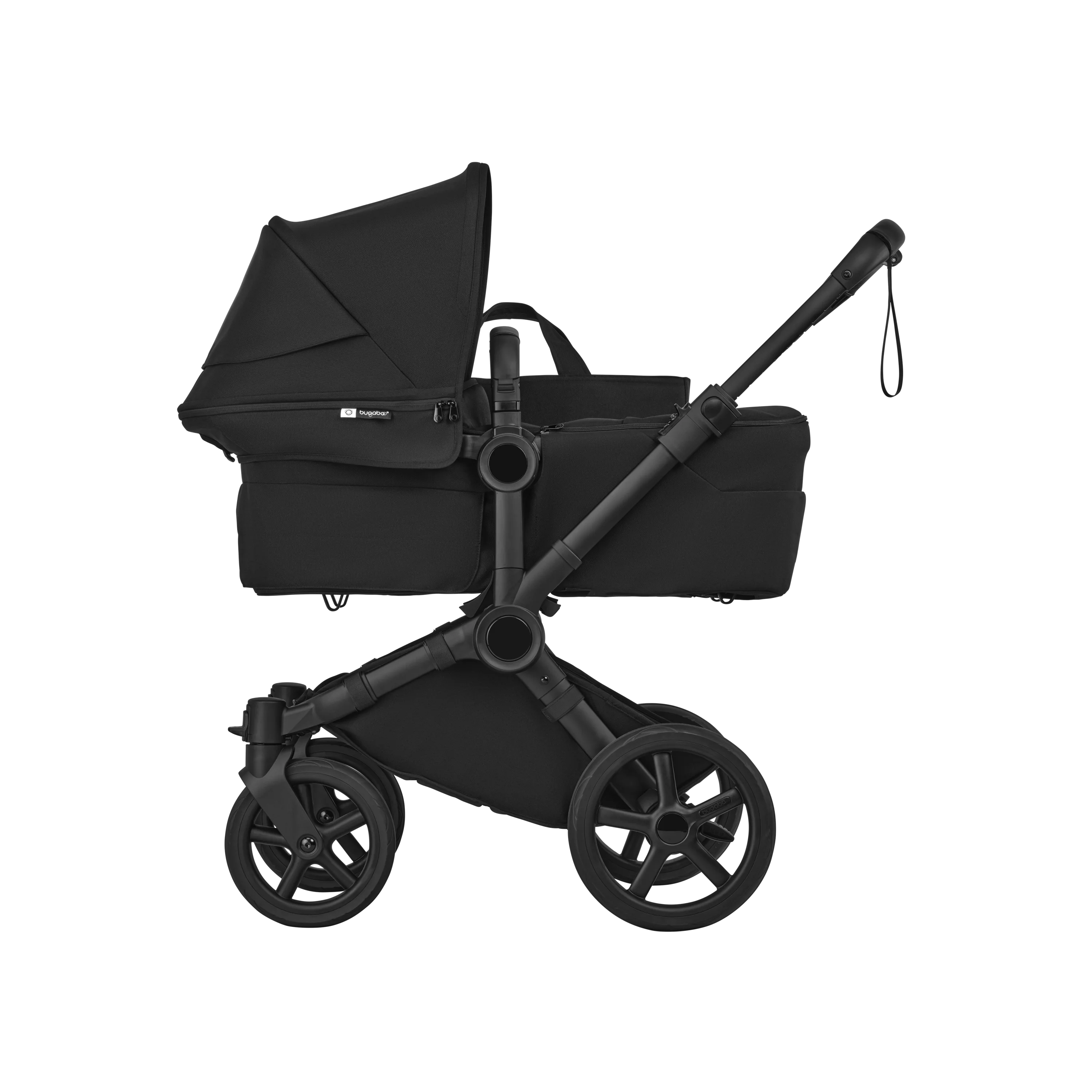
Fold and footprint is the Donkey’s weak point, and it is not close. The Donkey 6 Single scores 7.5 there and the Donkey 5 Twin drops to 7.0, against 9.0 for the Vista V3. A side-by-side chassis that must accommodate a second seat is a large object in a hallway or the boot of a small car, even when it stands on its own after folding. You will notice this every single day, and it will not get better.
Bugaboo does not publish a kerb weight for any Donkey in this data, which matters when the fold is already bulky. You cannot plan a boot lift around a figure nobody will state. Treat any weight quoted by a retailer with suspicion until Bugaboo confirms it.
The Australian ownership case is thinner than the brand cachet suggests. Every Donkey scores 7.5 for AU parts and service. That is below the Mountain Buggy Duet V4 on 8.0 and the Babybee Juno on 8.5. Locally supported brands earn 9.0. On a pram you intend to keep for four years and two children, spare fabrics and replacement wheels are a live concern.
Price is the last problem. The Donkey 6 Single asks $1,999 and finishes 0.3 behind a pram that costs $500 less. Note also that the three-click Mono-to-Duo conversion requires additional components you buy separately, so the second seat is not included in the single-pram price. Budget for it before you decide the Donkey is the cheaper long-term option.
How it compares
UPPAbaby Vista V3 Pram + Bassinet, $1,499. This is the pram that beats the Donkey, and it is fairer to say so than to dress up second place. The Vista V3 takes 9.0 overall and the Best overall award in our best prams roundup, with 9.5 for conversion and versatility, 9.5 for build and materials, and 9.0 for fold and footprint against the Donkey 6’s 7.5. It includes the bassinet, folds in one step and stands, runs all-wheel suspension, and carries a 13.6 kg basket. It also grows to three children with the RumbleSeat and PiggyBack accessories. At $500 less than the Donkey 6 Single, the burden of proof sits with Bugaboo.
Mountain Buggy Duet V4 Double Pram, $1,259. If a side-by-side double is what you actually need, the Duet V4 takes the Best double award on 8.2, matching the Donkey 5 Twin’s overall score for $630 less. It runs the same wheelbase width as a single Mountain Buggy buggy, uses air-filled tyres and a 6060 T52 aircraft-grade aluminium frame, and scores 9.0 for push and wheels against the Donkey 5 Twin’s 8.5. Where the Donkey wins is birth readiness for two, since the Twin includes two bassinets outright.
Babybee Juno, from $1,699.99. Also on 8.2, and the closest thing here to the Donkey’s configuration argument from an Australian company. The spec sheet lists 48-plus configurations across bassinet, seat, capsule and toddler board, a 15 kg basket, a one-hand free-standing fold and a lifetime warranty. It scores 8.5 for AU parts and service against the Donkey’s 7.5. It gives ground on running gear at 7.5 for push and wheels, because wheel and suspension detail is thin on the published spec.
Where Babyhood sits. The Babyhood Doppio Plus Single is $1,499 and scores 8.1. It offers 18 modes, a from-birth 22 kg seat, a measured 12.2 kg single configuration, foam-core wheels, independent suspension and a 9.0 for AU parts and service. The Donkeys still lead on build and running gear, while the Doppio stays 62 cm wide as an inline double and costs less to enter. Its $1,999 double bundles need a $129.95 adaptor, so compare finished configurations rather than headline prices.
Verdict
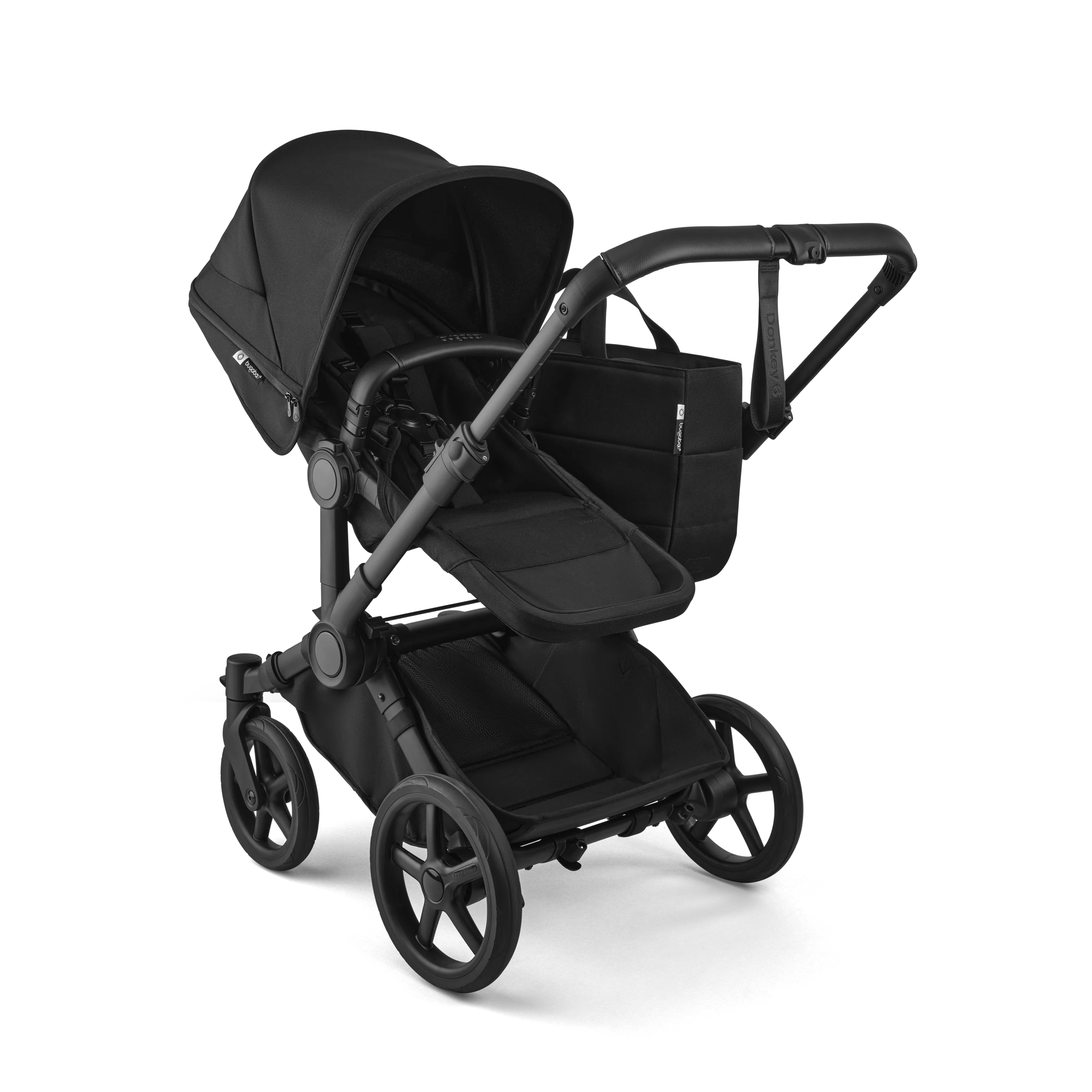
The Donkey is a genuinely clever piece of engineering sold at a price that assumes you will not check the alternatives. Buy the Donkey 5 Pram Complete at $1,399 and the maths works, because you get the three-click conversion, the all-terrain wheels, a side luggage basket and a bassinet for less than the pram that outscores it. Buy the Donkey 6 Single at $1,999 and you are paying $500 over the Vista V3 for a bigger basket, a side bag, a 60 cm single-mode width and a recycled frame, while accepting a worse fold. Buy the Donkey 5 Twin at $1,889 and you are making the strongest case of the three, because a from-birth twin package this complete has no direct rival here.
Bench Score: Bugaboo Donkey 6 Single Bassinet and Seat Pram 8.7 out of 10 (conversion and versatility 9.5, fold and footprint 7.5, push and wheels 9.0, build and materials 9.5, AU parts and service 7.5). Award: Best convertible.
Bench Score: Bugaboo Donkey 5 Pram Complete 8.3 out of 10 (conversion and versatility 9.0, fold and footprint 7.5, push and wheels 8.5, build and materials 8.5, AU parts and service 7.5).
Bench Score: Bugaboo Donkey 5 Twin Pram 8.2 out of 10 (conversion and versatility 9.0, fold and footprint 7.0, push and wheels 8.5, build and materials 8.5, AU parts and service 7.5). Award: Best for twins.
Assessed on specification, 30 July 2026. Prices as at 30 July 2026, lowest listed Australian retail.
Disclosure: Babyhood, and its distributed brand Kaylula, is a client of The Baby Bench’s owner, Xpand Digital. Scores and awards are assigned on published specification and are not influenced by that relationship.
Evidence record
Sources checked
Product specifications, claims and Australian pricing were checked against the following sources for this assessment. Prices and availability can change after publication.