
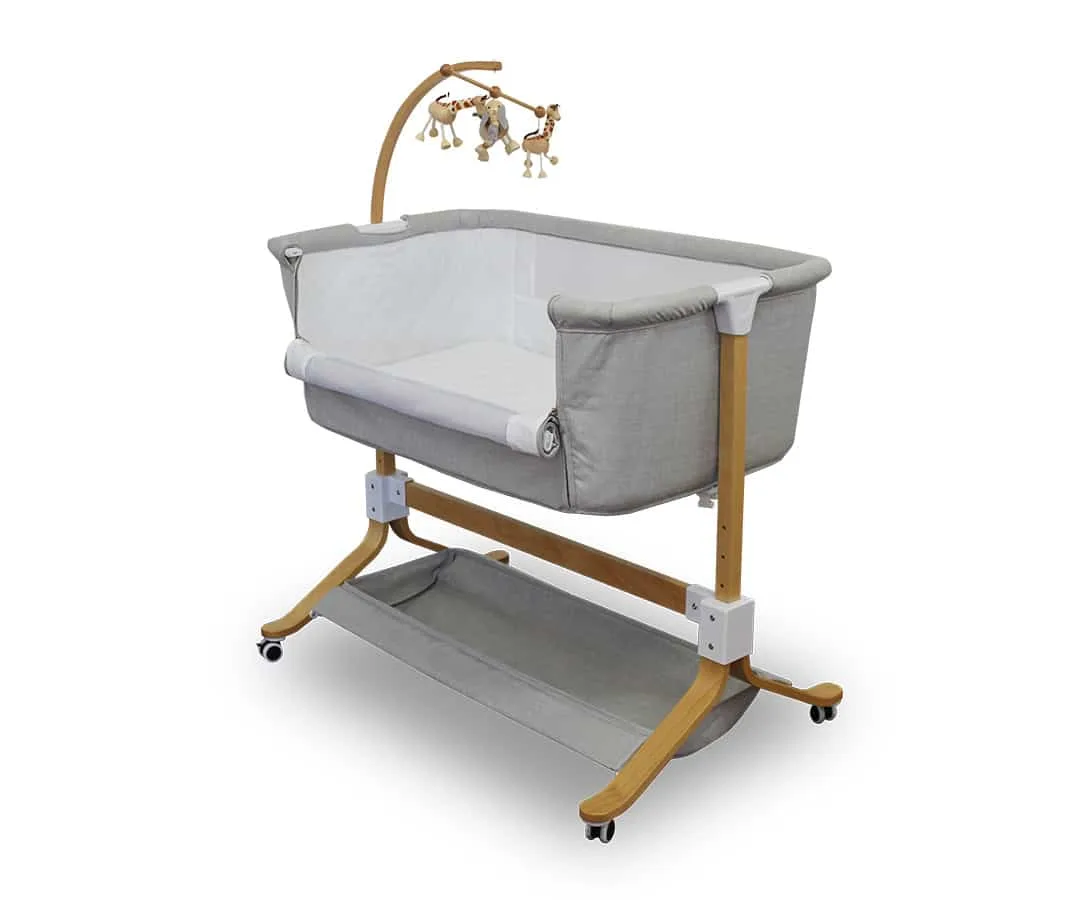
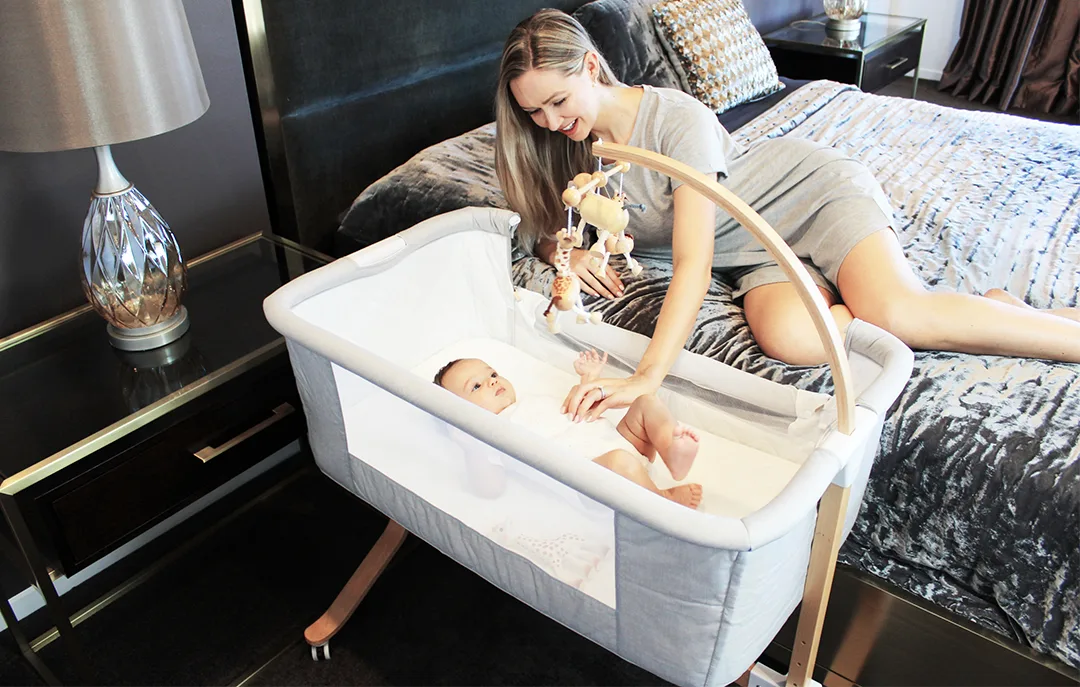
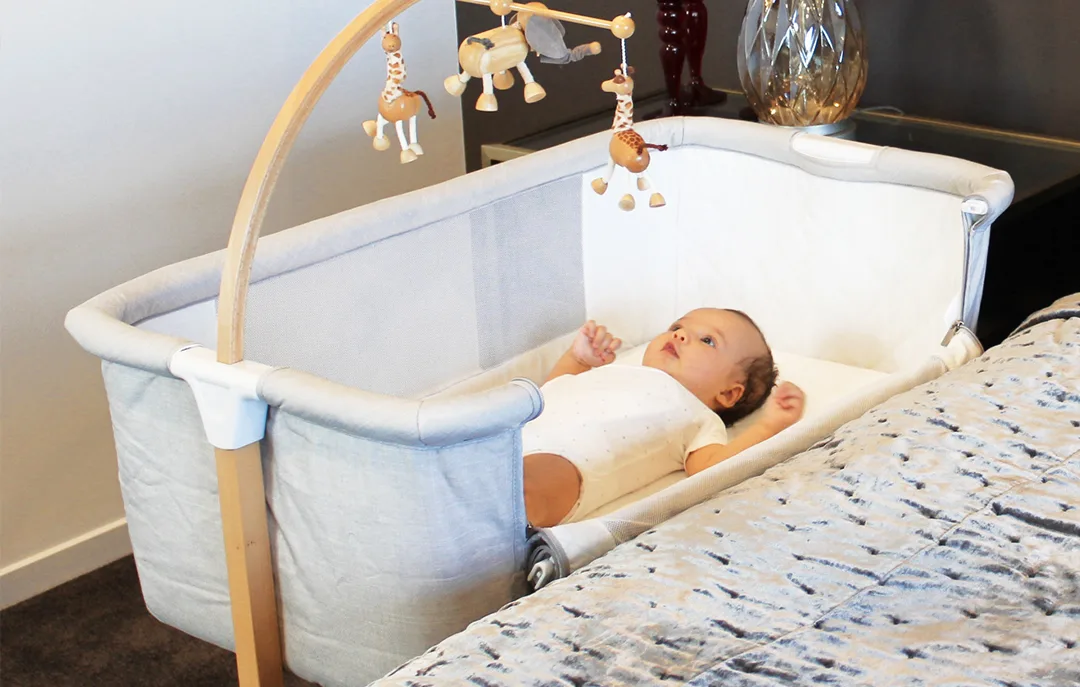
The Kaylula Co Sleeper Cradle is a bedside bassinet built around a firm adjustable side rather than a completely open edge. The zip side can sit up or down for access, Babyhood tells parents to raise it when they go to sleep, and a bed strap secures the timber-and-metal frame to the adult bed. Four mattress-height positions, lockable wheels and open mesh panels make it useful beyond the bedside.
At $449 it competes with newer bassinets that publish explicit compliance with Australia’s 2024 infant-sleep standards. Babyhood cites EN 1130-1 and EN 1130-2, which is relevant evidence, but the product page does not state the 2024 Australian standards by name. That certification story is the reason it scores 7.5 rather than leading our field.
Bench Score: 7.5 out of 10. We assessed the current published specification. We have not assembled the cradle, attached it to a bed or physically tested barrier strength.
Disclosure: Babyhood and Kaylula are agency clients of this publication’s owner, Xpand Digital. The product ranks eighth in our bassinet assessment; the commercial relationship does not move it upward.
The short answer
Buy it if you want a substantial bedside cradle that can wheel around the home, need one of four mattress heights and prefer a side that remains a physical barrier even when lowered. The 88 cm-long mattress offers more growing room than many compact bassinets.
Skip it if you want the clearest current Australian certification statement, a quick travel fold or the lowest price. The BabyRest Alfie2 costs less in our checked field and explicitly cites the 2024 Australian standards.
Bench Score
| Criterion | Score |
|---|---|
| Sleep-safety design | 8.0 |
| Breathability and airflow | 8.0 |
| Portability | 7.0 |
| Build | 7.0 |
| Value | 7.0 |
| Overall Bench Score | 7.5 |
Key specifications
| Specification | Kaylula Co Sleeper Cradle |
|---|---|
| Price checked | $449 sale; $499 listed regular price |
| Assembled size | 58 × 96 cm; 70–85 cm high with castors |
| Mattress | 480 × 880 × 40 mm Breathe Eze mattress included |
| Mattress heights with castors | 44, 49, 54 and 59 cm |
| Mattress heights without castors | 39, 44, 49 and 54 cm |
| Use limit | Newborn to the earlier of 9 kg or sitting upright |
| Sides | Mesh with zipped adjustable barrier |
| Mobility | Lockable wheels |
| Storage | 2 kg basket |
| Bed attachment | Safety strap included |
| Standard cited | EN 1130-1 and EN 1130-2 |
The case for it
The side is designed as a barrier, not an invitation to bed-share
The Kaylula’s side lowers for reach but remains structured. Babyhood recommends raising it once the baby is asleep and the adult is going to bed. That is the right framing: a co-sleeper should keep the infant on a separate, firm and flat sleep surface rather than turn the adult mattress into part of the bassinet.
The current ACCC standard requires infant sleep surfaces to be firm, flat and no more than seven degrees from horizontal, prohibits restraints in the sleep space and sets requirements for breathable side materials. The Kaylula page visibly publishes the flat-sleep warnings and its 9 kg/developmental limit.
Four heights cover a useful range
With castors, the mattress can sit at 44, 49, 54 or 59 cm from the floor; without them, each position drops 5 cm. That range is more useful than a vague “height adjustable” claim and lets buyers compare the cradle against their actual bed before ordering.
The secure strap and leg adjustment matter together. A side sleeper should sit flush, stable and configured exactly as its instructions show. Thick mattress toppers, unusual bed frames and ensemble bases may alter fit, so measure from the floor to the top of the adult mattress and compare the attachment path as well as the height.
It works as a mobile bassinet
Lockable wheels allow the cradle to move between bedroom and living area. The 2 kg basket holds a small set of nappies and cloths, and the included mattress and washable fabrics reduce the add-on list. An optional rocking-leg kit changes the motion but is not required for the bedside function.
The case against it
The standards language has not caught up with 2026
EN 1130 testing is useful. The omission is a direct statement about Australia’s mandatory Consumer Goods (Infant Sleep Products) Safety Standard 2024 and Information Standard 2024, fully in force from 19 January 2026. The product may comply—the legal supply obligation applies—but the listing should say so clearly and identify the evidence. Buyers should ask Babyhood for the current compliance declaration before purchase.
It is furniture, not compact travel equipment
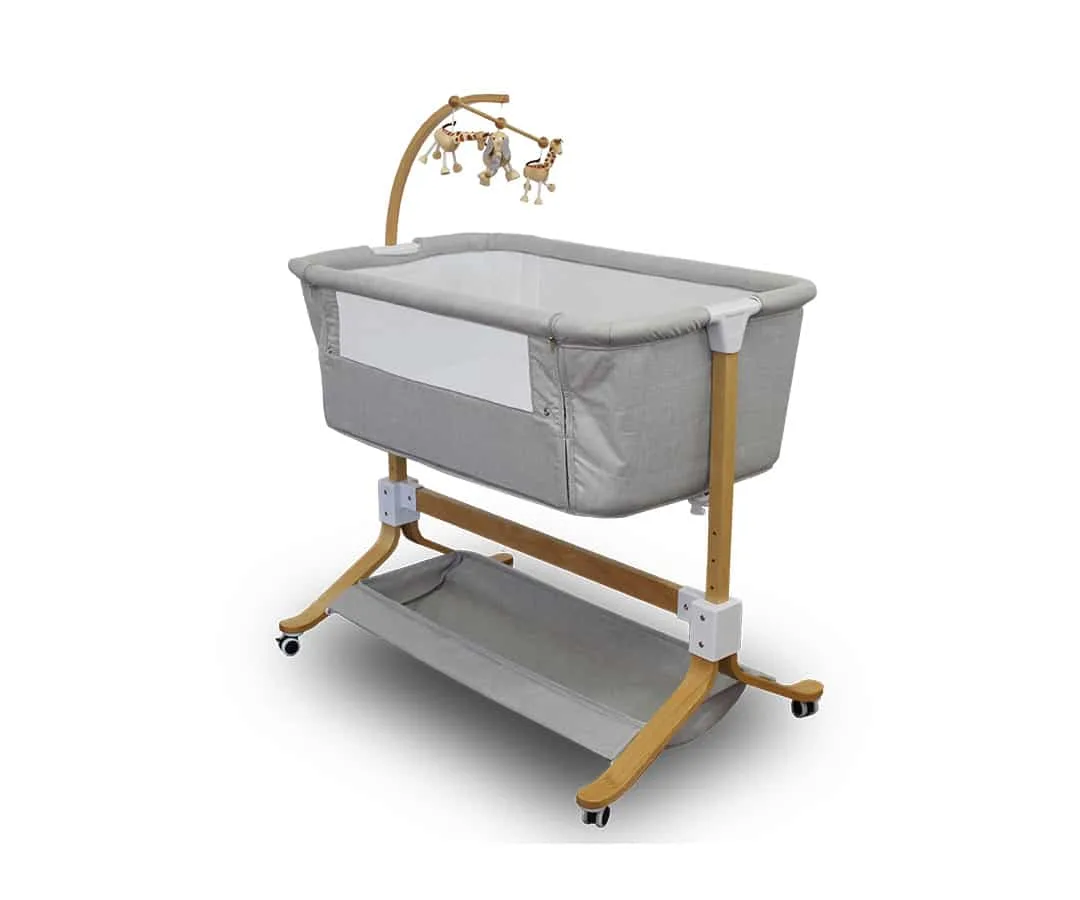
The assembled timber frame is 96 cm long, and no folded travel size or packed product weight is published. Wheels make room-to-room movement easier; they do not make the cradle an airline or boot-friendly bassinet. The Rocking Travel Bassinet is the more appropriate model for frequent packing.
Toys do not belong in the sleep setup
The removable toy bar is included, and Babyhood tells parents to remove it during settling and sleep. Follow that instruction. The safest infant sleep environment is deliberately empty: baby on their back, firm flat mattress, no loose objects or accessories.
How it compares
The BabyRest Alfie2 is our current category winner because it explicitly names the 2024 Australian safety and information standards, includes a firm mattress and costs less. The SnuzPod 5 presents a more refined imported bedside system at a similar price. Babyhood’s Co Sleeper Cradle Air is cheaper but uses a lighter fabric-frame construction.
The Kaylula remains distinctive for its timber frame, four measured heights and barrier design. Those features make a shortlist; they do not erase the need for current compliance documentation.
Who should buy it?
- Parents wanting a substantial timber-framed bedside cradle.
- Beds that match one of the four published mattress heights.
- Families who will wheel the bassinet between rooms.
- Buyers who value local Babyhood parts and support.
Who should skip it?
- Frequent travellers needing a compact packed form.
- Buyers who want explicit current Australian-standard wording online.
- Very small bedrooms.
- Families unlikely to use the bedside barrier or wheels.
Verdict
The Kaylula Co Sleeper Cradle solves the bedside-access problem thoughtfully. Its side remains a barrier, four mattress heights are actually published, the mattress is included and the mesh opens visibility. The frame feels like nursery furniture rather than a temporary fabric basket.
The evidence gap matters. In August 2026, an infant-sleep listing should name the 2024 Australian mandatory standards, not leave buyers to infer compliance from an older European reference. Ask for that documentation. If it checks out and the bed geometry fits, the Kaylula is a strong, locally supported bedside option; if not, the Alfie2 is the easier recommendation.
Bench Score: 7.5. Assessed on published specification, 11 August 2026. Sources: Kaylula Co Sleeper Cradle, ACCC infant sleep products standards and Red Nose safe-sleep guidance.
Disclosure: Babyhood and Kaylula are agency clients of The Baby Bench’s publisher, Xpand Digital. Client status does not buy a score, placement or recommendation.
Evidence record
Sources checked
Product specifications, claims and Australian pricing were checked against the following sources for this assessment. Prices and availability can change after publication.