
The Joolz Aer2 Stroller with Aer2 Bassinet is listed at $1,058, the lowest listed Australian retail as at 30 July 2026. The stroller weighs 6.5 kg and the bassinet another 4 kg. The folded package measures 44 x 53 x 23.5 cm. In our assessment of the Australian pram field it took the Best for travel award on a Bench Score of 7.7, with the highest fold and footprint sub-score of any pram we have scored.
That is the whole argument for this pram, and it is a narrow one. Buy the Aer2 if the pram spends real time in overhead lockers, or in the hallway of a flat where a Vista would not close the door. Buy something else if it will spend its life on gravel and kerbs. Nothing here has been pushed or weighed by us. Every figure below is the manufacturer’s or the retailer’s.
The case for it
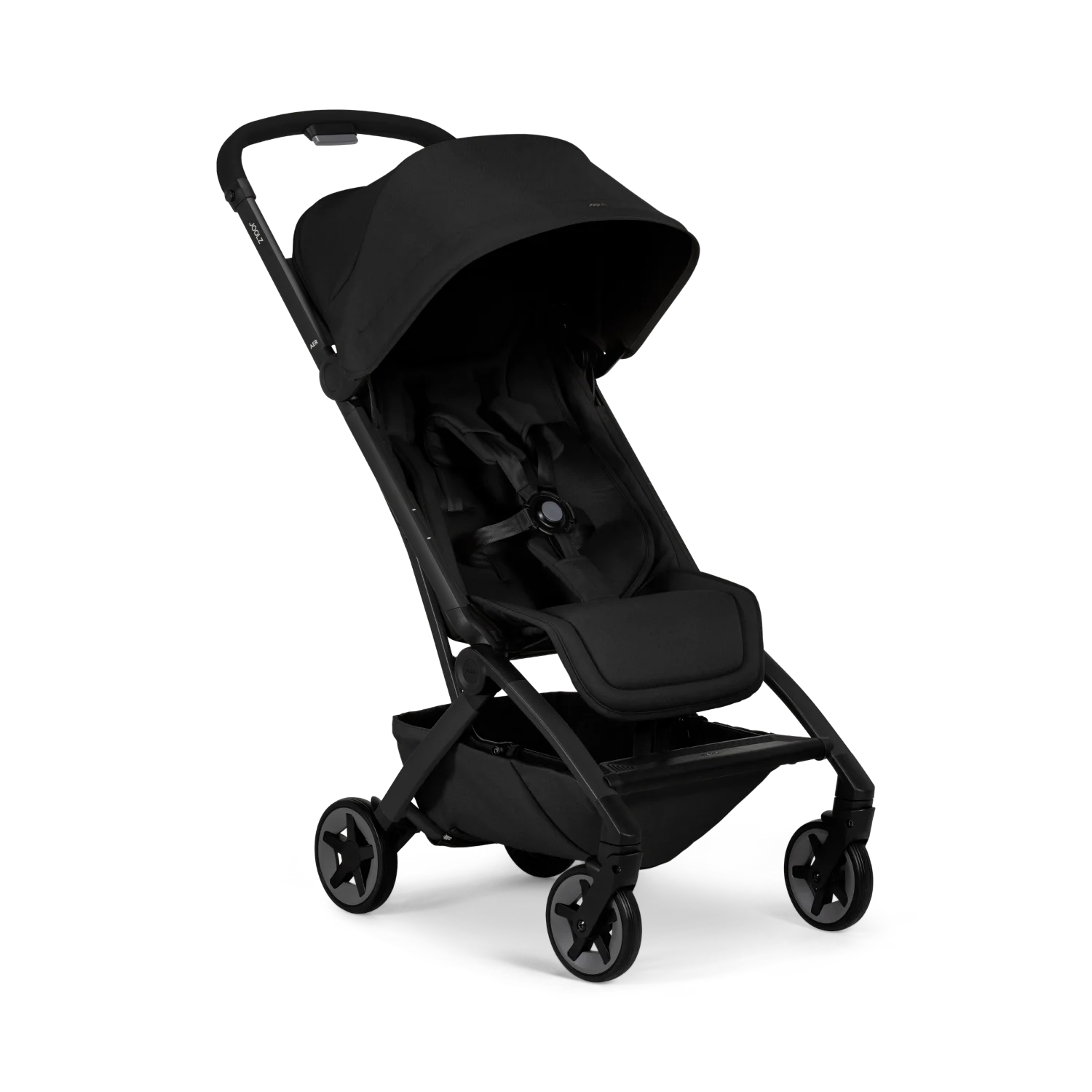
The fold is the product. Joolz publishes 44 x 53 x 23.5 cm and calls the folded package IATA compliant, with its own caveat to check your airline before you travel. Run the arithmetic against the Bugaboo Dragonfly, the only other compact in this field with published folded dimensions at 36 x 52 x 90 cm, and the Bugaboo is a little over three times the folded volume. The Aer2 stands up on its own when folded and comes with a shoulder strap and a travel bag, which matters more than it sounds when you are carrying a pram and a baby up a flight of stairs at the same time.
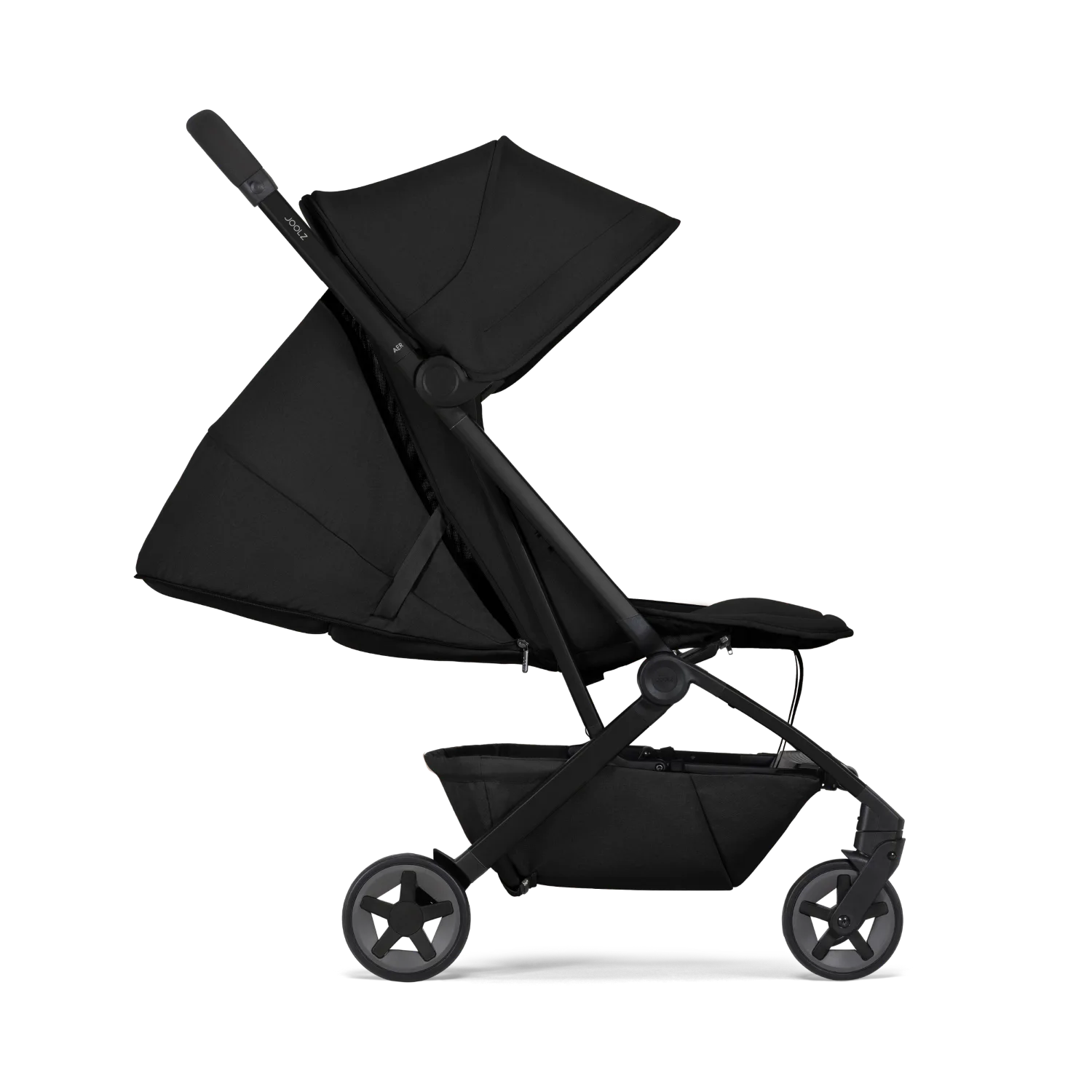
At 6.5 kg the stroller is the lightest published weight in the field, 3.4 kg under the Dragonfly’s 9.9 kg. The Cybex Coya runs it close at 6.6 kg. Where the Joolz separates itself is that the newborn kit is in the box at $1,058: the Aer2 Bassinet is a published 4 kg with its own fold, rated from newborn to toddler. Most compacts in this category sell you the frame and seat and invoice the newborn solution afterwards.
The controls are all specified for one hand. One-hand pull harness, one-hand steering, one-hand deep recline, one-hand leg rest adjustment. On paper that is the most consistently single-handed control set in the compact class, and it is the difference between folding at the airport gate with a sleeping baby on your hip and not.
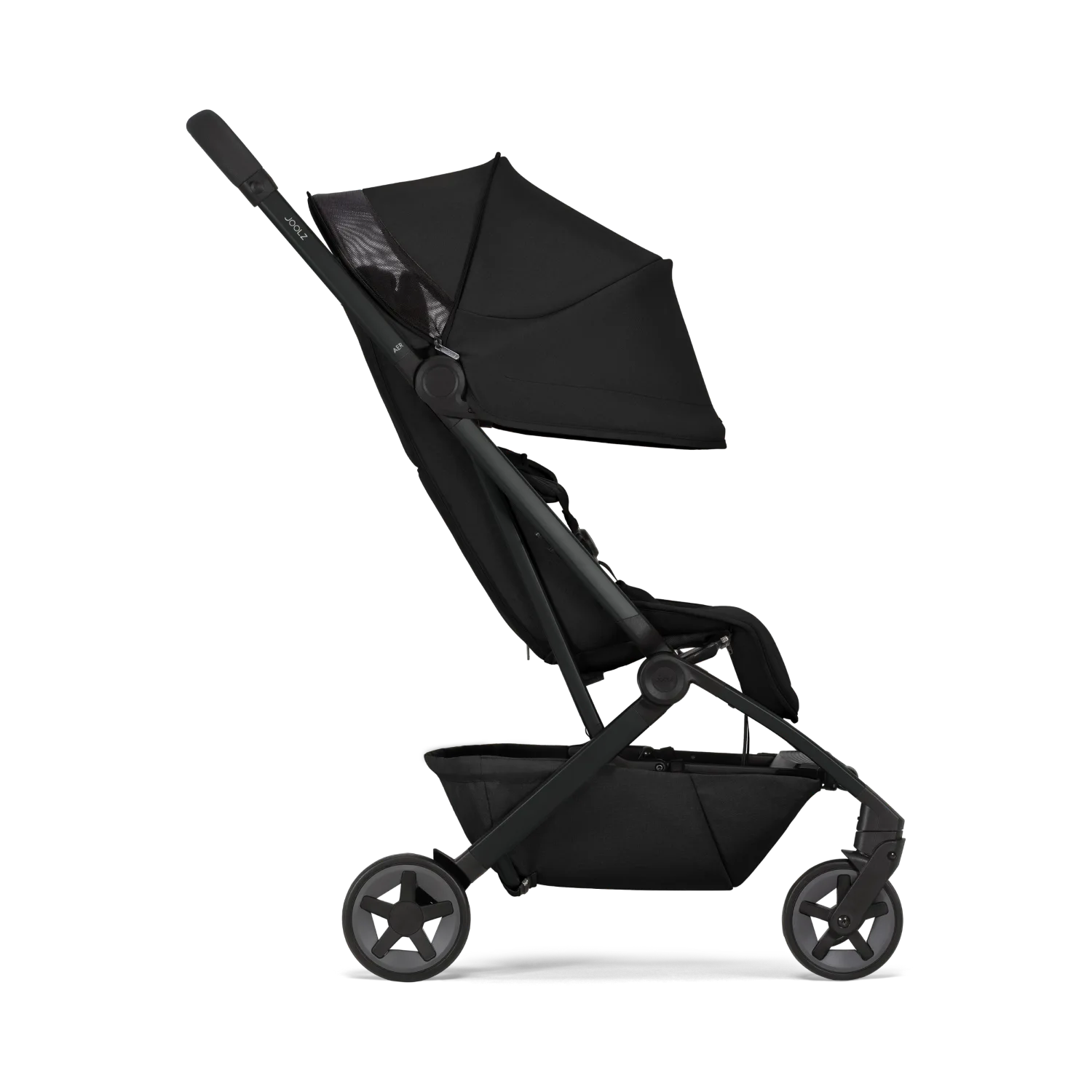
Two details read as Australian-market sensible. The sun hood is a super-extended UPF 50+ item with added ventilation, which is the right specification for a Queensland summer rather than a Dutch one. The basket is rated to 8 kg, against 5 kg on the Coya. That is not a full-size pram basket, but it is a real shop.
Build and materials scores 8.0, level with the Bugaboo Dragonfly and with the Babybee Juno at $1,699.99. Of the sub-$1,000 field only the UPPAbaby Cruz V3 scores higher, at 8.5. On paper this is more than a clever hinge on a cheap frame.
The case against it
The wheels are the price of the fold, and the spec sheet does not hide it. Push and wheels scores 6.5, and only two prams in our field score lower. Joolz publishes no tyre size and no suspension detail for the Aer2. Compare that to the Thule Urban Glide 3 at $1,379, where 16 inch air-filled tyres, rear suspension, a lockable swivel front wheel and an integrated twist hand brake earn 9.5 in the same column. A pram that folds into a cabin bag does not have room for a 16 inch wheel, and you will feel that difference on the first bad footpath.
Australian parts and service scores 6.5. That is the second-lowest figure in the entire pram field, and only the Rever Bebe Horizon sits below it. Babyhood scores 9.0 in that column, Babybee 8.5, Valco Baby 8.5, Mountain Buggy 8.0. If a wheel or a canopy fails in year two, a Dutch pram sold through Australian retail is a longer conversation than an Australian one. Weight that against the fold advantage honestly, because it is the column that costs you money after the sale rather than at it.
Conversion and versatility scores 7.5. The seat is described as suitable from newborn on an approximate basis with newborn options available, which is exactly the sort of qualified language that should send you to the bassinet or the Nest to Seat rather than the seat alone. There is no published maximum seat weight on this listing and no published seat dimensions, so how long the Aer2 lasts a tall three-year-old is a question the spec sheet does not answer. We treat unpublished as unpublished, not as a guess.
The capsule question is also left open. Joolz publishes no car-seat or travel-system path for the Aer2 on the Australian listings in front of us, where Cybex states outright that the Coya is travel system ready and Babyhood states that the Air Compact is travel-system compatible. For a pram sold on the strength of moving between a car and a terminal, that is a gap worth resolving with the retailer before you pay, particularly if you were planning to click a capsule onto the frame rather than buy the bassinet. Storage is the smaller everyday irritation: 8 kg reads well against a travel rival, less well against the 10 kg of the Dragonfly and the 13.6 kg of an UPPAbaby Cruz V3 at $999.
Then there is the packaging, which is genuinely confusing at the till. Across Australian retail the Aer2 sells as three different packages. The Stroller with Nest To Seat lists at $958 and the Stroller with Cot at $999. The scored package, the Stroller with Aer2 Bassinet, is $1,058. That is a $100 spread across boxes containing much the same hardware. Read the contents line, not the product name.
How it compares
Cybex Coya Travel Stroller, $799. Bench Score 7.4. The obvious cross-shop and $259 cheaper. The Coya is 6.6 kg against 6.5 kg and folds carry-on small. It has an ergonomic lie-flat recline from birth without a separate accessory, which the Aer2’s seat does not claim on its own, and front-wheel suspension specified where Joolz publishes none. The Coya loses on the numbers that matter to a travelling parent: its folded dimensions are not published, its basket is 5 kg against 8 kg, its build and materials scores 7.5 against the Joolz 8.0, and its fold and footprint sub-score is 9.0 to the Aer2’s 9.5.
Bugaboo Dragonfly Pram, $979. Bench Score 7.9. The Dragonfly outscores the Aer2 overall and took Best city fold, so say it plainly: if you are not flying, this is the better pram. It is suitable from birth to approximately four years, carries 22 kg, has full suspension and a 10 kg basket, and its one-hand fold keeps the seat attached. The costs are weight and volume. It is 9.9 kg and folds to 36 x 52 x 90 cm, which is a boot item rather than a cabin item, and its bassinet is a separate purchase where the Joolz includes one at $1,058.
Babyhood Air Compact Stroller, $499. Bench Score 7.2. Babyhood is our publisher’s agency client and it scores below the Joolz, so treat this as the budget alternative it is rather than a like-for-like. What it does have is an assisted auto fold, a newborn-ready reclining seat, travel-system compatibility, a powder-coated aluminium frame weight-tested to 22 kg and a carry bag, at $559 less than the Joolz package. It took Best under $500. It also runs high-density EVA wheels, scoring 6.0 on push and wheels, and its fold and footprint sits at 8.5 against the Aer2’s 9.5. Where it beats every pram in this article outright is Australian parts and service at 9.0, against the Joolz 6.5. If the pram is a second stroller for the boot of the car and the grandparents’ house, the $559 is hard to argue with.
For completeness, the field leader is neither of the compacts and is not a Babyhood product. The UPPAbaby Vista V3 with bassinet takes Best overall at $1,499 on a Bench Score of 9.0, and it is a different kind of object entirely.
Verdict
The Aer2 is a specialist bought by a specialist buyer, and it is honest about that. You are paying $1,058 for a 6.5 kg pram that folds to 44 x 53 x 23.5 cm with a 4 kg bassinet included, and you are paying for it in wheel size and in local service cover. Nothing else in the field folds this small with newborn kit in the box, which is why it holds the travel award despite finishing mid-table overall. If you fly two or three times a year with a baby, that fold will earn its money back in checked-luggage stress alone. If you do not, the Dragonfly at $979 is cheaper and scores higher, and the Coya at $799 gets you most of the compactness for $259 less.
Bench Score 7.7. Conversion and versatility 7.5, fold and footprint 9.5, push and wheels 6.5, build and materials 8.0, Australian parts and service 6.5. Award: Best for travel.
Assessed on specification, 30 July 2026.
Prices are the lowest listed Australian retail as at 30 July 2026 and will move.
Disclosure: Babyhood is an agency client of The Baby Bench’s publisher, Xpand Digital. Babyhood products are scored on the same published criteria as every other pram we assess, and no Babyhood product was placed above a product that outscored it.
Evidence record
Sources checked
Product specifications, claims and Australian pricing were checked against the following sources for this assessment. Prices and availability can change after publication.