
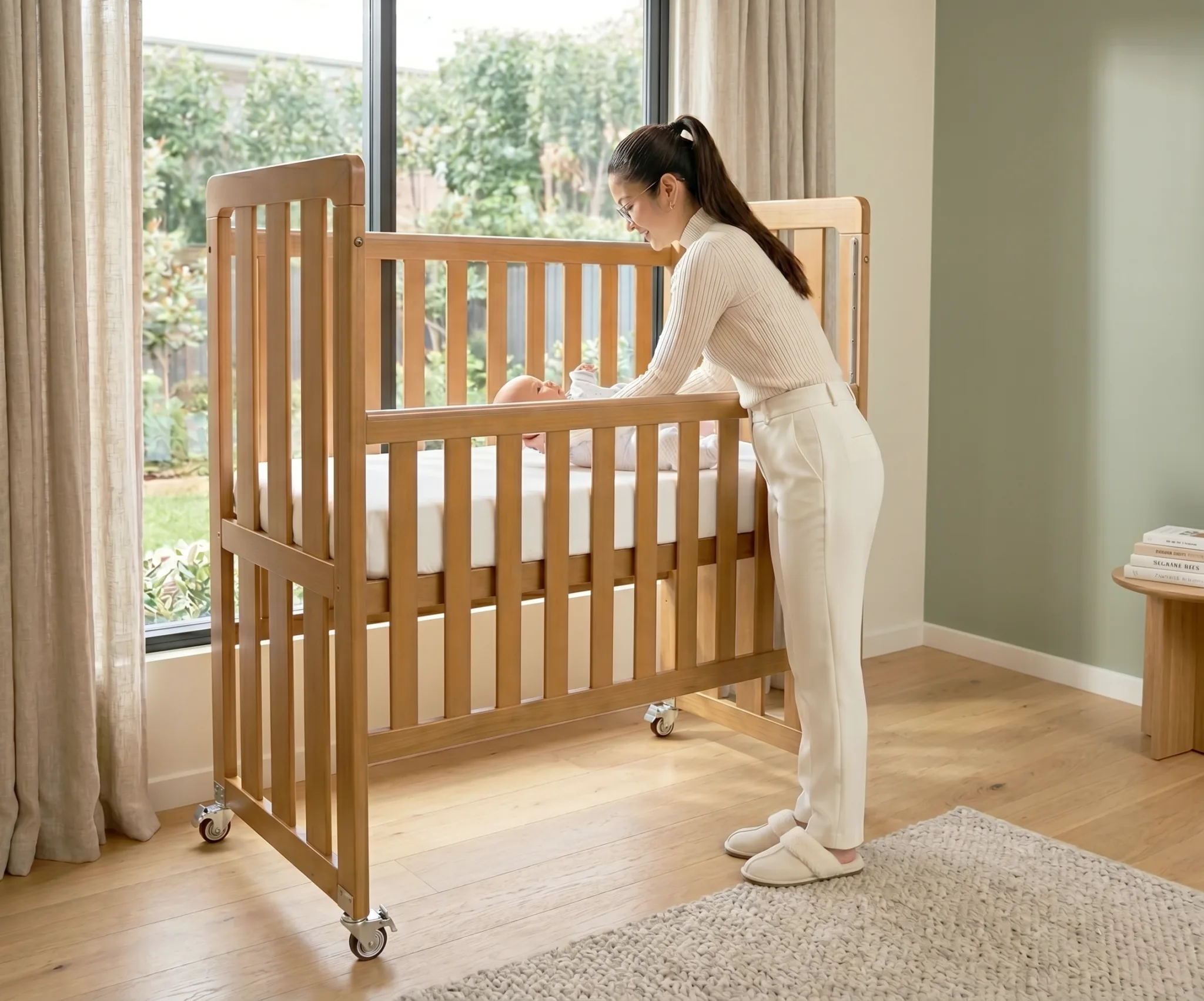
The Babyhood Ergonomic Cot is not a conventional nursery cot with an ambitious name. Its single mattress level sits 80 cm from the floor with the supplied heavy-duty castors, and the lowered front rail remains 106 cm high. The design is intended to reduce bending for carers and can also serve as an evacuation cot. That specialisation earns it our Best ergonomic design award. It also makes the $899 cot a poor fit for families expecting a low toddler bed later.
Bench Score: 7.2 out of 10. Build and materials 8.0, conversion and longevity 6.0, ease of assembly 6.5, Australian parts and service 9.0 and value 7.0. Scores are reproduced from the canonical cots file. No physical testing is claimed.
Disclosure: Babyhood is an agency client of Xpand Digital, this publication’s owner. The Ergonomic Cot wins a specific award but sits mid-field overall. The commercial relationship does not move it above products that outscore it.
The short answer
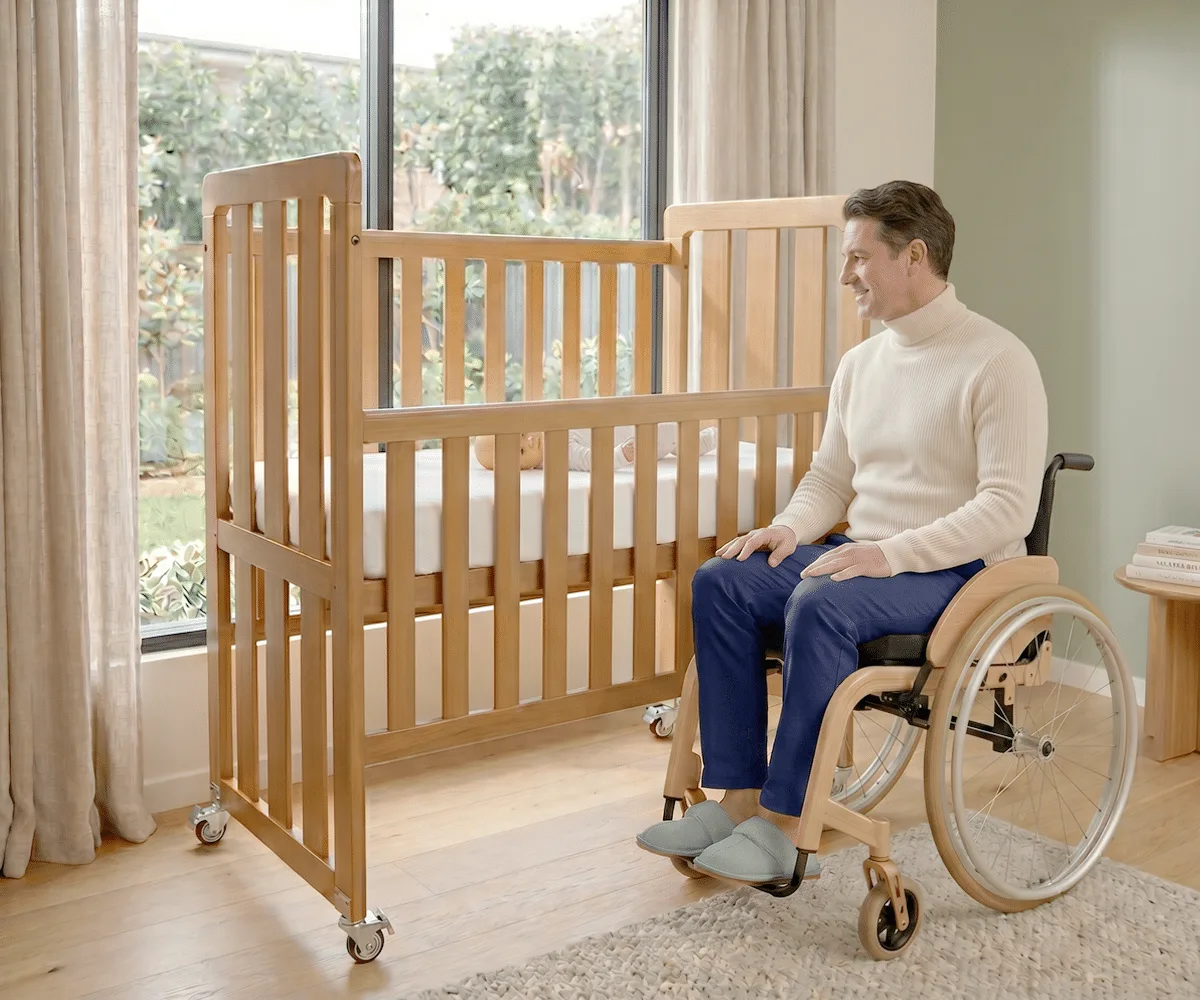
Buy it if repeated bending is the central problem: you have a back injury, limited mobility, multiple carers or a childcare-style use case. The raised platform, two-button drop side and commercial-style castors form a coherent ergonomic system.
Skip it if you want bassinet, cot and toddler-bed stages from one purchase. The cot has one mattress level, uses a compact 1200 × 600 mm mattress and publishes no toddler conversion. Most households will get better lifetime value from the Riya or Milano.
Bench Score
| Criterion | Score |
|---|---|
| Build and materials | 8.0 |
| Conversion and longevity | 6.0 |
| Ease of assembly | 6.5 |
| Australian parts and service | 9.0 |
| Value | 7.0 |
| Overall Bench Score | 7.2 |
Key specifications
| Specification | Babyhood Ergonomic Cot |
|---|---|
| Price checked | $899 |
| Assembled size | 68 × 127 × 153 cm |
| Base height | 80 cm with wheels; 70 cm without |
| Lowered rail height | 106 cm with wheels; 96 cm without |
| Mattress | 1200 × 600 × 100 mm, sold separately |
| Use limit | Newborn to 24 kg |
| Base positions | One |
| Access | Two-button drop side |
| Mobility | Four lockable heavy-duty castors included |
| Current standards claimed | 2024 Australian infant-sleep safety and information standards |
The case for it
The dimensions prove the ergonomic claim
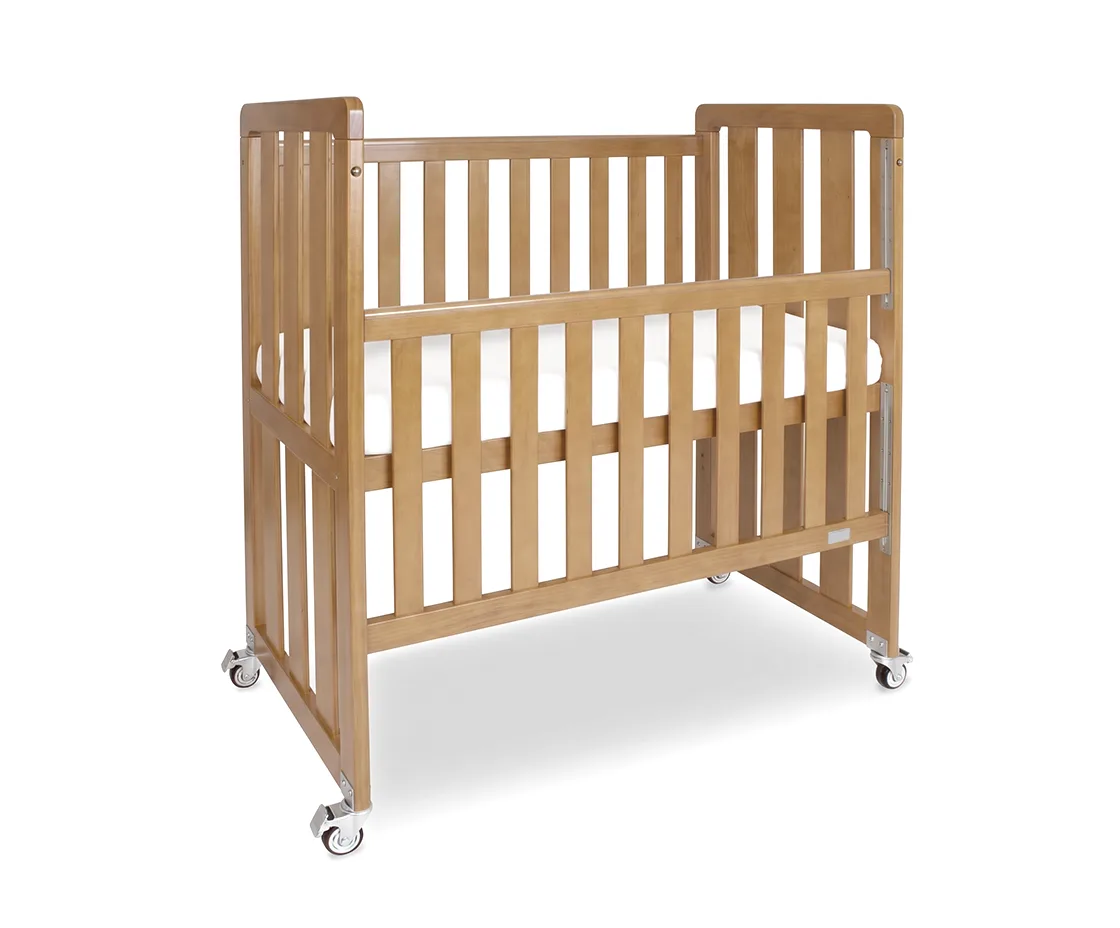
Many cots call a drop side ergonomic without publishing where the mattress sits. Babyhood gives the relevant numbers. An 80 cm base is substantially higher than the lower stage of a domestic cot, and the front rail drops to 106 cm with wheels fitted. That reduces the distance between the carer’s hands and the child.
The design followed work around carer back strain and uses a taller overall frame to preserve containment around the raised base. It is also tested against tipping requirements associated with high-profile commercial cots. We have not verified lifting outcomes, but the geometry supports the stated purpose.
Mobility is designed in
Four heavy-duty locking castors are standard rather than an optional nursery accessory. The cot can be repositioned for cleaning or emergency evacuation without lifting the 33 kg of published carton contents. Locks matter whenever the cot is stationary.
The clear grade-A New Zealand plantation timber and discreet teething rails make the frame less institutional than its dimensions suggest. Australian parts access is the strongest element in the score.
The current compliance statement is explicit
Babyhood now names both the Consumer Goods (Infant Sleep Products) Safety Standard 2024 and Information Standard 2024. That is the disclosure every current infant-sleep listing should provide. The cot also carries the expected warnings about a firm flat surface, back sleeping and an empty sleep space.
The case against it
One high level is the trade-off
The cot does not lower into a conventional toddler-level base. The tall outer frame maintains containment, but you remain dependent on the drop-side opening throughout use. There is no open toddler bed, day bed or sofa mode to extend ownership after cot use.
That limitation explains the 6.0 longevity score. A product optimised for adult access cannot simultaneously become a low, open bed without a different structure.
The mattress format is compact
The specified 1200 × 600 mm mattress is smaller than the common Babyhood 1295 × 690 mm format. Replacement choice is narrower, and the child has less internal sleeping length. The advantage is a 68 cm-wide frame that can pass through more doorways. Measure both the room and the replacement-mattress market.
The height can dominate a domestic nursery
At 153 cm tall, this is visually and physically much larger than an 84–107 cm domestic cot. Overhead shelving, window coverings and wall decor need generous clearance. The high rails may also feel excessive for a household performing only a few lifts each day.
How it compares
The Babyhood Riya costs less, uses a standard mattress and converts through toddler and day-bed stages. The Mali Compact is narrower and vastly cheaper but positions the mattress conventionally. Childcare-focused metal or timber evacuation cots may offer similar mobility without the domestic timber finish.
Choose the Ergonomic Cot only when reduced bending outranks conversion. That is a narrow brief, but it is a legitimate one.
Verdict
The Babyhood Ergonomic Cot is the best ergonomic design in our cot field because it changes the lifting geometry instead of merely lowering one rail. A measured 80 cm platform, tall tested enclosure, two-button access and serious castors all support carers who cannot tolerate repeated low reaches.
The score stops at 7.2 because those decisions reduce versatility. One mattress level, a compact proprietary-leaning size and no toddler conversion make little sense for the average nursery. For a household or care environment with a real access need, the design can be worth far more than its overall rank suggests.
Bench Score: 7.2. Assessed on published specification, 13 August 2026. Primary source: Babyhood Ergonomic Cot.
Disclosure: Babyhood is an agency client of The Baby Bench’s publisher, Xpand Digital. Client status does not buy a score, award or recommendation.
Evidence record
Sources checked
Product specifications, claims and Australian pricing were checked against the following sources for this assessment. Prices and availability can change after publication.