
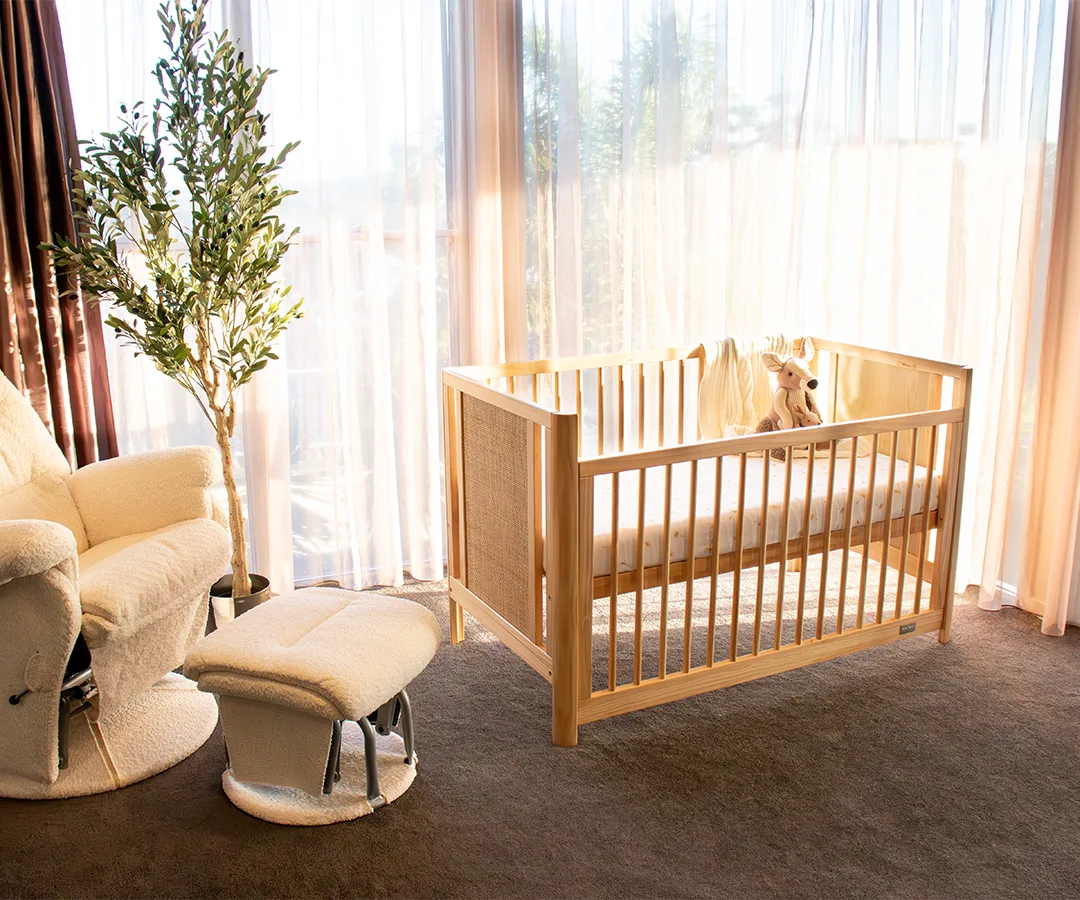
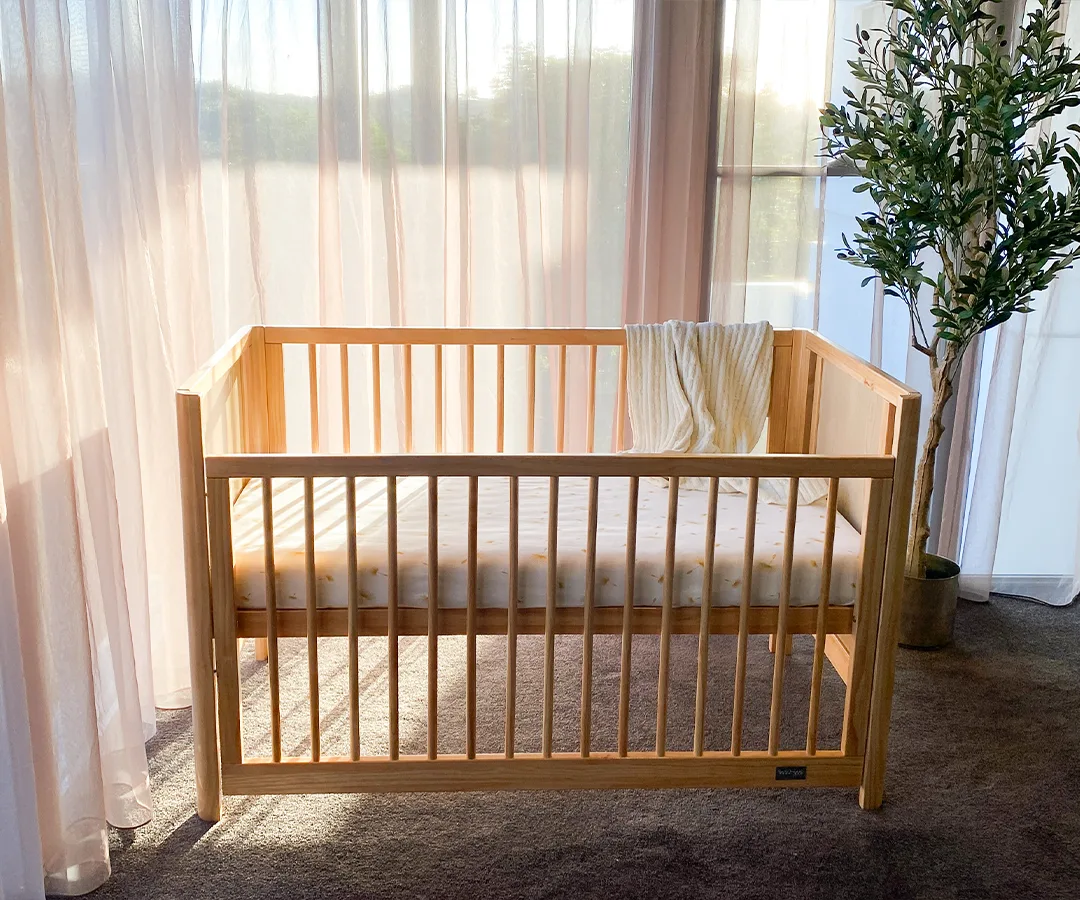
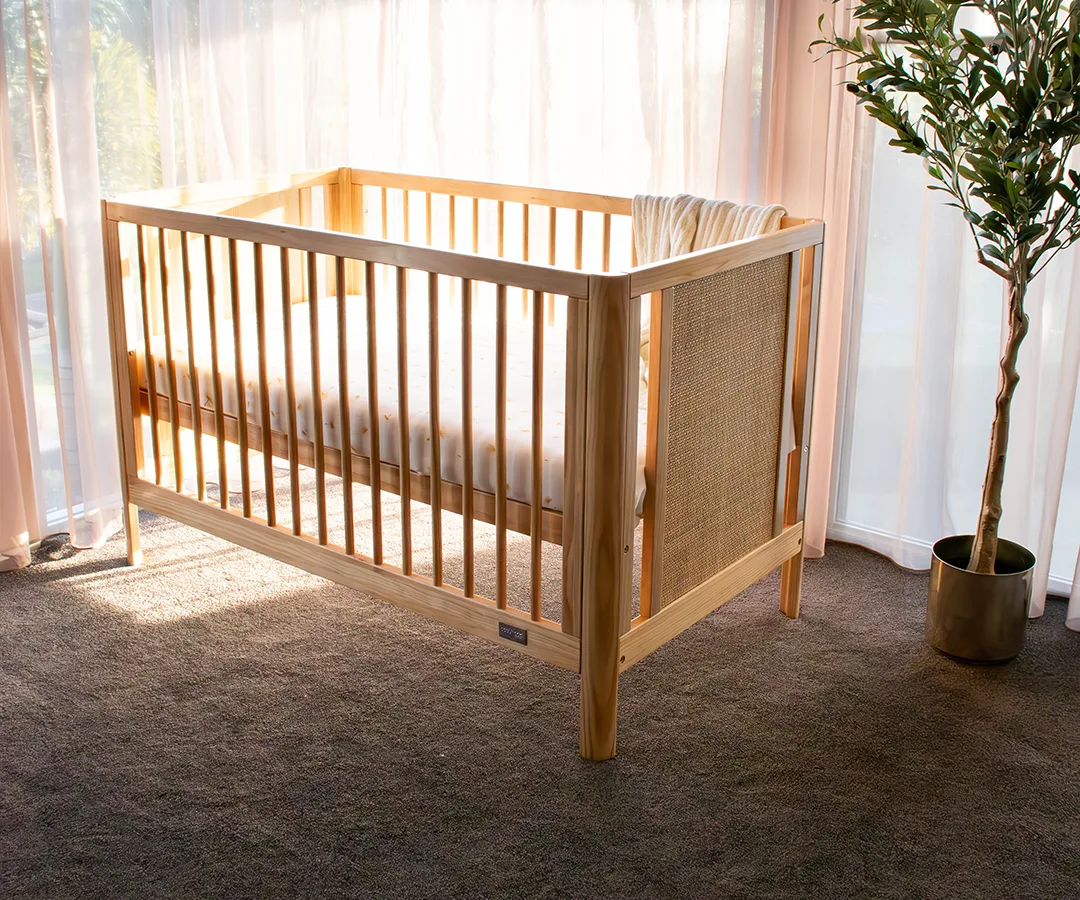
The Babyhood Aliya Rattan Cot is a design-led cot with a practical idea hidden behind the styling: its single-hand drop side can be locked out. Parents who want lower access can use it; parents who prefer a fixed side can disable the movement. Around that mechanism is a 76 × 132 cm New Zealand plantation-timber frame with a rattan-look panel, two mattress heights and conversion from bassinet level to cot, toddler bed, day bed and a two-seat sofa.
At $1,099 without a mattress or castors, it is not a value cot. It is a premium paid for the natural finish and an access mechanism that most rattan-styled rivals do not offer.
Bench Score: 7.8 out of 10. This is a published-specification assessment. We have not assembled, loaded or long-term durability-tested the cot or its drop-side hardware.
Disclosure: Babyhood is an agency client of this publication’s owner, Xpand Digital. The relationship has no effect on the score. The Aliya Rattan ranks sixth in our cot field, not first.
The short answer
Buy the Aliya Rattan if the appearance matters, you want a lower-access side without committing permanently to a moving rail, and you plan to use the toddler, day-bed or sofa configurations. The locally supported frame and included conversion pieces make it more than a nursery showpiece.
Skip it if budget, included mattress or compact footprint matters most. The standard 1295 × 690 × 100 mm mattress is separate, castors cost extra, and cheaper Babyhood cots carry similar drop-side and conversion engineering.
Bench Score
| Criterion | Score |
|---|---|
| Longevity and conversion | 7.5 |
| Access and adjustment | 9.0 |
| Build and materials | 8.0 |
| Footprint | 7.5 |
| Value | 7.0 |
| Overall Bench Score | 7.8 |
Key specifications
| Specification | Aliya Rattan Cot |
|---|---|
| Price checked | $1,099 |
| Assembled size | 76 × 132 × 84 cm |
| Mattress required | 1295 × 690 × 100 mm; not included |
| Configurations | Bassinet, cot, toddler bed, day bed, two-seat sofa |
| Base positions | Two |
| Cot/toddler tested limit | 24 kg |
| Manufacturer’s static-base claim | 100 kg, based on internal 2021 testing |
| Main material | Clear grade-A New Zealand plantation timber |
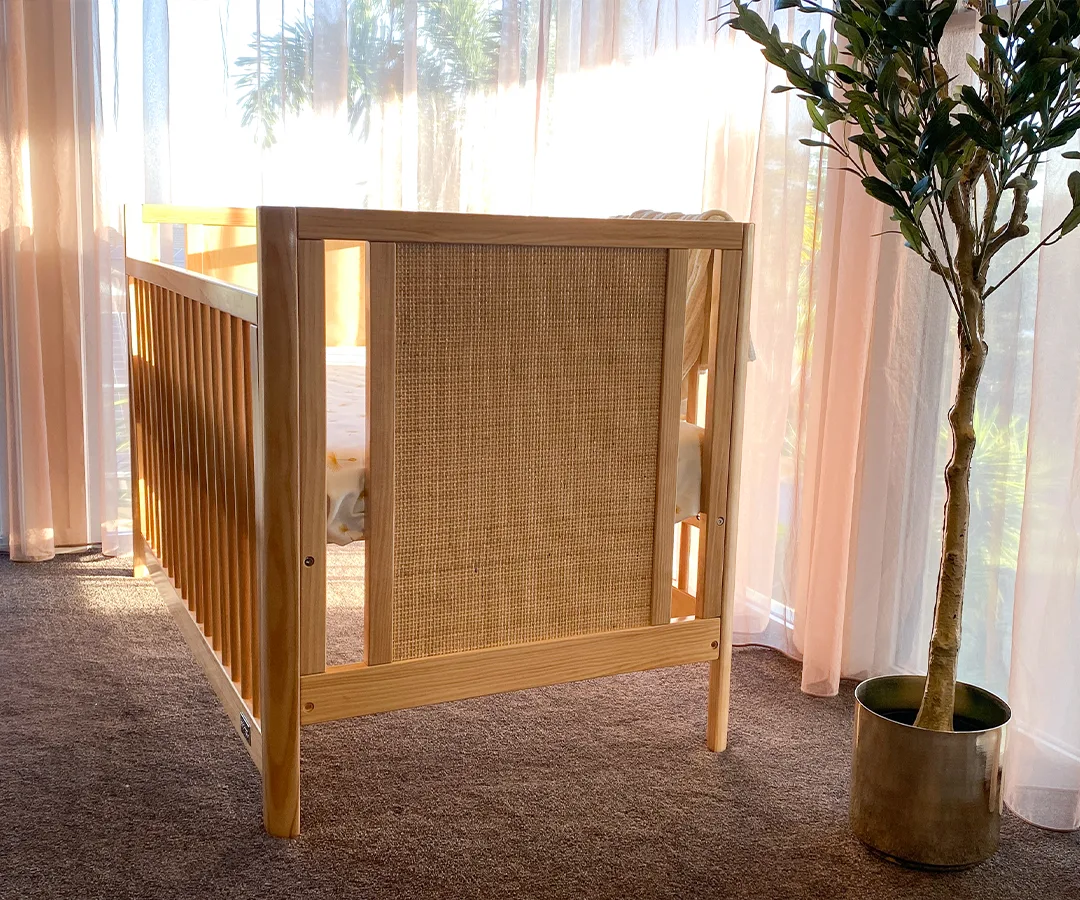
| End-panel material | Rattan facade backed by engineered timber-look board |
| Access | One-hand drop side with lock system |
| Castors | Sold separately |
| Standards cited | AS/NZS 2172:2003; compliance with AS/NZS 2172:2010 and the 2024 infant-sleep standards |
The case for it
The lockable drop side is a meaningful choice
A drop side reduces the distance a parent reaches over the rail, particularly when the mattress is on its lower setting. The Aliya’s extra idea is the lock. If you dislike moving sides or no longer need the access, the mechanism can be disabled instead of remaining an unused moving component.
The current Australian infant-sleep rules include specific construction and durability requirements for drop-side fastening devices and guides. A drop side is not automatically unsafe; it is a mechanism whose compliance and maintenance matter. Babyhood cites AFRDI testing and the relevant domestic-cot standards. Owners still need to inspect fasteners and operation as directed by the manual.
The frame lasts beyond the cot stage
The five-mode claim is credible because the conversions change the furniture’s actual job. After cot use, one side can come away for a toddler bed, then the frame can serve as a day bed or small sofa. That does not make the $1,099 disappear, but it spreads the visual and material investment over more years.
The standard Australian mattress size is another ownership advantage. Unlike an oval proprietary cot, a 1295 × 690 mm mattress leaves several replacement options and can move between many full-size cots if the nursery plan changes.
The material description is unusually specific
Babyhood identifies clear grade-A New Zealand plantation timber and explains that the woven panel is a facade backed by an engineered timber-look board. That is more useful than simply calling the product natural rattan. The backing is part of the structural story and tells buyers that the woven finish is decorative rather than a free-standing basket panel.
The case against it
The mattress and mobility are separate purchases
No mattress is included in the $1,099 price. A cot cannot be compared honestly until the correct firm, flat 1295 × 690 × 100 mm mattress is added. Castors are also separate. The product photography frequently shows a finished nursery; the price card buys the cot frame.
The style commands a large premium
Babyhood’s Riya and conventional timber cots offer the same broad engineering ideas—two base levels, a drop side and toddler conversion—for hundreds less. The Aliya’s rattan facade is the reason to spend more. If that look is not central to the room, the value argument weakens immediately.
The 100 kg statement is not the use limit
Babyhood says the base held a static 100 kg in internal 2021 testing. The published cot/toddler use limit remains 24 kg under the cited Australian test. Static-load evidence is useful for confidence in the base, but it is not permission for an adult to climb into the cot or for the product to be used outside the manual.
How it compares
The Riya is the rational Babyhood alternative: similar timber, drop-side and five-mode thinking for substantially less. The Kaylula Sova is the more radical premium design, bundling its segmented mattress and converting to a table-and-chair set, but it costs more and uses a proprietary oval sleep surface. Against imported design cots, the Aliya’s strongest advantage is the local parts and support pathway.
In our best cots in Australia assessment, the Aliya Rattan scores 7.8. It is not the category winner; it is the design pick for buyers who specifically value the woven finish and lockable side.
Who should buy it?
- Parents who want the rattan aesthetic with a tested timber cot structure.
- Shorter carers or parents managing back strain who value a lower rail.
- Buyers intending to use toddler-bed, day-bed and sofa modes.
- Households that value Australian after-sales support.
Who should skip it?
- Budget-led buyers.
- Anyone expecting a mattress or castors in the price.
- Small nurseries needing a compact cot.
- Parents who prefer a fixed-side design and do not need the lockable option.
Verdict
The Aliya Rattan is a considered piece of nursery furniture, not a specification bargain. Its lockable drop side, standard mattress size, two base heights and five configurations are real functional arguments. The rattan facade is the part that makes it special—and the part that makes it expensive.
Buy it because you want to look at it for years and will use the later modes. If the woven finish is merely nice to have, the Riya or another conventional timber cot delivers more of the same engineering per dollar.
Bench Score: 7.8. Assessed on published specification, 11 August 2026. Primary source: Babyhood Aliya Rattan Cot. Safe-cot guidance: ACCC Product Safety.
Disclosure: Babyhood is an agency client of The Baby Bench’s publisher, Xpand Digital. Client status does not buy placement, a score or a recommendation.
Evidence record
Sources checked
Product specifications, claims and Australian pricing were checked against the following sources for this assessment. Prices and availability can change after publication.