
The short answer
In Australian product-safety language, a pram carries a baby primarily lying down in a box-like or boat-like body. A stroller carries a child seated, although its backrest may recline. A combination model can do both. Retailers use the words more loosely, so the name on the box tells you less than the actual from-birth configuration, restraint, recline and warnings.
The definitions come from the ACCC’s prams and strollers mandatory standard. This buyer guide was checked on 29 September 2026.
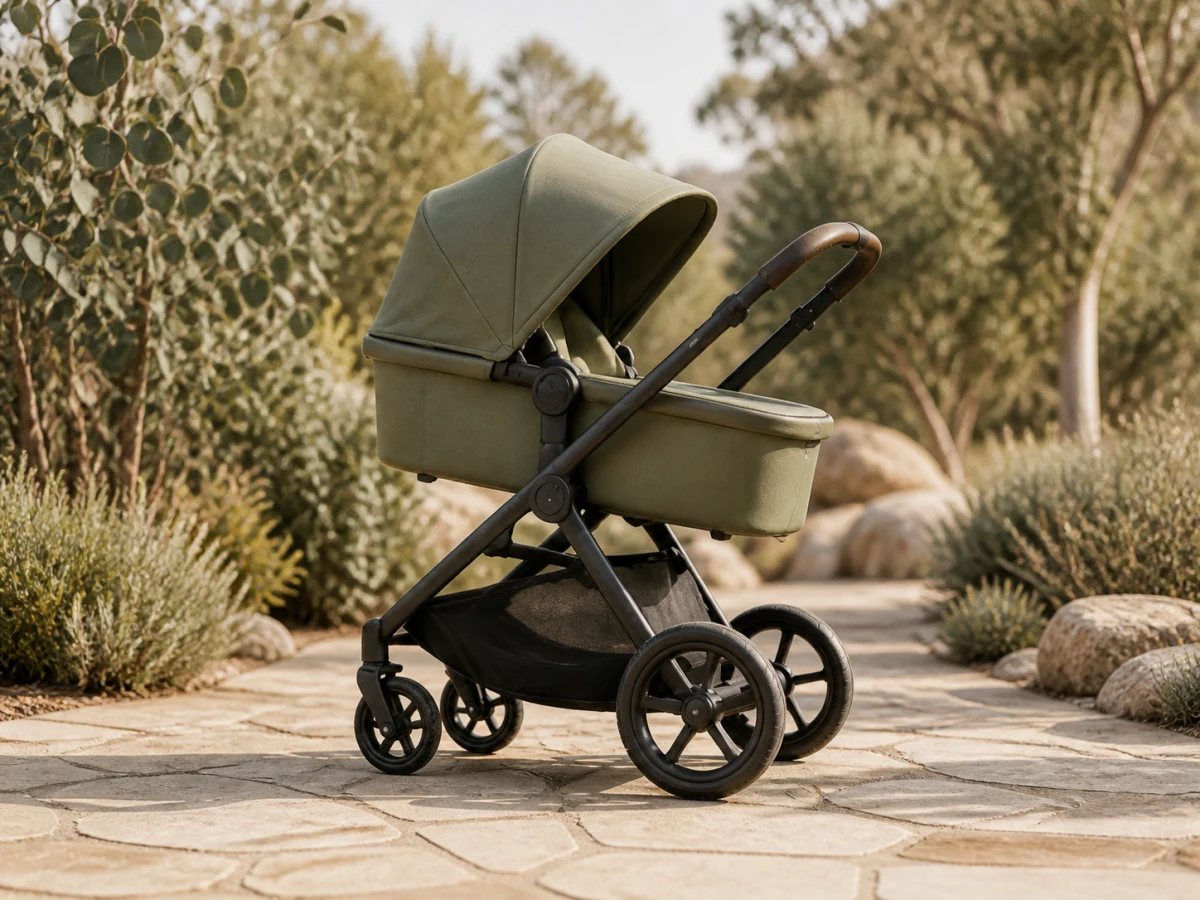
The formal Australian definitions
| Term | ACCC description | What to expect in shops |
|---|---|---|
| Pram | A wheeled vehicle with a box-like or boat-like body that carries a baby primarily fully reclined. | Often a carrycot or bassinet-style attachment on a chassis. |
| Stroller | A wheeled vehicle that transports a child seated; it may recline. | A seat unit, from a full-size everyday model to a light travel model. |
| Combination pram and stroller | A product that can carry children in upright, semi-reclined and fully reclined positions. | A chassis with a convertible seat or multiple approved attachments. |
These are descriptions in the mandatory standard, not a guarantee that any particular configuration suits a newborn. A stroller can be suitable from birth if the manufacturer approves its exact setup; a model sold as a pram can still require a separate bassinet or infant insert.
The newborn question is the real distinction
If you are shopping before birth, ask which supplied or optional setup is approved from birth? Check the manual for the recline or carrycot configuration, age and weight limits, whether an insert or bassinet is required, and whether those parts are included in the quoted price. Also check any warning about use below six months. The ACCC consumer guide says babies under six months should not be placed in an upright seated position.
A car capsule clipped to a pram chassis is a travel-system convenience, not the same product as a pram bassinet. For planned sleep at home, follow our safe sleeping guide and the sleep product’s instructions. Do not treat the pram’s recline as a substitute for a designated safe sleep space.
What the mandatory standard covers
Australian prams and strollers are subject to a mandatory safety standard covering design, construction, testing, warnings and labelling. The ACCC describes requirements for brakes and a tether strap; strollers also have harness requirements. Some warnings apply to specific seat and recline designs.
That tells you what suppliers must address. It does not mean all models push, fold or last equally well. Our full pram field compares published conversion, fold, wheels, build and Australian parts support. The best double prams and prams under $800 answer more specific buying questions.
Choose by daily use, then by name
If a newborn is your immediate passenger, establish the approved from-birth setup first. Then compare the full price of that setup, the boot-space footprint, the lift weight the maker actually publishes, and whether you can manage the fold. If a second child is likely, check the real cost and geometry of the double conversion rather than assuming “convertible” means every arrangement is included.
For frequent travel, a compact stroller may save space, but inspect its exact from-birth instructions before using it with a young baby. For mixed paths, wheels and suspension may matter more than the product name. A large pram can be an excellent newborn solution and a nuisance on daily stairs. A light stroller can be easy to carry yet less comfortable over broken footpaths. The useful comparison is the specific configuration against your route and car.
Our individual pram reviews set out the published trade-offs model by model. No model on this site has been physically push-tested, so use the figures as a shortlist and, if possible, lift and fold the finalists in a shop.
Checked 29 September 2026 against ACCC Product Safety guidance. Follow the selected product’s current instructions and warnings.
Evidence record
Sources checked
This guide draws on the following primary sources. Rules and guidance can change, so check the linked authority before relying on a detail.