
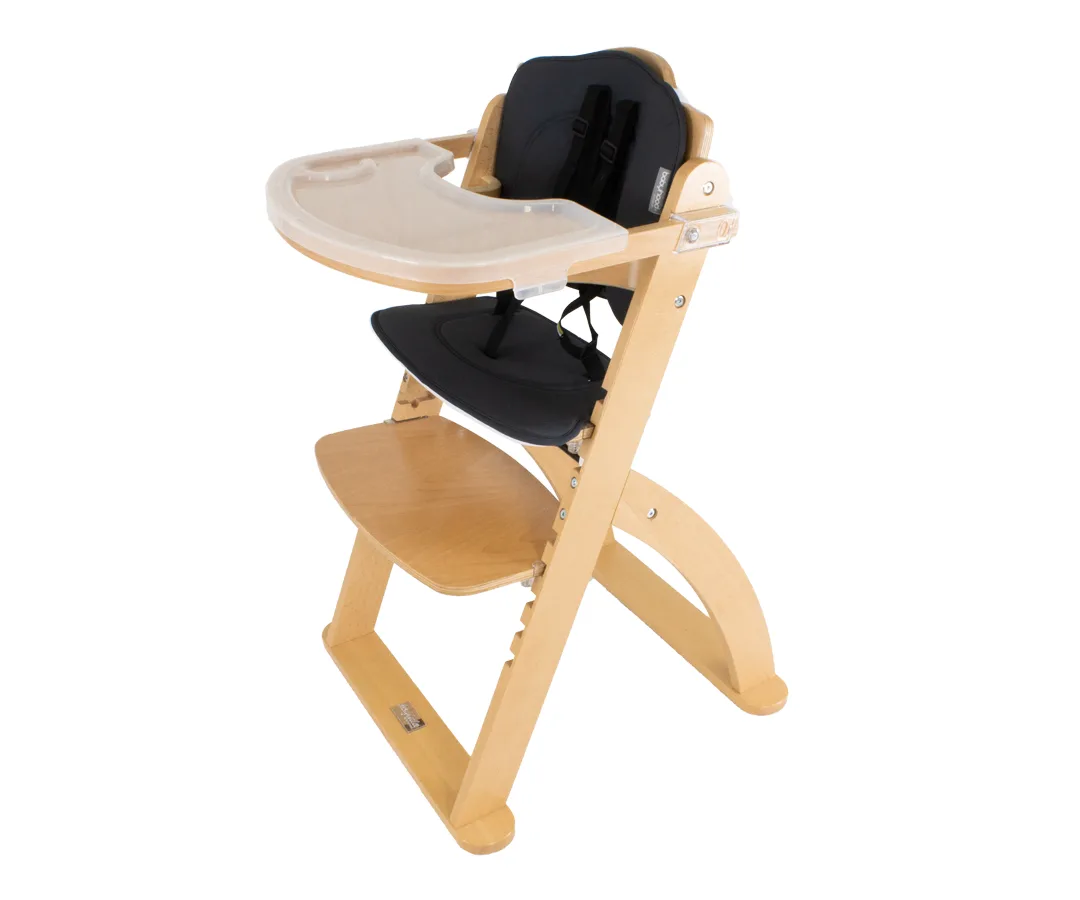
The Kaylula Ava Forever High Chair takes the right approach to longevity: instead of adding a weak booster mode, it lets the seat and foot plates move through the timber frame as the child grows. The European-beech structure is rated to 45 kg, the tray and removable food tray are included, and so are the padded cushion and five-point harness. At the current $329 sale price, the package is considerably more complete than many grow-with-child chairs.
Its curved frame occupies a 55 × 55 cm square, and an adjustable timber chair always creates more joints and cleaning edges than a moulded plastic bucket. Buy it for posture and years of use, not for the fastest wipe-down.
Bench Score: 8.2 out of 10. This review assesses published specifications and official construction details. We have not assembled the chair, fed a child in it or abrasion-tested the finish and cushion.
Disclosure: Babyhood and Kaylula are agency clients of this publication’s owner, Xpand Digital. The relationship is declared and has no effect on the scoring.
The short answer
Buy the Ava if you care about a supported foot position, want seat and footrest adjustment without tools, and intend to keep one chair from first meals into the school years. Its included accessories and $329 price make it one of the strongest-value timber chairs we assess.
Skip it if your kitchen is narrow, you want a chair that folds, or you need every food-contact surface to come clean in one sweep. The 55 cm footprint is stable but broad, and the cushion, slots and timber junctions create extra cleaning work.
Bench Score
| Criterion | Score |
|---|---|
| Longevity and adjustment | 9.0 |
| Ergonomics and support | 8.0 |
| Cleanability | 8.0 |
| Footprint and storage | 6.5 |
| Value | 9.0 |
| Overall Bench Score | 8.2 |
Key specifications
| Specification | Kaylula Ava Forever High Chair |
|---|---|
| Price checked | $329 sale; $399 listed regular price |
| Assembled size | 55 × 55 × 93 cm |
| Published product/carton weight | 7 kg |
| Published use range | From three months to 45 kg |
| Frame | European beech |
| Adjustment | Interchangeable seat and foot plates; no tools required |
| Restraint | Five-point harness included |
| Included | Main tray, removable food tray and cushion |
| Standard cited | EN 14988:2006 |
Specifications and price were checked on 11 August 2026.
The case for it
The footrest is structural, not decorative
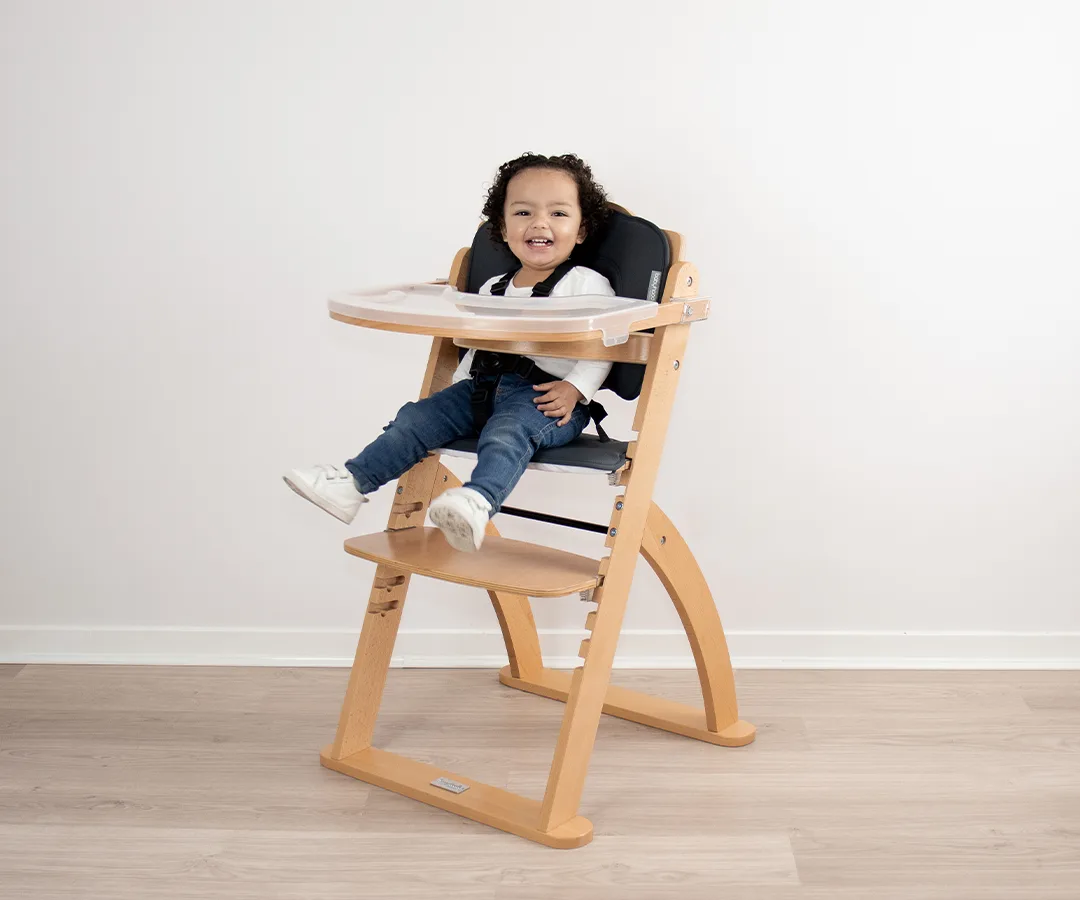
A useful high-chair footrest must reach the child’s feet. The Ava’s plate can move independently of the seat, letting a parent create support as leg length changes. That is a material advantage over chairs with a tiny fixed bar positioned for only one growth stage.
The seat plate also moves. In combination, the two adjustments let the chair shift from a contained feeding position to a taller dining chair for a preschooler or older child. The 45 kg limit is high enough that the frame, rather than the child’s weight, is unlikely to end normal use.
The box is genuinely complete
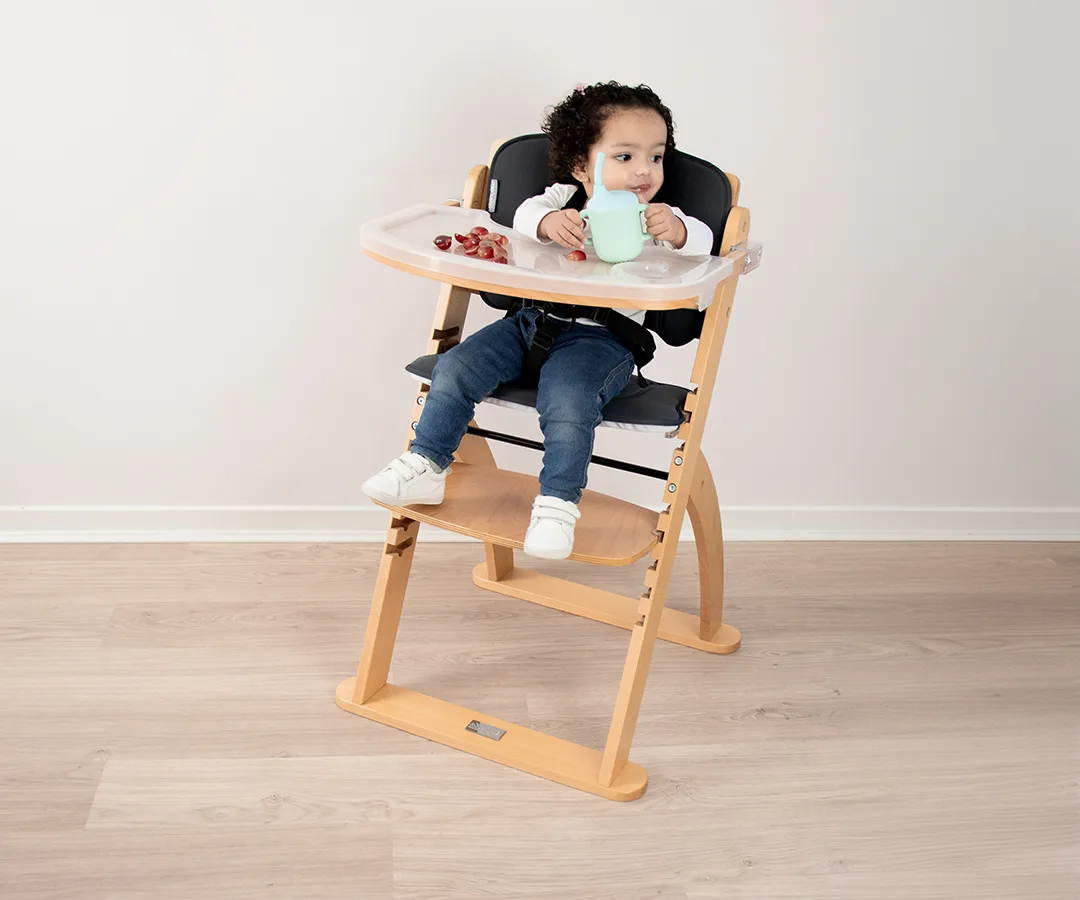
Many premium timber chairs become expensive after the tray, infant set, cushion and harness are added. Babyhood includes all four practical pieces. The removable food tray adds a washable layer over the timber-supported main tray, while the cushion makes the early setup less austere.
That completeness is why the value score is 9.0. Compare total configured prices rather than bare frames: a lower ticket can become higher once the parts required for first meals are included.
It can remain useful after the tray phase
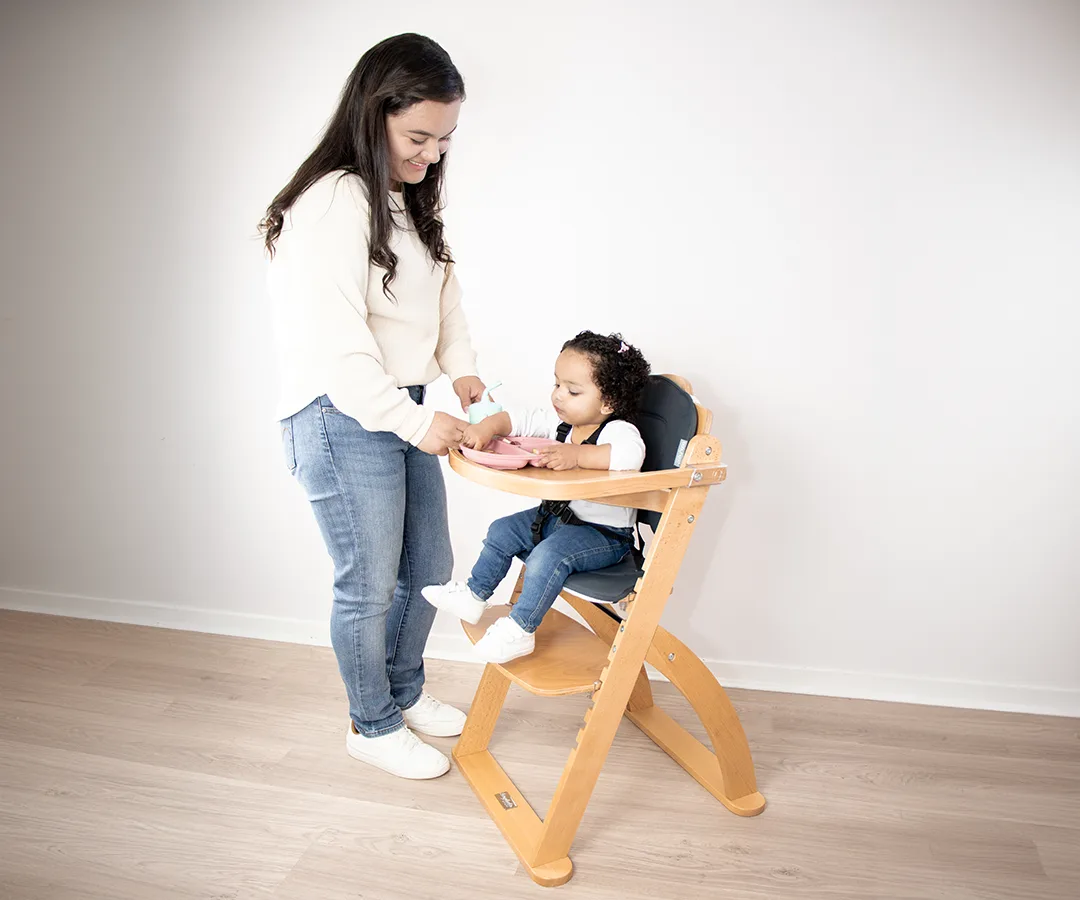
The Ava is not trying to become a floor chair or step stool. It stays at table height, which is the sensible second life for a high chair. Remove the tray and early-years accessories, adjust the plates and the same frame can position a child at the family table.
The case against it
A 55 cm square matters in a kitchen
The curved rear legs and broad base provide stability but require a permanent patch of floor. The chair does not fold. In a galley kitchen or apartment dining zone, 55 cm plus the space needed to walk around the tray can feel larger than the product photo suggests.
Mark the footprint on the floor before ordering. If the chair will be moved after every meal, a lighter folding product may be more realistic even if it offers less adjustment.
Timber adjustment creates cleaning edges
The removable food tray should handle the largest mess, but crumbs and liquids can still find the harness slots, cushion seams, plate grooves and bolted junctions. The black cushion also adds a separate washable component. This is manageable cleaning, not one-piece-hose-down simplicity.
Check Babyhood’s care instructions before using sprays or soaking the timber. Repeated saturation is rarely kind to a natural wood finish.
“Three months” is not a universal readiness date
Babyhood publishes a starting age of three months. Age alone does not establish that an infant is ready for upright feeding. Use the chair only in a configuration allowed by the manual and when the child has the developmental head and trunk control required for that position. The five-point harness restrains movement; it does not create postural readiness.
How it compares
The Stokke Tripp Trapp has the deeper accessory ecosystem and longer market history, but a usable infant feeding setup costs considerably more. The Bugaboo Giraffe is lighter and more refined to adjust, again at a higher configured price. IKEA’s Antilop is vastly cheaper and easier to clean, but offers neither the same foot support nor the same later-child use.
The Ava occupies the useful middle: proper timber-chair ergonomics and included accessories without the premium-brand total.
Who should buy it?
- Families who want an adjustable, reachable footrest.
- Buyers planning to keep one chair for years.
- Parents comparing fully configured prices rather than bare frames.
- Dining spaces with room for a permanent 55 × 55 cm footprint.
- Households comfortable cleaning timber joints and a cushion.
Who should skip it?
- Tiny kitchens and narrow walkways.
- Anyone needing a folding high chair.
- Parents prioritising one-piece, hose-down cleaning.
- Buyers wanting wheels or frequent room-to-room movement.
- Families unlikely to adjust the plates as the child grows.
Verdict
The Kaylula Ava Forever High Chair gets the expensive decisions right. Its seat and foot plates both adjust, the beech frame supports a useful 45 kg limit, and the tray, food tray, cushion and harness are not held back as accessories. At $329, that is an unusually complete grow-with-child setup.
Its weaknesses are physical rather than conceptual: the frame is broad, does not fold and asks for more detailed cleaning than moulded plastic. If the space is available and parents will actually reposition the plates over time, the Ava is one of Babyhood’s strongest products.
Bench Score: 8.2. Assessed on published specification, 11 August 2026. Primary source: Kaylula Ava Forever High Chair.
Disclosure: Babyhood and Kaylula are agency clients of The Baby Bench’s publisher, Xpand Digital. Client status does not buy a score, placement or recommendation.
Evidence record
Sources checked
Product specifications, claims and Australian pricing were checked against the following sources for this assessment. Prices and availability can change after publication.