
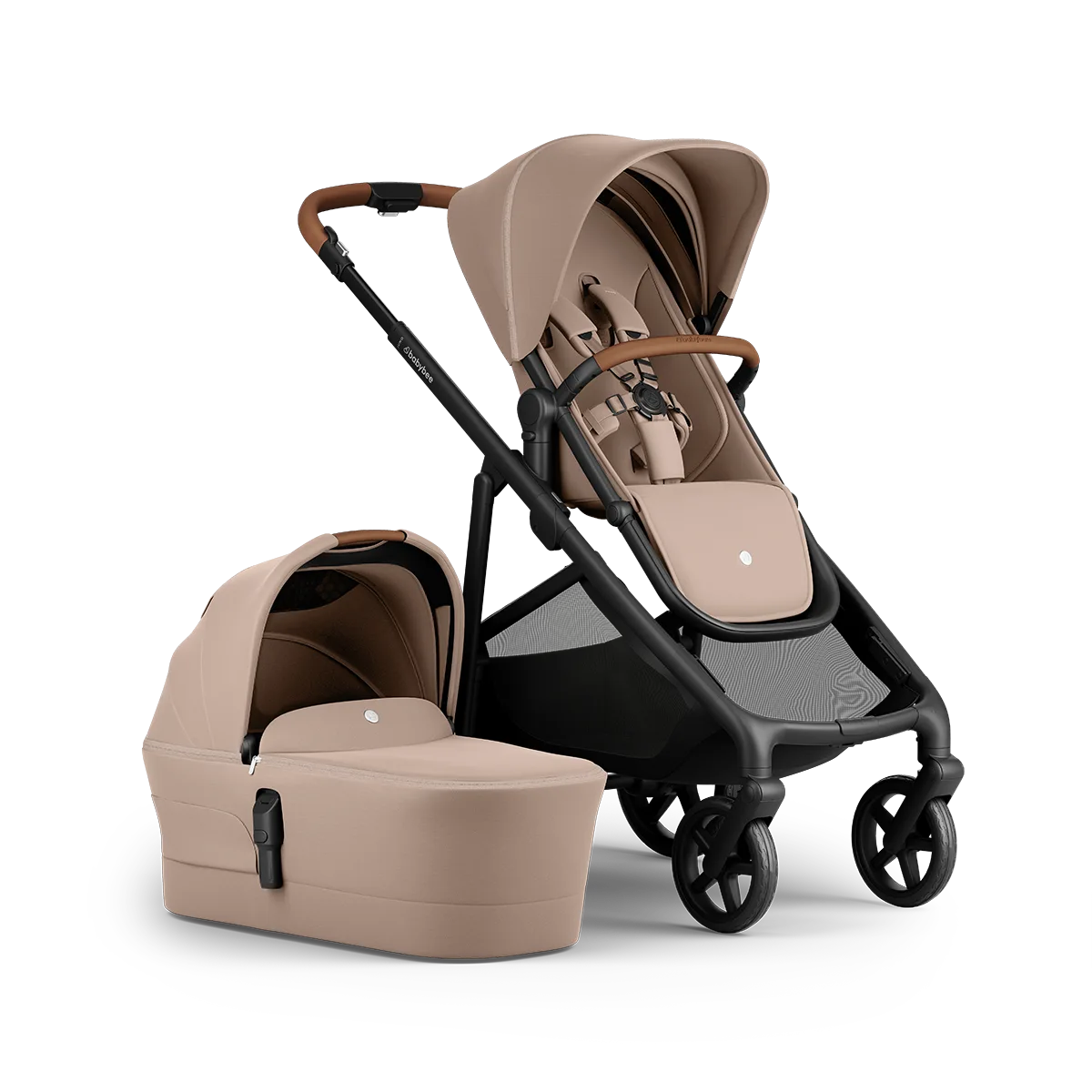
The Juno is Babybee’s flagship convertible, listed from $1,699.99 in Mocha and running to $2,599.99 once you add the parts that turn it into a double or a twin. Babybee calls it Australian-designed and European-engineered, and puts a lifetime warranty behind it. It is aimed at the buyer who wants one frame to cover a newborn now and two children later, and who cares more about what happens when a part breaks in Australia than about the badge on the handlebar.
Assessed on specification, the Juno scores 8.2. That is a genuinely good result in a field that runs from $499 to $3,119, and it is not the top of the table. The UPPAbaby Vista V3 Pram + Bassinet leads this category at 9.0 and costs $1,499, which is $200.99 less than the Juno. Everything below is the argument about whether the Juno’s extra money buys you anything.
The case for it
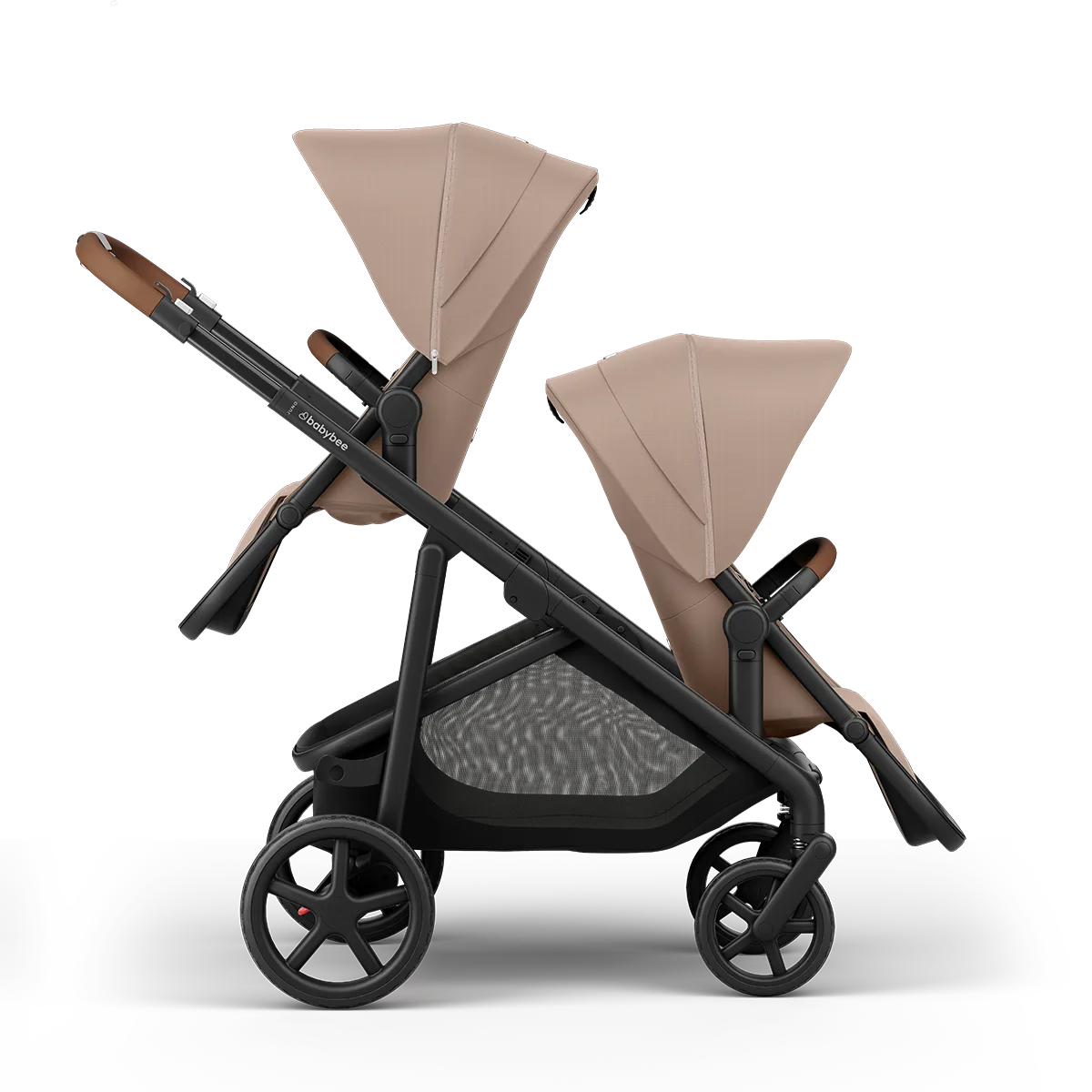
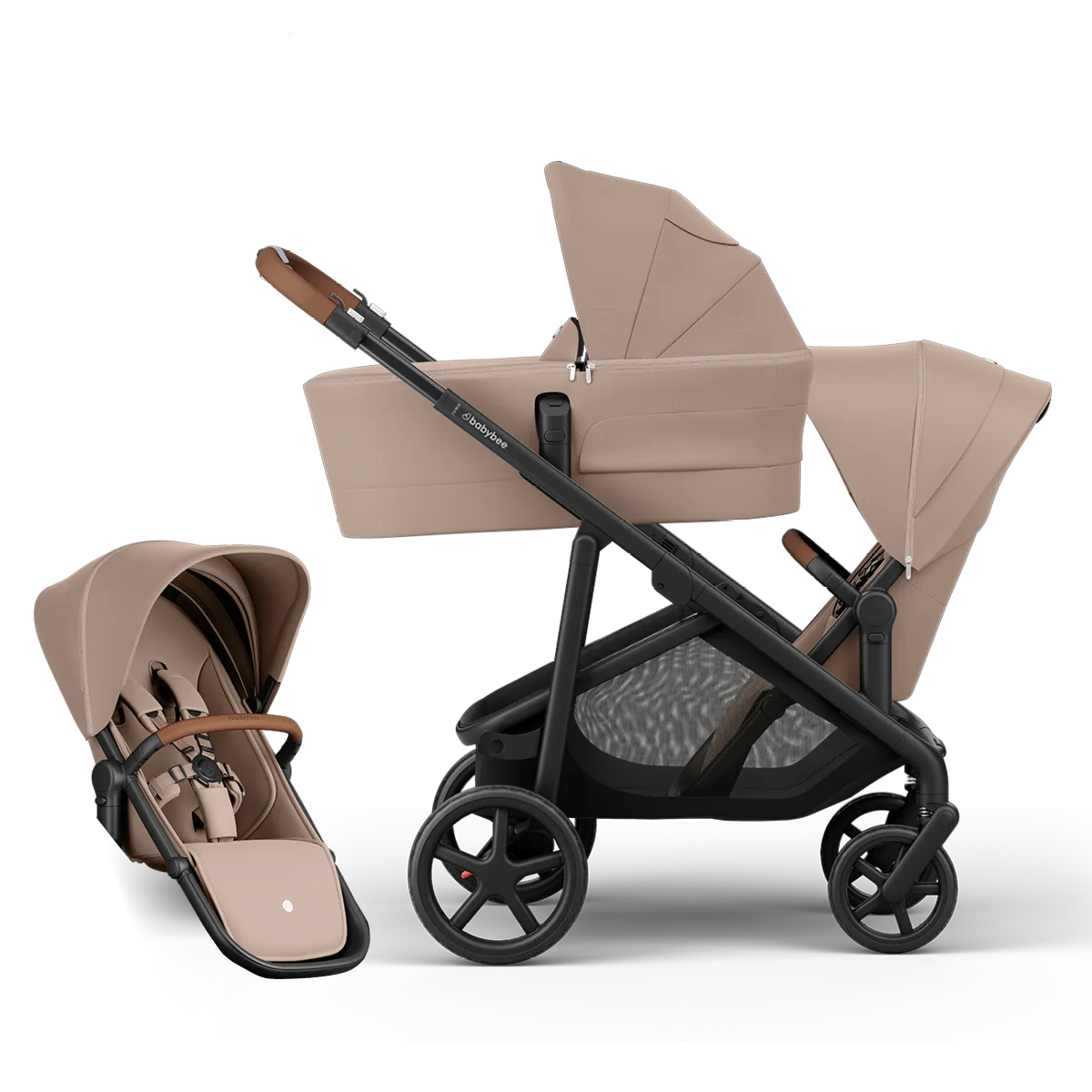
Configuration is where the Juno earns its score. Babybee publishes 48-plus configurations across bassinet, seat, capsule, toddler board and an additional shopper basket, spanning one, two or three children from a single chassis. That is the highest published configuration count of any pram in this field, and it is why the Juno takes 9.0 for conversion and versatility, level with the Bugaboo Donkey 5 and behind the Vista V3 and the Donkey 6, both at 9.5. If you are buying at 30 weeks with no idea whether a second child is coming, that number is the one that matters, because the alternative is buying the frame twice.
The basket is the second concrete win. Babybee lists 15 kg of capacity, which beats the 13.6 kg UPPAbaby publishes for the Vista V3 and the 10 kg Bugaboo publishes for the Donkey 5. Fifteen kilograms is a nappy bag, a shop and a folded toddler board without you having to hang anything off the handlebar. It matches the Donkey 6, which costs $1,999.
The fold is a one-hand, free-standing action on an aeronautical-grade aluminium frame, and that combination is worth having. A pram that stands on its own is a pram you can fold with a baby on your hip, and it is the difference between a kerbside pack-down that takes four seconds and one that takes both hands and a knee. Babybee does not publish the folded dimensions, which is why fold and footprint sits at 8.0 rather than higher, but the mechanism itself is the right one.
Then there is the part that does not show up on a showroom floor. Babybee is an Australian company selling a pram with a lifetime warranty, and it scores 8.5 for Australian parts and service. Bugaboo and UPPAbaby sit at 7.5 on that column and Cybex and Thule at 7.0. A canopy, a wheel or a bumper bar on a European pram can mean a wait and an import; on the Juno it means an email to a local company that has committed to the frame for its life. If you intend to keep this pram through two children and five years, that column is worth more than the half point it looks like.
Babybee also lists more than $210 of accessories in the box and four years of development behind the design, and its own listing cites Product of the Year and Best Double Pram at the 2026 Mum Central Awards. Take the last as the manufacturer’s claim rather than ours.
The case against it
The Juno’s spec sheet goes quiet at exactly the point a $1,699.99 pram should be loudest. There is no published kerb weight, no folded dimension, no tyre size or type, and no description of the suspension. Babybee tells you the frame is lightweight aeronautical-grade aluminium and stops there. That is why push and wheels is the Juno’s weakest column at 7.5, below the Vista V3 at 9.0, below the Donkey 5 at 8.5, and a long way below the Thule Urban Glide 3 at 9.5. We do not score a figure that is not published, and we do not estimate one. If the running gear is better than 7.5, Babybee has the fix in its own hands: publish the numbers.
The same gap sits under build and materials at 8.0. Aircraft-grade alloy is a real claim, but the Bugaboo Donkey 6 publishes 60 per cent recycled aluminium with a 15 kg basket and a 10 kg side bag, and UPPAbaby publishes an all-wheel suspension system and a 13.6 kg basket with weight ratings attached. Against that level of disclosure, 8.0 is where the Juno lands.
“Tallest seats in its class” is the claim that frustrates most. It is plausibly the Juno’s best feature, since seat height is what decides whether a tall four-year-old still fits, and there is no published measurement anywhere on the listing to check it against. You cannot compare a superlative to a rival’s centimetres.
Watch the price ladder as well. The $1,699.99 that gets quoted is the entry point. The bassinet and seat pram is listed at $1,699, and so is the two seat set, but the Juno Double is $1,998.99 and the Juno Twin is $2,149.99. Configuration 48 is not free. If the reason you are buying the Juno is the second child, price the configuration you will actually run rather than the headline.
How it compares
| Pram | Price | Bench Score |
|---|---|---|
| UPPAbaby Vista V3 Pram + Bassinet | $1,499 | 9.0 |
| Bugaboo Donkey 5 Pram Complete | $1,399 | 8.3 |
| Babybee Juno | Mocha | $1,699.99 | 8.2 |
| Thule Urban Glide 3 Black Pram | $1,379 | 7.9 |
| Babyhood Doppio Plus Stroller | $1,499 | 8.1 |
UPPAbaby Vista V3 Pram + Bassinet, $1,499, Bench Score 9.0. This is the pram the Juno has to beat and does not. It is $200.99 cheaper with the bassinet already in the box, it publishes all-wheel suspension and a one-step self-standing fold, and it carries three children with the RumbleSeat and PiggyBack accessories. It takes our Best overall award in our pram rankings. The Juno’s counter is the 15 kg basket against 13.6 kg, and the parts column, where the Vista scores 7.5 to the Juno’s 8.5. Buy the Vista unless local service is the thing keeping you up at night.
Bugaboo Donkey 5 Pram Complete, $1,399, Bench Score 8.3. A full $300.99 under the Juno, with bassinet and toddler seat fabrics both included, a mono-to-duo conversion in three clicks, and all-terrain puncture-proof wheels that are actually described in the specification. Its basket is 10 kg against the Juno’s 15 kg, and its Australian parts score is 7.5. On paper it is the better-documented pram for less money.
Thule Urban Glide 3 Black Pram, $1,379, Bench Score 7.9. The reason to look at it is the column the Juno cannot answer. Sixteen inch air-filled tyres, rear suspension and a lockable swivel front wheel give it 9.5 for push and wheels, the best running gear in the field and our Best all-terrain pick. The catch is that the seat is six months and up, and a bassinet or capsule adapter is extra, which takes the bundled version to $1,749. It is a worse pram than the Juno overall and a better one on gravel.
Babyhood Doppio Plus Stroller, $1,499, Bench Score 8.1. The Doppio chases the same buyer with 18 configurations and the strongest Australian parts and service score in the field at 9.0. Babyhood now publishes its 8.7 kg frame, seat-on fold, foam-core wheels and independent suspension, narrowing the gap to one tenth. The Juno retains the better one-hand free-standing fold, 15 kg basket, lifetime warranty and 8.2 overall. The Doppio is the more clearly measured pram; the Juno is still the slightly stronger package.
Verdict
The Juno is a well-judged pram let down by a thin specification. What Babybee publishes is genuinely competitive: 48-plus configurations, a 15 kg basket, a one-hand free-standing fold and a lifetime warranty from a company you can reach without an international freight quote. What it does not publish is the weight, the folded size and the running gear, and at $1,699.99 those absences cost it real points against rivals that will tell you everything.
Buy it if the second child is likely and the local warranty is the thing you are actually paying for. If you want the strongest package at this money, the category leader is not the Juno. It is the UPPAbaby Vista V3 Pram + Bassinet at $1,499, and it is both cheaper and better documented.
Bench Score 8.2. Conversion and versatility 9.0, fold and footprint 8.0, push and wheels 7.5, build and materials 8.0, Australian parts and service 8.5.
Assessed on specification, 30 July 2026. No unit was pushed, folded or weighed by us; every figure above comes from the manufacturer or the retailer listing. Prices are the lowest listed Australian retail as at that date and will move.
Disclosure: Babyhood, which also distributes the Kaylula range, is an agency client of The Baby Bench’s publisher, Xpand Digital. Babybee is not. Bench Scores are set from published specification on the same five criteria for every product, and no Babyhood product has been placed above a product that outscores it.
Evidence record
Sources checked
Product specifications, claims and Australian pricing were checked against the following sources for this assessment. Prices and availability can change after publication.